Tuesday, September 26, 2023

Today's KNOWLEDGE Share::Repairs for thermoplastic composite aerostructures!

Today's KNOWLEDGE Share

Developing repairs for thermoplastic composite aerostructures!


The HyPatchRepair project (2019-2022) was funded by the #German government, as part of the LuFo-V3 #aerospace research program, to demonstrate rivet-free repair technology for continuous #fiberreinforced TPC parts. The goal was a set of automated repair techniques to restore the original load-carrying capacity, geometry and aerodynamic surface without adding weight for parts such as #fuselageskins, #wings, #winglets and empennage components, including rudders. These techniques would prepare the repair area, fabricate a load-optimized repair patch and then integrate the patch into the repair area using proven and cost-effective technologies.


The German HyPatchRepair consortium was led by research institutes Faserinstitut Bremen and Laser Zentrum Hannover. The project included Airbus Operations, #aircraftrepair services provider Lufthansa Technik , small aircraft manufacturer Silence Aircraft and optical measurement systems supplier Vereinigte Elektronikwerkstätten as associated partners. Due to its expertise in large TPC structures, #GKN Fokker provided defect/damage cases and helped to define demonstrators.


The process chain conceived by this consortium includes:

Detect damage: An optical measuring system inspects the part to be repaired and determines the area and depth of material that needs to be removed, minimizing this if possible. VEW demonstrated this step using an optical measuring system at its facilities.


Mill the repair area: Damaged material is removed with a DMG MORI five-axis ULTRASONIC mobileBLOCK robot, providing consistent quality, dimensional accuracy and repeatability. To replace the removed plies with an accurate repair patch, the repair area is machined into steps. FIBRE demonstrated this process using the DMG MORI robot while LZH explored using lasers.


Measure the repair area: The stepped repair area must be accurately measured to fabricate a precisely fitting repair patch. LZH demonstrated this step using a Wenglor MLWL 232 laser profile scanner. LabVIEW #software was used to convert the data into the required patch dimensions.


Fabricate repair patches: #Repair patch preforms are fabricated using tailored fiber placement (TFP) and continuous fiber 3D printing and are then consolidated. FIBRE demonstrated the manufacturing of TPC preforms and consolidation using a heated press and specially designed tooling.


Trim patches: The #patches are measured after consolidation and compared with the stepped repair surface. Required trimming is completed using a laser, demonstrated by LZH.


Weld patches: Patches are fused to the repair area using laser beam welding. LZH demonstrated how this method would work while #FIBRE demonstrated the concept using pressure welding in a heated press.


Source; #managingcomposites

Follow: http://polymerguru.blogspot.com


#composites


Monday, September 25, 2023

Laser-based system achieves noncontact medical ultrasound imaging

 Researchers from MIT Lincoln Laboratory and their collaborators at the Massachusetts General Hospital (MGH) Center for Ultrasound Research and Translation (CURT) have developed a new medical imaging device: the Noncontact Laser Ultrasound (NCLUS). This laser-based ultrasound system provides images of interior body features such as organs, fat, muscle, tendons, and blood vessels. The system also measures bone strength and may have the potential to track disease stages over time.
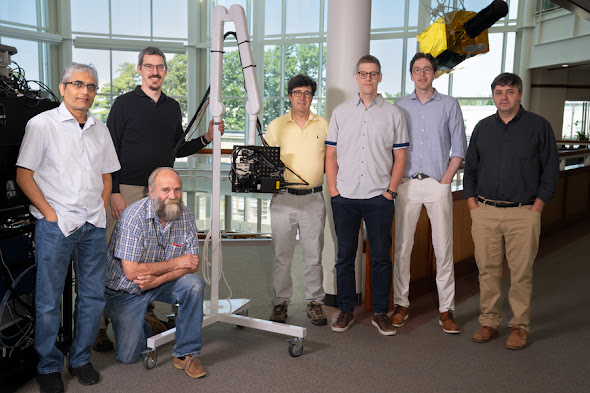
"Our patented skin-safe laser system concept seeks to transform medical ultrasound by overcoming the limitations associated with traditional contact probes," explains principal investigator Robert Haupt, a senior staff member in Lincoln Laboratory's Active Optical Systems Group. Haupt and senior staff member Charles Wynn are co-inventors of the technology, with assistant group leader Matthew Stowe providing technical leadership and oversight of the NCLUS program. Rajan Gurjar is the system integrator lead, with Jamie Shaw, Bert Green, Brian Boitnott (now at Stanford University), and Jake Jacobsen collaborating on optical and mechanical engineering and construction of the system.

Medical ultrasound in practice

If your doctor orders an ultrasound, you can expect a highly trained sonographer to press and manipulate an array of transducers, set in a handheld device, onto your body. As the sonographer pushes the transducer probe across your skin, high-frequency acoustic waves (ultrasound waves) penetrate and propagate through your body tissue, where they "echo" off different tissue structures and features. These echoes manifest from the acoustic impedance, or change in tissue strength (tissue softness or rigidity), from fat, muscle, organs, blood vessels, and bone deep inside the body. The probe receives the returning echoes, which are assembled into representational images of the body's internal features. Specialized processing schemes (synthetic aperture processing) are used to construct the shapes of the tissue features in 2D or 3D, and these constructions are then displayed on a computer monitor in real time.

Using ultrasound, doctors can noninvasively "see" inside the body to image diverse tissues and their geometries. Ultrasound can also measure blood flow pulsing through arteries and veins, and can characterize the mechanical properties (elastography) of tissues and organs. Ultrasound is used routinely to assist doctors in evaluating and diagnosing a variety of health conditions, diseases, and injuries. For example, ultrasound can be used to image the anatomy a developing fetus, detect tumors, and measure the degree of narrowing or leakage in heart valves. Ranging from handheld devices on an iPhone to cart-based systems, ultrasound is highly portable, relatively inexpensive, and widely used in point-of-care and remote-field settings.

Limitations of ultrasound

Though state-of-the-art medical ultrasound systems can resolve tissue features within fractions of a millimeter, the technique has some limitations. Freehand manipulation of the probe by sonographers to obtain the best viewing window into the body interior leads to imaging errors. More specifically, as sonographers apply pressure to the probe by feel, they randomly compress the local tissue where the probe makes contact, causing unpredictable changes in the tissue properties that impact the travel paths of the ultrasound waves. This compression distorts tissue-feature images with some unpredictability, meaning feature shapes are not accurately plotted. In addition, tilting the probe, even slightly, changes the angle plane of the image view — skewing the image and creating uncertainty of where features are positioned in the body.

The image distortion and positional reference uncertainty are significant enough that ultrasound cannot resolve with sufficient confidence, for example, whether a tumor is getting larger or smaller and precisely where the tumor is located in the host tissue. Furthermore, the uncertainty in feature size, shape, and position will vary upon repeat measurement, even for the same sonographer trying to retrace their steps. This uncertainty, termed operator variability, is more severe when different sonographers attempt the same measurement, leading to inter-operator variability. Because of these drawbacks, ultrasound is often restricted from tracking cancerous tumors and other disease states. Instead, methods such as magnetic resonance imaging (MRI) and computerized tomography (CT) are mandated to track how diseases progress — even with their vastly higher cost, greater system size and complexity, and imposed radiation risk.

“Variability has been a major limitation of medical ultrasound for decades," says Anthony Samir, associate chair of Imaging Sciences at MGH Radiology and director of CURT. Samir and his MGH CURT colleagues Kai Thomenius and Marko Jakolvejic provide critical medical experience, technical expertise, and guidance on conventional ultrasound devices to the laboratory team and collaborate with them on NCLUS system development.

By fully automating the process for acquiring ultrasound images, NCLUS has the potential to reduce the need for a sonographer and to mitigate operator variability. The laser positioning can be accurately reproduced, thus eliminating variability across repeated measurements. Because the measurement is noncontact, no localized tissue compaction or its related distortion to image features occur. Moreover, similar to MRI and CT, NCLUS provides a fixed-reference-frame capability using skin markers to reproduce and compare repeat scans over time. To support such tracking capabilities, the laboratory team developed software that processes ultrasound images and detects any changes between them. Requiring neither manual pressure nor coupling gels (as required by contact probes), NCLUS is also ideal for patients with painful or sensitive body areas, in fragile states, or at risk of infection.

"NCLUS could image burn or trauma victims, patients with open deep-tissue regions directly during surgery, premature infants requiring intensive medical care, patients with neck and spine injuries, and contagious individuals from standoff distances," Haupt says.

Light-induced ultrasound waves

NCLUS employs a pulsed laser that transmits optical energy through the air to the skin surface, where the light is rapidly absorbed once in the skin. The optical pulse causes instantaneous localized heating and rapidly deforms the skin through a thermoelastic process that in turn generates ultrasonic waves, acting as an ultrasound source — a phenomenon called photoacoustics.

The optical pulse yields sufficient ultrasound power with frequencies comparable to that of practiced medical ultrasound while causing no sensation on the skin. The team patented the choice of the optical carrier wavelengths, with the photoacoustic process designed to create a consistent ultrasound source, independent of skin color or tissue roughness.

The ultrasound echoes returning from the tissue interior emerge at the skin surface as localized vibrations, which are measured by a highly sensitive, specialized laser Doppler vibrometer.

"With an appropriate laser transmit-and-receive implementation, any exposed tissue surfaces can become viable ultrasound sources and detectors," Haupt explains.

Advances toward a clinically operational system

In 2019, the team demonstrated that the NCLUS proof-of-concept (GEN-1) system can acquire ultrasound imagery from human subjects using skin-safe lasers — a first in the medical community. However, the time to acquire the image data from the patient subject was long and impractical for clinical practice. In addition, the GEN-1 system image resolution was significantly less than that of state-of-the-art medical ultrasound.

Significant engineering development has since occurred to transition NCLUS GEN-1 to an operational system appropriate for clinical testing. In the clinical NCLUS system, both the laser source and receiver are miniaturized and housed inside an optical head attached to a portable armature. The lasers that pulse and scan are 500 times faster than those of the GEN-1 system, thus reducing the entire image-data acquisition time to less than a minute. Future NCLUS prototypes will involve faster acquisition times of less than one second. The new clinical system also operates at much higher ultrasound frequencies than those of the GEN-1 system, enabling resolution down to 200 microns, which is comparable to the resolution of state-of-the-art medical ultrasound.

The moveable armature enables many degrees of freedom to view the various regions of the body. Inside the optical head are also programmable fast-steering mirrors that automatically position the source and receive laser beams to precisely establish the ultrasound array. A 2D lidar is used to map the patient's skin surface topography; a high-frame-rate short-wave-infrared camera records the laser source and receiver projected locations on the skin, providing the array parameters necessary for constructing ultrasound images. The skin-surface topography mapping and laser-position recordings are registered by using natural skin features such as freckles. In this way, a fixed reference frame is established for performing precise repeat scans over time.

The NCLUS clinical system generates fully automated and registered ultrasound images via synthetic aperture processing. The team demonstrated this system on a gel-based puck synthesized to match the mechanical properties of human tissue (referred to as a phantom) that control ultrasound wave propagation.

Through sponsored programs, the team is now developing NCLUS to support field-forward military applications. These applications include detecting and characterizing life-threatening injuries from internal bleeding in organs; monitoring debilitating musculoskeletal injuries and their healing over time; and providing elastographic imagery of soft tissue and bone of amputee limb regions to accelerate the design and fitting of prosthetic sockets. Civilian applications include imaging in the intensive care unit. With NCLUS, emergency medical technicians, paramedics, and medical staff without specialized sonography training might be able to perform ultrasound imaging outside of a hospital — in a doctor’s office, at home, or in a remote battlefield setting.

"With further development, NCLUS has the potential to be a transformative technology: an automated, portable ultrasound platform with a fixed-reference-frame capability similar to that of MRI and CT," Samir says.

In the next phase of the NCLUS program, the team will pursue clinical studies using an operational skin-safe laser to evaluate ultrasound images and compare them to those of conventional medical ultrasound. If these studies are successful, the team will seek commercial funding for clinical medical device development, followed by U.S. Food and Drug Administration agency approval.

This work is funded by the U.S. Army Military Operational Medicine Research Program. The human in vivo testing was approved by the MIT Committee on the Use of Humans as Experimental Subjects.

Source:  MIT Lincoln Laboratory

Follow: http://polymerguru.blogspot.com

iCOMAT and CGTech push new frontiers in composite part manufacture

CGTech, the developer of VERICUT verification, simulation and optimisation software, is announcing an exciting reseller agreement with Bristol-based iCOMAT, pioneer of the first-ever defect-free tape-steering process for composite component production. The special worldwide arrangement will see iCOMAT sell and support a dedicated version of VERICUT VCP/VCS software in support of its patented manufacturing process for composites.


Providing the basis for this success is #iCOMAT’s unique composites #production process, known as Rapid Tow Shearing (RTS). Due to manufacturing limitations, conventional composite part design relies on straight fibre layers, leading to structures which use more material than necessary and are heavier and more expensive as a result. In contrast, iCOMAT’s innovative process enables the #defectfree steering of #compositetapes for the first time. The placement of these tapes along complex load paths delivers highly optimised structures with dramatic weight savings and lower use of raw material in support of cost-effective and more sustainable composite parts.


iCOMAT’s industrial cells comprise a proprietary tape-laying head mounted as an end effector to a state-of-the-art six-axis #industrialrobotarm, all located inside a safety cell. As part of this solution, programming and virtual simulation will come via a special version of VERICUT VCP (VERICUT Composites Programming)/VCS (VERICUT Composites Simulation) software complete with a new interface specifically for iCOMAT’s technology. iCOMAT will be the exclusive reseller of this software worldwide.


Explains Dr Dominic Bloom, Business Development Manager at iCOMAT: “Software is an integral part of our turnkey offer; customers must program and simulate their composite components to unlock optimised designs. CGTech are leaders in this field, so we definitely picked the right partner and know we can make our worldwide reseller agreement a success.”


Adds Olivier Munaux, Composites Product Manager, #CGTech: “Our powerful software will drive the world’s only industrial machines that can steer wide #composite tapes without defects at fast rates. iCOMAT is pioneering this technology, disrupting the way engineers design composites, so it makes absolute sense for them to be the official global reseller of our RTS-specific VERICUT VCP/VCS #software. Together, we can push new frontiers in automated composite part manufacturing.”


Source:www.cgtech.co.uk/jeccomposites.com

Follow: http://polymerguru.blogspot.com


Sunday, September 24, 2023

Today's KNOWLEDGE Share:Biobased Plastic materials challenges

Today's KNOWLEDGE Share

When trying to move to plant-based or biosourced plastic materials, a whole host of challenges will come-up.


Due to intrinsically lower Tg of bio-materials, chances are that you will have to transition to semi-crystalline materials and develop a very skillful mastering of precise shrinkage control in your molding process. Subtle physical phenomena including molecular orientation, flow induced crystallinity, slow dimensional recovery by relaxation will make your life a bit more complicated.


Lower thermal stability will also seriously tighten-up your limits in terms of thermal control and residence time in your process. Drying may suddenly become a critical step too.

Overall, a much better and deeper understanding of the molding process and specific plastic materials will be needed to address these challenges.


Source:Vito Leo

Follow: http://polymerguru.blogspot.com


#plastics #biobased #injectionmolding #shrinkage #semicrystalline #thermal #orientation


Saturday, September 23, 2023

University of Queensland to make ultra-high temperature composite materials for hypersonic flight

The furnace is the first of its type in Australia, allowing UQ researchers to make the next generation of ultra-high temperature composite materials for hypersonic flight.


Hypersonic vehicles travel more than five times faster than the speed of sound, and Associate Professor Michael Heitzmann said they have to be made from materials that can withstand extremely high temperatures caused by aerodynamic heating.


“That’s where UQ and our new furnace at the Centre for Advanced Materials Processing and Manufacturing – or AMPAM comes in,” Dr Heitzmann said. “We are working directly with industry to identify appropriate and cost-effective high temperature #ceramicmatrixcomposites or CMCs, tailored to hypersonic flight applications. In areas like a rocket nozzle or a hypersonic vehicle, the temperatures we’re talking about approach those seen on the surface of the sun. We are trying to get the utmost temperature resistance out of our material and find the most thermal-resistant materials possible. We are pioneering CMC manufacturing in Australia – it is a rare class of material because it’s extremely lightweight and has exceptional heat resistance.”


The components made in the German-manufactured furnace will be used by companies such as Brisbane-based #aerospace manufacturer Hypersonix Launch Systems, which specialises in hypersonic technology and scramjet engines.


Hypersonix Manufacturing Lead Sam Grieve said the UQ team would produce an engine part for the DART AE, a three-metre-long, single-use vehicle, powered by a hydrogen -fuelled SPARTAN scramjet engine.

“The insert is in a part of the engine that could be subjected to temperatures more than 1300 degrees Celsius, due to #hypersonicflows and #shockwaves,” Sam Grieve said. “Normal metal alloys would fail at that temperature, so we need high-performance lightweight materials to ensure the engine will survive in flight.”


Sam Grieve said UQ’s AMPAM group would have a capability to produce high quality CMC’s with #temperatureresistance not previously possible in #Australia.

“This is a very important sovereign capability and an important puzzle piece in establishing an Australian space and hypersonics industry,” he said. “The ultimate goal for Hypersonix is a multi-mission autonomous vehicle capable of delivering satellites to orbit while producing no CO2 in its exhaust. Our Engineering team is excited to be working with UQ to deliver outcomes that could see #Hypersonix competing internationally, and to see Australia at the forefront of international #spacetechnologies.”


Source:www.uq.edu.au/jeccomposites.com

Follow: http://polymerguru.blogspot.com


Friday, September 22, 2023

OQ Chemicals Introduces TCD Alcohol DM with Bio-circular DCPD

OQ Chemicals to supply ISCC PLUS certified Oxbalance® TCD Alcohol DM (tricyclodecane dimethanol), in response to growing market preferences for environmentally friendly alternatives. This product is manufactured using the bio-circular precursor DCPD (#dicyclopentadiene) from #Shell Chemicals Europe, which is also #ISCC Plus certified.

The strategic #collaboration between the two companies will ensure a reliable supply of bio-circular DCPD to support OQ Chemicals’ production.


Sustainable & Environmentally Conscious Alternative


TCD Alcohol DM serves as a versatile component in the production of high-performance technical polymers, paints and coatings, and adhesives used across sectors such as food packaging, electronics, and automotive. It is valued for its exceptional ability to enhance the properties of the final product, including improved durability, chemical resistance, and thermal stability.


The #biobasedOxbalance TCD Alcohol DM serves as a #sustainable and environmentally conscious alternative to its fully synthetic counterpart.


#OQChemicals’ new Oxbalance offering aligns with changing market preferences as customers increasingly seek out more sustainable alternatives without compromising quality or performance. Our partnership with Shell Chemicals Europe ensures a consistent supply of high-quality #biocircular DCPD for our production. With Oxbalance® TCD Alcohol DM, we’ve added another product to our portfolio that supports our customers on their path towards more #sustainability,” said Kyle Hendrix, executive vice president marketing at OQ Chemicals.


“Our collaboration with OQ Chemicals to deliver ISCC PLUS-certified bio-circular DCPD that is based on a mass balance approach is another example of how Shell Chemicals works with customers to develop solutions to meet their objectives,” said Liz Allen, director, Shell Chemicals Europe. “It’s also an example of how Shell is committed to delivering premium quality sustainable solutions to support a circular economy.”


OxBalance is a registered trademark of OQ Chemicals. The mass balance method allocates renewable feedstock in manufacturing. ISCC PLUS certification by the International Sustainability & Carbon Certification organization confirms environmentally responsible sourcing and strict sustainability compliance.


Source: OQ Chemicals/specialchem

Follow: http://polymerguru.blogspot.com

Epoxigraph | When Performance Is Not Optional

  Epoxigraph | When Performance Is Not Optional Not all epoxy resins are created equal. Epoxigraph is our graphene-enhanced epoxy resin deve...