Saturday, May 28, 2022

Global Refinery New and Expansion Projects Outlook to 2026

  • 460 upcoming crude oil refinery projects are expected to start operations from 2022 to 2026


• 118 represent new build projects and 342 are expansions of existing projects


• Predictably Asia dominates with the highest capacity additions of 7.3 mmbd by 2026. The Middle East and Africa follow with capacities of 3.8 mmbd and 3.6 mmbd, respectively


• China leads with the highest refinery capacity addition of 3.4 mmbd by 2026. Nigeria and India follow with capacities of 1.7 mmbd and 1.6 mmbd, respectively


• The Lagos I project in Nigeria with a capacity of 650 thousand barrels per day (mbd) leads in terms of refinery capacity.


Visit MY BLOG http://polymerguru.blogspot.com

Cycling forward with bike frame materials and processes!

 ðŸ“¢Saturday Spotlight!📢 Cycling forward with bike frame materials and processes!


"Are carbon fiber-reinforced polymer (CFRP) bicycle frames poised for a “great reshoring” — the return of production to locales near the customer base — or will they continue to be fabricated and shipped largely from Asian countries, as the vast majority are today? The short answer, according to bike manufacturers interviewed by CW, is that Asia will continue to predominate. Still, noteworthy changes to the bicycle manufacturing landscape are evident."


"CFRP frame manufacturing is making inroads in North America and Europe, where most CFRP bike enthusiasts reside. “One of the biggest differences [between offshore and reshored manufacturing] is product ownership,” emphasizes Dave Luyckx, chief product officer at Leuven, Belgium-based Rein4ced. “Asia doesn’t have a bicycle culture, but we have this cycling culture that infuses passion into the product.”


"Of course, cycling passion must be accompanied by composites know-how and innovative approaches before reshored CFRP frames achieve considerable market penetration. To the extent that the geography and technology of CFRP bike frame manufacturing are changing, key factors include the same market forces affecting all globalized manufacturing industries today: supply chain issues, the fallout from the pandemic, and geopolitical uncertainties. But the primary agent of change appears to be the classic tension between two manufacturing dynamics often at odds with each other: economies of scale versus production agility. The latter has prompted innovation that includes technical advances in the traditional hand-laid fabrication approach as well as forays into new materials and automated processes."


Want to learn more about this topic? Check out the full article by using this link 👉 https://lnkd.in/ggkPTjjw


Source:#managingcomposites

Thursday, May 26, 2022

carbon -carbon composites Microscope image

 Have a look at this beautiful microscopy!


This scanning electron microscope image shows a carbon-carbon composite composed of carbon fibers (in blue) and silicon carbide (in brown)! 


Besides high mass-specific properties and high thermal stability, functional properties like low thermal expansion and good tribological behavior play increasing importance in commercial applications of carbon-carbon composites. Originally developed for space and military applications, nowadays this class of materials is mainly used in brake disks and pads, clutches, calibration plates, or furnace charging devices! 


Source: managing composites

New Research Shows Waxworm's Saliva Degrades Polyethylene

A team of researchers from the CSIC has discovered that the saliva of the waxworm degrades plastic, which could have numerous applications in the treatment or recycling of plastic waste.


Enzymatic Degradation of Plastic:


The team discovered in 2017 that this species of worm (Lepidoptera Galleria mellonella) is capable of breaking down plastic (polyethylene), and now they have discovered it does so with their saliva containing enzymes (from the phenoloxidase family) that initiate the degradation of polyethylene in a short time and at room temperature.


"To degrade the plastic it is necessary that oxygen penetrates the polymer (into the plastic molecule)," explains Federica Bertocchini CSIC researcher at the Center for Biological Research (CIB-CSIC) who directed the study.


"This first step of oxidation, which is usually the result of exposure to sunlight or high temperatures, is a bottleneck that slows down the degradation of plastics such as polyethylene, one of the most resistant. Therefore, under normal environmental conditions, plastic takes months or years to degrade," explains Bertocchini.


These enzymes are the first and only ones known to be able to degrade polyethylene plastic without pre-treatment, according to Bertocchini. "We have now discovered that enzymes from waxworm saliva perform this crucial step: they oxidize plastic. Thus, they allow to overcome the bottleneck of plastic degradation and accelerate its decomposition,” further adds Bertocchini.


Polyethylene is one of the most resistant and used plastics. Together with polypropylene and polystyrene, they make up 70% of the total production of plastics. Plastic pollution poses a threat to the health and environment of the planet, so it is urgent to find solutions to deal with plastic waste.


Waxworm’s Plastic-eating Ability


An interesting question is to find out how wax insects acquired this ability. The researchers venture that it could be due to an evolutionary process. Waxworms feed on beehive wax and pollen from very diverse plant species. If you consider that the wax of hives is full of phenols, this type of enzyme would be very useful for worms. Indirectly, this would explain why waxworms can break down polyethylene. However, so far this theory is only speculation, and more studies combining insect biology with biotechnology will be needed.


Source: CSIC


Porsche 911 sport classic

 ðŸ“£Connecting the Dots!📣


"@Porsche knows that its classic designs are as popular today as they were before they became classics, so it is metering out to the market a series of four Heritage Design models. The second model (with the first being the 911 Targa 4S Heritage Design Edition, launched in 2020) has just been announced: the 911 Sport Classic. It features a ducktail spoiler that is a nod to the 911 Carrera RS 2.7 of 1972 and 1973."


"And while it might be something of a stretch to justify its appearance in CompositesWorld simply on a CFRP spoiler, know that the hood is also made with the material — and that’s not the case on the 911 Turbo S, the vehicle upon which this specialized version is based. The hood is formed with a dip in the center, a design cue that is echoed on the roof, which is also CFRP."


"But it is not like the 911 Sport Classic is going to be produced in mass quantiles. In fact, just 1,250 will be built."


Source:#thenativelab 


Wednesday, May 25, 2022

Composite CNG cylinder project report

 I have submitted a project report on the Indian Type 4 Composite Cylinder market for Indian and European clients this week.

I have covered an overview landscape of the market, swot analysis, latest technological advancements, certification, Investment structure, etc stated in detail in the report.


Interested companies do write to me by email at rosaram211@gmail.com to get more information.


Visit MY BLOG http://polymerguru.blogspot.com


Plant-based epoxy enables recyclable carbon fibre!

 Plant-based epoxy enables recyclable carbon fibre!


"Thanks to recent advances in bio-based material design, recycling carbon fiber at an industrial scale could already be close at hand. Through a project supported by the US Department of Energy's Vehicle Technologies Office, under the Composites Core Program, Rorrer and other NREL researchers have shown that making carbon-fiber composites with bio-based epoxies and anhydride hardeners makes the material fully recyclable by introducing linkages that are more easily degraded. In fact, the recycling process — called methanolysis — can be selectively triggered at room temperature without degrading the quality or orientation of the fibers. That could represent a strong step toward a circular material, which can make carbon fiber cheaper and greener when used across multiple lives."

"The thermoset-nature of the cured epoxy makes those superior products difficult to break apart, especially without severely damaging the carbon filaments. Products made from carbon fiber — despite their premium price — often head to the landfill at the end of their lives, along with any efficiency benefits they may have earned."


Rorrer and teammates began experimenting with the chemistry of biomass to understand if it could enable a new epoxy designed for recyclability. Compared to the hydrocarbons in petroleum, biomass contains higher levels of oxygen and nitrogen, offering a different set of chemical possibilities.

"We essentially redesigned the epoxy amine resins — today's thermosets in carbon fiber — with epoxy and anhydrides synthesized from biomass, predominantly from the biological and chemical conversion of sugars," Rorrer explained. "We have shown that [the] reformulated resin can maintain and/or exceed all the same properties as in today's epoxy amine resins, but also make them recyclable by design, and at room temperature."

"Using a special catalyst, the NREL team was able to break down the bio-based resin at room temperature, a process known as "depolymerization." That allowed them to recover the carbon filaments while maintaining their quality and alignment."

"We can actually maintain the fiber quality over at least three material lives," Rorrer said. "So not only are we able to recycle it, we are able to recycle it without any detriment to properties. We are not downcycling the material at all."

Source:#managingcomposites

Tuesday, May 24, 2022

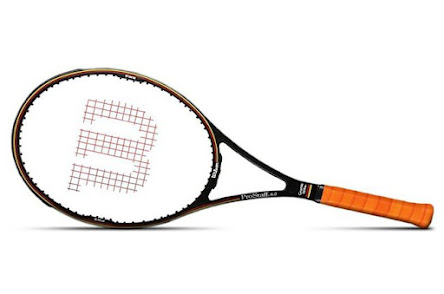
The introduction of composite materials in tennis racquets!

 ðŸ“£Composites Showcase!📣


Let's learn more about the introduction of composite materials in tennis racquets!


For many years, tennis was played with wooden rackets. There was some experimentation with laminating woods, but Bill Severa, Wilson’s global director of technology says the wood rackets remained pretty much the same from the early teens [in the 20th century] up until the mid-60s.


"The wood rackets were all based off natural wood and while we sold millions and millions of rackets in those years, there was no real definite evolution," he says.


That evolution took public shape in 1967. But it started in 1953, when Frenchman René Lacoste came up with a design for a metal racket, patenting it that same year. Wilson later acquired the rights to it and in 1967, players grew intrigued enough by the Wilson-made T2000 that it showed up in tournaments. It made its first appearance in the Wilson catalog in 1969.


And with wood finding a challenger in steel, the race for new materials was on. Aluminum, easier to mold than steel, made its debut in the 1970s. But there was more coming. The carbon fiber composite industry wasn’t new in the '80s, having been around since the '50s, Severa says. But at exorbitant prices, carbon fiber wasn’t plausible for sporting goods. As prices started to drop for carbon fiber, tennis companies could experiment.


The big convergence was in 1983 when the last Wilson catalog featured wood, steel, and composite rackets. Just one year later, the company that had been making wood rackets since 1917 was fully in the composite world for its high-end line. Developed as one of the first carbon tennis rackets, the Pro Staff line was actually our third venture into the carbon tennis racket space, following our “Galaxy” and “Sting” racket lines. In fact, when Pro Staff first debuted in 1983, we were selling wood, steel, and carbon tennis rackets. However, Pro Staff’s unique carbon and aramid fibers double braid instantly garnered the attention of serious players due to its combination of power, feel, and control. It’s safe to say that the success of this original Pro Staff line ensured carbon would be the premier material used in performance tennis rackets going forward.


Composite fiber has remained the key material now for over 30 years. With about five major manufacturers of the graphite material, every racket maker has their own tweak on the system, trying to bring out different attributes of the fiber, sometimes mixing and matching differing fiber types and resins within single rackets.


Source: Article "The history of rackets and why players experiment with head size, materials", written by Tim Newcomb.


Source:#thenativelab


Friday, May 20, 2022

GLOBAL SUICIDE RATE

 SUICIDE RATE:

More than 700 000 people die due to suicide every year.

For every suicide, there are many more people who attempt suicide. A prior suicide attempt is the single most important risk factor for suicide in the general population.
Suicide is the fourth leading cause of death among 15-19 year-olds.
77% of global suicides occur in low- and middle-income countries.


Ingestion of pesticides, hanging, and firearms are among the most common methods of suicide globally.

Prevention:
limit access to the means of suicide (e.g. pesticides, firearms, certain medications);
interact with the media for responsible reporting of suicide;
foster socio-emotional life skills in adolescents;
early identify, assess, manage and follow up with anyone who is affected by suicidal behaviors

Post pandemic period has played a vital role in the increasing number of suicide. This generation leads to comfort life, learning and believing the news comes from social media only. Not finding time to go out to meet the people and stand in the sun and burn for a while.

The sad part is the numbers are increasing in recent years a lot as the younger generation is not being able to handle the situation in the proper way. Need counseling for those who are weak mentally.
Let us spread positive vibes to others as much as we can to lead a healthy lifestyle in the world.

Source: WHO

Continuous Marketing leads you taste more profits

If your marketing team is being forced to justify every single action by ROI or ROAS, you're strangling your own growth. The biggest dri...