Monday, July 29, 2019

Discovery of a New Class of Enzymes to Convert Plant Waste into Eco-friendly Products

A cross-institutional team of scientists has engineered a new family of enzymes to convert plant waste into sustainable and high-value products, such as nylon, plastics and chemicals.
Lignin – A Main Component of New Enzymes

The newly engineered enzyme is active on lignin – one of the main components of plants, which scientists have been trying for decades to find a way of breaking down efficiently. Lignin acts as scaffolding in plants and is central to water-delivery. It provides strength and defence against pathogens.

Professor McGeehan, Director of the Centre for Enzyme Innovation in the School of Biological Sciences at Portsmouth said, “To protect their sugar-containing cellulose, plants have evolved a fascinatingly complicated material called lignin that only a small selection of fungi and bacteria can tackle. However, lignin represents a vast potential source of sustainable chemicals, so if we can find a way to extract and use those building blocks, we can create great things.”

Cellulose and lignin are among the most abundant biopolymers on earth. The success of plants is largely due to the clever mixture of these polymers to create lignocellulose, a material that is challenging to digest,” he further added.


Engineering of Naturally Occurring Enzymes


The team’s goal is to discover enzymes from nature, bring them into our laboratories to understand how they work, then engineer them to produce new tools for the biotechnology industry. In this case, the team has taken a naturally occurring enzyme and engineered it to perform a key reaction in the breakdown of one of the toughest natural plant polymers.

Current enzymes tend to work on only one of the building blocks of lignin, making the breakdown process inefficient. Using advanced 3D structural and biochemical techniques the team has been able to alter the shape of the enzyme to accommodate multiple building blocks. The results provide a route to making new materials and chemicals such as nylon, bioplastics, and even carbon fiber, from what has previously been a waste product.

The discovery also offers additional environmental benefits – creating products from lignin reduces our reliance on oil to make everyday products and offers an attractive alternative to burning it, helping to reduce CO2 emissions.


An International Research Team of Specialized Experts


The research team was made up of an international team of experts in structural biology, biochemistry, quantum chemistry and synthetic biology at the Universities of Portsmouth, Montana State, Georgia, Kentucky and California, and two US national laboratories, NREL and Oak Ridge.

Professor McGeehan said, “We now have proof-of-principle that we can successfully engineer this class of enzymes to tackle some of the most challenging lignin-based molecules and we will continue to develop biological tools that can convert waste into valuable and sustainable materials.”

The research was jointly funded by the Biotechnology and Biological Sciences Research Council (BBSRC), National Science Foundation (NSF), and the DOE EERE Bioenergy Technologies Office. The 3D enzyme structures that underpinned this work were solved at the Diamond Light Source, the UK’s national synchrotron science facility in Oxford. 


Source: UoP News

Friday, July 26, 2019

Newly Engineered Thermoplastic Alloy by Polyscope Polymers for Medical Segment

Polyscope Polymers B.V. has introduced a new engineering thermoplastic alloy combining the benefits of styrene maleic anhydride (SMA) and polymethyl methacrylate (PMMA) to meet the needs of the rapidly growing point-of-care (POC) microfluidic medical test device segment. 

Features of XILOY™ Alloy


The injection moldable polymer, called XILOY™ SO2315 SMA/PMMA alloy, offers excellent optical properties, biocompatibility with a variety of proprietary coatings, reagents, and blood and tissue products, and maintains high dimensional stability to assure accurate and reliable immunoassay test results. The material is in use on devices completing their final agency reviews and expected to be commercially available to medical professionals soon.


Use of SMA and PMMA Alloy to Mold Microfluidic Cassettes


The newest material being used to mold microfluidic cassettes is an alloy of SMA and PMMA. The specific reactivity of anhydride groups on the SMA portion of XILOY SO2315 copolymer is especially helpful in microfluidic chip applications for its intrinsic ability to react with the “bioanchor,” which captures and binds to analytes (substances/chemicals of interest, e.g. amino acids, peptides, proteins) in the fluid sample, simplifying the post-mold coating process while, at the same time, making it more robust and cost-effective. 

SMA also provides higher thermal stability than PS for tests requiring heat to process samples, plus it maintains very-high dimensional stability to assure micro channels operate properly and cassettes fit into test devices. SMA is not especially miscible with PS, leading to a copolymer that is more opaque than transparent. Instead, chemists combine it with PMMA, with which it is highly miscible. 

The PMMA portion of the copolymer provides excellent transparency for optical detection test methods and has good biological compatibility with human tissue and fluids. The resulting copolymer is chemically compatible with the proprietary coatings and reagents typically used on microfluidic cassettes. It also processes easily and maintains consistent tight dimensions for intricate molded micro patterns that are critical to accurate and reliable rest results. 


Use of XILOY SO2315 Copolymer in Further Applications

In addition to use for disposable microfluidic cassettes for POC medical diagnostic devices, XILOY SO2315 copolymer is also appropriate for use in a variety of demanding applications in lighting, display, housewares, and consumer disposable applications. 
 

Source: Polyscope Polymers BV


Wednesday, July 24, 2019

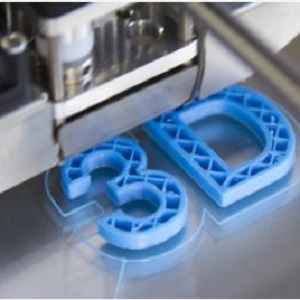
Covestro Joins Carbon to Upscale 3D Printing for Digital Mass Production


Covestro has partnered Silicon Valley based tech company Carbon to upscale 3D Printing process 
to meet industrial demand of mass production. 

Joint Forces to Prove Mass Production Viability


Silicon Valley based company Carbon has developed Digital Light Synthesis™ (DLS™) technology, 
which can accelerate the production of parts up to a hundredfold compared to previous processes. 
After years of R&D, Carbon developed a novel polyurethane liquid resin suitable for production parts.

Covestro is a key partner in the scale-up and high-volume production of this material.
 The company invested a significant sum to enable the production in commercial quantity. 
As a result, joint forces proving mass production viability of the 3D-printing process and the 
respective material. 


"Our biggest challenge in the upscaling of additive manufacturing until series production lies in the supply of suitable materials in the required quality and quantity," explains Patrick Rosso, global head of additive manufacturing at Covestro. "By partnering with companies like Carbon, we are pushing existing scale boundaries and supporting various industries along the value chain on their way to digital mass production.” 

Production Using DLS™ Technology on a Large Scale


Efficient manufacturing process DLS™ technology developed by Carbon, is now being used for the 
first time on a large scale. Like stereolithography, the workpiece is created in a vat of liquid plastic
 resin that is cured by means of UV radiation. 

At Carbon’s DLS™ technology, oxygen is supplied from below to counteract the curing and thus 
creating a liquid dead zone. For this purpose, the bottom of the vessel is made of a light- and 
air-permeable membrane, like a contact lens. Due to this dead zone, the printed part can be 
pulled continuously upward without the formation of individual layers. 

Production using DLS™ technology is up to 100 times faster than with stereolithography – another
 important prerequisite for industrial mass production. In that context, a proprietary process combines 
software, hardware and materials. It imparts the desired technical and mechanical properties to the 
finished parts. 

Rising Demand of 3D Printing in Industrial Mass 

Production


3D printing offers unique opportunities to produce three-dimensional, often complex shaped parts 
in one single step. While predominantly prototypes and sample parts have been produced in small 
numbers so far, many industries are increasingly interested in industrial mass production. 

Covestro is currently researching materials to enable an extended range of industrial applications. 
To this end, the company is upgrading laboratories for 3D printing at its Leverkusen, Pittsburgh and 
Shanghai sites, where it develops and tests material solutions for serial additive manufacturing in 
collaboration with different customers. 
 

Source: Covestro
Online Course Recently Added
Master Plastics Compounding with Essential Concepts &Techniques (Part-2)
Master the compounding process to meet new performance challenges and today’s consumers’ demands to get to profits sooner. Leading expert, Luis Roca will share global concepts & practical tips to...
4

Tuesday, July 23, 2019

Hemp fiber-reinforced plastic wins product of the year

An audience at the 16th EIHA Hemp Conference, which took place in Germany in June, has voted for a hemp fiber reinforced plastic material as one of its hemp products of the year.
BioLite, a polypropylene (PP) reinforced with 30% hemp fibers benefits from the strength of the fibers, making it strong, light and durable, its manufacturer, Trifilon, says. The new material is suitable for lightweight automotive construction and consumer goods and was used in this instance to make a trolley case.

Monday, July 22, 2019

Michelin & GM Develop New Generation of Airless Wheel Technology

Michelin and General Motors presented a new generation of airless wheel technology, the MICHELIN Uptis Prototype (or “Unique Puncture-proof Tire System”), at the Movin’On Summit for sustainable mobility. GM intends to develop this airless wheel assembly with Michelin and aims to introduce it on passenger vehicles as early as 2024.


Michelin Uptis Prototype


Later this year, GM will initiate real-world testing and validation of the Uptis Prototype on a Michigan test fleet of Chevrolet Bolt EVs.

“General Motors is excited about the possibilities that Uptis presents, and we are thrilled to collaborate with Michelin on this breakthrough technology,” said Steve Kiefer, senior vice president, Global Purchasing and Supply Chain, General Motors. “Uptis is an ideal fit for propelling the automotive industry into the future and a great example of how our customers benefit when we collaborate and innovate with our supplier partners.”

Airless Technology


Airless technology makes the Uptis Prototype eliminate flats and blowouts. This means Uptis offers significant potential for reducing the use of raw materials and waste, contributing to GM’s vision for a world with zero crashes, zero emissions and zero congestion as it:

  • Reduces the number of punctured or damaged tires that are scrapped before reaching the end of their life cycle.
  • Reduces the use of raw materials, energy for production and emissions linked to the manufacture of spare tires and replacement tires that are no longer required.
  • Lasts longer by eliminating irregular wear and tear caused by over- or under-inflation.
  • Reduces dangers related to flats and blowouts. 

Source: General Motors

Thursday, July 18, 2019

New Industrial Process to Develop CO2-based Elastic Textile Fibers - Covestro & RWTH

Dress with CO2Two research projects have succeeded in making elastic textile fibers based on CO2 and so partly replacing crude oil as a raw material. Covestro and its partners, foremost the Institute of Textile Technology at RWTH Aachen University and various textile manufacturers, are developing the production process on an industrial scale and aim to make the innovative fibers ready for the market. They can be used for stockings and medical textiles, for example, and might replace conventional elastic fibers based on crude oil. .

Further Milestone in the Use of CO2 as an Alternative Raw Material


The elastic fibers are made with a chemical component that consists in part of CO2 instead of oil. This precursor called cardyon® is already used for foam in mattresses and sports floorings. And now it is being applied to the textile industry.

That’s a further, highly promising approach to enable ever broader use of carbon dioxide as an alternative raw material in the chemical industry and expand the raw materials base,” says Dr. Markus Steilemann, CEO of Covestro. “Our goal is to use COin more and more applications in a circular economy process and save crude oil.” 


Sustainable Production Process


The fibers are made from CO2-based thermoplastic polyurethane (TPU) using a technique called melt spinning, in which the TPU is melted, pressed into very fine threads and finally processed into a yarn of endless fibers. Unlike dry spinning, which is used to produce conventional elastic synthetic fibers such as Elastane or Spandex, melt spinning eliminates the need for environmentally harmful solvents. A new chemical method enables carbon dioxide to be incorporated in the base material, which also has a better CO2 footprint than traditional elastic fibers. 

The CO2-based material could be a sustainable alternative to conventional elastic fibers in the near future,” states Professor Thomas Gries, Director of the Institute of Textile Technology at RWTH Aachen University. “Thanks to our expertise in industrial development and processing, we can jointly drive establishment of a new raw materials base for the textile industry.” 

Development of the method of producing fibers from CO2-based thermoplastic polyurethane has been funded by the European Institute of Innovation and Technology (EIT). It will now be optimized as part of the “CO2Tex” project, which is to be funded by the German Federal Ministry of Education and Research (BMBF) so as to enable industrial production in the future. “CO2Tex” is part of “BioTex Future,” a project initiative of RWTH Aachen University. The initiative is devoted to developing production and processing technologies to facilitate the future market launch of textile systems from bio-based polymeric materials.

Development Partners Display Interest


What makes the CO2-based TPU fibers so special is their properties: They are elastic and tear-proof and so can be used in textile fabrics. Initial companies from the textile and medical engineering sectors have already tested the CO2-based fibers and processed them into yarns, socks, compression tubes and tapes. 

The aim of launching CO2-based textiles on the market is to promote a material cycle in the textile and clothing industry based on sustainable resources.


Source: Covestro

Thursday, July 11, 2019

New Research Unveils Direct Synthesis of Graphene using Carbon Dioxide

The chemical compound carbon dioxide knows the general public as a greenhouse gas in the atmosphere and because of its climate-warming effect. However, carbon dioxide can also be a useful source of chemical reactions. A working group of the Karlsruhe Institute of Technology (KIT) in the journal ChemSusChem reports on such an unusual application. It uses carbon dioxide as a starting material to produce the currently very intensively investigated technology material graphene. 


Carbon Dioxide - A Useful Source of Chemical Reactions


The burning of fossil fuels such as coal and oil supplies energy for electricity, heat and mobility, but also leads to an increase in the amount of carbon dioxide in the atmosphere and thus to global warming. To cut through this causal chain, scientists are motivated to search for alternative sources of energy, but also alternative uses for carbon dioxide. One possibility could be to see the carbon dioxide as a favorable starting material for the synthesis of recyclables and thus in the economic recovery cycle - possibly even profitable - reintroduce.

An example of this can be found in nature: during photosynthesis in the leaves of plants, biomass is rebuilt from light, water and carbon dioxide and the natural material cycle is closed. In the process, it is the task of the metal-based enzyme RuBisCo to absorb the carbon dioxide from the air and make it usable for further chemical reactions in the plant. Inspired by this metal-based natural transformation, researchers at KIT are now presenting a process in which the greenhouse gas carbon dioxide, together with hydrogen, is directly transferred to the technology material graphene with the aid of specially prepared, catalytically active metal surfaces at temperatures of up to 1000 degrees Celsius.

Graphene


Graphene is the two-dimensional shape of the chemical element carbon, which has interesting electrical properties and is therefore suitable for future, novel electronic components. Its discovery and manipulation in 2004 led to worldwide, intensive research and in 2010 brought the discoverers Andre Geim and Konstanin Novoselov the Nobel Prize in Physics. The two took the graphene by hand from a block of graphite using adhesive tape.

Simple One-step Process


A collaboration of several working groups at KIT is now published in the journal ChemSusChema method to separate graphene by means of a metal catalyst of carbon dioxide and hydrogen. "If the metal surface has the right balance of copper and palladium, the conversion of carbon dioxide to graphene will take place directly in a simple one-step process," said study leader Professor Mario Ruben of the Molecular Materials Working Group at the Institute of Nanotechnology (INT) and at the Institute of Inorganic Chemistry (AOC) of KIT. 

In further experiments, the researchers even succeeded in producing the graphene with several layers of thickness, which could be of interest for possible applications in batteries, electronic components or filter materials. The next research objective of the working group is to shape functioning electronic components from the graphene obtained.


Source: Karlsruhe Institute of Technology

Today's KNOWLEDGE Share : The Value Inside Food Waste

Today's KNOWLEDGE Share  The Value Inside Food Waste Food waste is often seen as disposal — yet it is actually displaced resources. One ...