Tuesday, May 21, 2024

Today's KNOWLEDGE Share:Researchers Develop Green Composite Using Japanese Washi Paper.

Today's KNOWLEDGE Share

Washi: the traditional Japanese paper, known for its beauty and strength, has been used in bookbinding, art, furniture, and architecture for hundreds of years. But more recently, washi's usage is on the decline, as people opt for more western style housing designs.


In a bid to revive interest in this traditional craft, a group of Tohoku University researchers has developed an environmentally friendly material from washi that boasts improved strength and biodegradability.


Details of the research were published in the journal Composites Part A: Applied Science and Manufacturing on May, 9, 2024.


Layered and Hot Pressed Sheets of Washi with Polybutylene Succinate:

Bio-based and biodegradable materials are increasingly sought after as the world seeks to move away from fossil based-plastic materials and build a more sustainable society. Green composites combine plastics with natural fibers, producing materials with higher strength, improved biodegradability, and a lower environmental footprint.


"We created a green composite from washi, which itself stems from plant fibers, improving its properties further whilst still maintaining its classical beauty," points out Hiroki Kurita, co-author of the paper and an associate professor at Tohoku University's Graduate School of Environmental Studies.


To produce the material, Kurita and his colleagues layered and hot pressed sheets of Washi with polybutylene succinate (PBS). To source the Washi, they worked with an artisan from a Miyagi-based washi-workshop. The material's ultimate tensile strength, i.e., the amount of stress the paper could withstand, stood at 59.85 MPa, representing an improvement of over 60%.


82% Biodegradation within 35 Days:

Washi has a lot of space between its entangled fibers. When combined with PBS, the plastic filled these spaces, thereby locking the fibers in place and preventing the fibers from moving.


PBS is also notable for its biodegradability, and the resultant composite material degraded much faster than pure plastic. After 35 days, it had biodegraded by 82%.The biodegradation was calculated by measuring the amount of CO2 released from the material when it was buried in compost. At the same time, researchers measured weight loss and loss of strength during degradation.


Not only was the team successful in producing a new material, but Kurita believes they were able to raise the standard of biodegradation testing and provide blueprints for future research into biodegradable composite materials. "We utilized both standardized and non-standardized methods for measuring biodegradability. The differing methods used will help researchers compare biodegradability between different materials moving forward."


Source: Tohoku University/omnexus.specialchem.com

Covestro and Arcesso's Arfinio® Technology is “Winner” in "German Innovation Award 2024"

The Innovation Award honors products, projects, and pioneering achievements that sustainably improve life

Arfinio® earns “Winner”-prize in the category "Excellence in B2B: Materials and Surfaces"

This technological breakthrough enables the rapid production of lightweight, repairable, and recyclable solid surface materials.


Covestro, one of the world's leading manufacturers of polymer materials and components, has been awarded “Winner” of the "German Innovation Award 2024" for outstanding innovation achievements in the category "Excellence in B2B: Materials and Surfaces" for its Arfinio® technology.

The award is presented by the "German Design Council." Candidates submit projects that have been launched on the market no longer than five years ago, but they can also be nominated by the council. The evaluation is carried out by an independent, interdisciplinary expert jury. The award ceremony took place on May 14 in front of around 300 invited guests at the Futurium in Berlin.


"We are very pleased that the German Design Council has honored us with this award," said Joan Miquel García Martínez, Senior Project Manager Arfinio® at Covestro. "Arfinio® is a real breakthrough for design, surfaces, and sustainability. This award shows the relevance of combining design, manufacturing technology, and materials for the development of new products and confirms that we are on the right track."


The Arfinio® technology, which Covestro has developed together with its partner Arcesso, a manufacturer of custom polyurethane parts, combines liquid high-performance polymers and unique minerals with the RIM process (reaction injection molding). This combination enables seamless shapes and surfaces – and was long considered impossible. The resulting products are durable, repairable, and lightweight, can be produced quickly, and allow for free designs. The material also contributes to sustainability as it can be produced with partially bio-based raw materials, can be mechanically recycled at the end of its life cycle, and reused for the production of new products.


source: Covestro

Today's KNOWLEDGE Share:LUBRICANT DISPERSION

Today's KNOWLEDGE Share

Some molding compounds contain a so-called "external lubricant". It is essentially a second immiscible polymeric material with a much lower viscosity.


What happens when you mold such materials ?

In extrusion things are quite obvious. The hydrodynamic forces push the dispersed lubricant to the surface of the die where they can act as expected and promote slip of the major phase polymer.


In Injection Molding the combination of the Fountain flow, moving inner flow layers to the very edge, and the presence of a frozen skin, create a more complex situation.


The high shear layer where lubricant will accumulate is INSIDE the frozen skin ! While this can still help to reduce the pressure to fill, this situation will also induce a serious risk of blistering/delamination.


This delamination was well known for instance in the Xenoy grade made of PC/PBT. But other compounds, containing for instance a silicon based lubricant, will produce the same result, as reported by some of my customers.

So, keep in mind that the lubricant (possibly necessary at the outer surface of the molded part if the intention is to control friction coefficient) doesn't quite go where you'd hope to see it.


Note that this delamination can also occasionally be observed in pure HDPE if the molecular weight is high enough. In this case the low molecular tail (waxes) will accumulate at the frozen skin interface, promoting delamination.


Source:Vito Leo

#injectionmolding #plastics #lubricant

Monday, May 20, 2024

Syensqo Extends its PPSU Films Portfolio to Reduce Slot Liner Thickness in E-motors

Syensqo, formerly part of Solvay Group, has announced the extension of its Ajedium™ Films offering for slot liners in electric motors to a range of polyphenylene sulfone (PPSU) based products. These films are developed to replace conventional paper slot liners in motors up to 400V.

Require Less Energy Throughout the Manufacturing Process:

In contrast to incumbent NKN (aramid paper and polyimide film) laminates, Ajedium™ PPSU films can help manufacturers reduce the thickness of slot liners by more than 42%. It maximizes the possible copper slot fill. In addition, PPSU slot liners require less energy throughout the manufacturing process. Their carbon footprint can be further reduced with optional grades using ISCC Plus mass balance certified circular feedstock.


The extended Ajedium™ slot liner films portfolio underscores Syensqo’s role as an innovator in this market segment. It responds to a growing trend towards greater sustainability and energy efficiency. The company is now offering advanced slot liner material solutions across the entire power range from below 400V to above 800V.


“The challenge with many paper and paper laminate slot liners in medium to low-voltage e-motors is two-fold. High moisture sensitivity requires additional humidity management, and quite often they must be deducted in a secondary step after insertion to remove excess scrap. Our new Ajedium™ PPSU slot liner films eliminate both of these issues, while also offering durable mechanical performance, including high stiffness to prevent breakage during assembly,” Brian Baleno, head of automotive marketing at Syensqo Materials.


Source: Syensqo/omnexus.specialchem.com


Sunday, May 19, 2024

Today's KNOWLEDGE Share: ALPLA Launches Recyclable PET Wine Bottle

Today's KNOWLEDGE Share

ALPLA Launches Recyclable PET Wine Bottle

ALPLA launches a recyclable wine bottle made of PET. The bottle weighs approximately only an eighth of a glass bottle, reduces the carbon footprint by up to 50% and allows for price savings of up to 30%. It can be made entirely of recycled PET (rPET).

The packaging solution is available now in 0.75-liter and 1-liter bottle sizes and is already being used in Austria by the pilot customer and development partner Wegenstein.


Weighs 8X Less than the Glass Alternative:

The global packaging specialist ALPLA has added a PET wine bottle to its product range.The 0.75-liter bottle weighs just 50 grams – around eight times less than the alternative made of glass. The first white wine bottles belonging to the Wegenstein winery recently went into circulation in the Austrian wine market, making them part of the Europe-wide bottle-to-bottle loop.


The sustainable solution reduces carbon consumption by 38% compared to the glass alternative – and that's even without rPET content. The PET bottle is now also available in a 1-litre version. ALPLA plans to already be manufacturing several million units a year from 2025 and is planning solutions made entirely of rPET. The plastic packaging meets all the quality requirements, is available as a transparent or a green bottle and is suitable for all types of wine.

“PET is light, unbreakable and recyclable, and can be molded with little energy needed, making plastic the ideal packaging solution. With it, winemakers can improve their environmental footprint and lower their costs.


Sustainable and Inexpensive

The lower material consumption and energy-saving manufacturing reduce carbon consumption.The use of rPET further increases the reduction. Even with 30% rPET, 42% is saved, while the ecological footprint of the solution made of 100% rPET is even halved at minus 50%.


The high-quality recycled material is provided by ALPLA from its own ALPLArecycling recycling plants. The low weight of the packaging also has positive effects on shipment. And there is a cost advantage too. ALPLA’s PET wine bottles are up to 30% less expensive than glass bottles, depending on the requirements.


Compatible with Conventional Metal Screw Caps:

The sustainable packaging solution works with conventional metal screw caps and is compatible with winemakers’ bottling lines, meaning it is flexible. Wegenstein fills the PET bottles on the same bottling lines as its glass bottles.

“The bottle has been perfectly tailored to the bottling and shipment processes. The close cooperation with the Wegenstein team significantly sped up the market launch.


“The PET bottle lives up to what it promises. It is visually appealing, ensures our quality and is practical. We are making an innovative offer to consumers who care about our environment and our climate,” explains Herbert Toifl, managing director of the Wegenstein winery.


Source: ALPLA/omnexus.specialchem.com

Saturday, May 18, 2024

Innovia Films Launches Hot-melt PSA Film for Freezer Label Applications:

Innovia Films launches a uniquely engineered two-sided coated cavitated film for pressure sensitive labeling (PSL) applications which is marketed as Rayoface™ AQBHA. The polypropylene (PP) film offers outstanding printability with a backside coating specifically designed for hot melt pressure-sensitive label coating.


HMA with Anti-migration Properties:

The film is 58 microns thick, has a printable top-coating, and an adhesive receptive coated surface on the reverse side that provides anti-curl and migration properties with hot melt adhesives.


Rayoface™ AQBHA offers good moisture resistance and cold temperature performance, making this the perfect material for fridge and freezer applications.


“As more SKU’s move to polypropylene containers, having a label made from the same material supports the design for recycling criteria for filmic facestocks”, explains Lucija Kralj, business unit director labels EMEA.


Rayoface™ AQBHA has undertaken extensive hot melt barrier testing and the film remains flat through the whole duration of the test, delivering the perfect solution to mitigate any facestock material issues with hot melt coating for PSL.


Source: Innovia/adhesives.specialchem.com

Friday, May 17, 2024

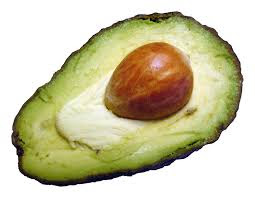
Today's KNOWLEDGE Share:Avocadro Fibers

Today's KNOWLEDGE Share

Researchers Use Fibers from Avocado Trees as Reinforcing Material in Packaging

A study published by the University of Cordoba, in which the University of Girona also participated, has found a way to manufacture a prototype of a material for food packaging that is more ecofriendly.

The study manages to produce a prototype of a more durable material that increases the biodegradability of food packaging. It partially replaces its bioplastic with cellulose fibers extracted from the branches and leaves of the avocado tree.


Replacing a Portion of the Bioplastic Used in Food Packaging:

It exploits waste devoid of any added value until now: residues from the pruning of the avocado tree; Spain is the main producer of avocados at the European level, with production being concentrated in the Axarquia region of Málaga.


Although plastic allows food to be packaged safely and hygienically, its extensive use constitutes a significant environmental challenge due to its limited recyclability and short shelf life. Thus, industry and the scientific community have been looking for more sustainable alternatives for decades.


Through a semi-chemical and mechanical process through which the leaves and branches are mixed with soda, refined and defibrated, the study has managed to isolate the fibers from the pruning's woody residue and use them as reinforcing material, replacing a portion of the bioplastic used in food packaging.


According to researcher Ramón Morcillo, lead author of the work and a researcher with the 'Bioproducts and Process Engineering' group at the University of Cordoba, the study has managed to integrate the cellulose resulting from avocado residues using a compatibilizing agent, and at least partially reduce the use of biopolyethylene, a type of bioplastic widely used in the packaging industry and which, despite being of plant origin, is not biodegradable.


Achieving Up to 49% Increase in Tensile Strength:

In addition to its sustainability, this new compound has proven to be more durable, due in part to the strong mechanical properties of natural fibers from avocado pruning residues. The work analyzed how the material performs at different fiber ratios, achieving up to a 49% increase in tensile strength.

The next step within the group's line of research, explained the study's author, will be to evaluate other properties of interest to the industry; for example, the antimicrobial or antioxidant capacities that the new compound may feature, thus opening the door to new forms of conservation that are more sustainable, specialized, and adapted to different types of products.


Challenges in the Face of Regulatory Change

Just days ago, the European Parliament approved a series of measures to reduce and recycle packaging. Some types of single-use plastic packaging will be banned as of 2030, which poses a real challenge for the industry.


source: University of Córdoba/omnexus.specialchem.com

Today's KNOWLEDGE Share : More sustainable epoxy thanks to phosphorus

Today's KNOWLEDGE Share More sustainable epoxy thanks to phosphorus Epoxy resin is a clear, robust polymer that is widely used – especia...