Sunday, May 19, 2024

Today's KNOWLEDGE Share: ALPLA Launches Recyclable PET Wine Bottle

Today's KNOWLEDGE Share

ALPLA Launches Recyclable PET Wine Bottle

ALPLA launches a recyclable wine bottle made of PET. The bottle weighs approximately only an eighth of a glass bottle, reduces the carbon footprint by up to 50% and allows for price savings of up to 30%. It can be made entirely of recycled PET (rPET).

The packaging solution is available now in 0.75-liter and 1-liter bottle sizes and is already being used in Austria by the pilot customer and development partner Wegenstein.


Weighs 8X Less than the Glass Alternative:

The global packaging specialist ALPLA has added a PET wine bottle to its product range.The 0.75-liter bottle weighs just 50 grams – around eight times less than the alternative made of glass. The first white wine bottles belonging to the Wegenstein winery recently went into circulation in the Austrian wine market, making them part of the Europe-wide bottle-to-bottle loop.


The sustainable solution reduces carbon consumption by 38% compared to the glass alternative – and that's even without rPET content. The PET bottle is now also available in a 1-litre version. ALPLA plans to already be manufacturing several million units a year from 2025 and is planning solutions made entirely of rPET. The plastic packaging meets all the quality requirements, is available as a transparent or a green bottle and is suitable for all types of wine.

“PET is light, unbreakable and recyclable, and can be molded with little energy needed, making plastic the ideal packaging solution. With it, winemakers can improve their environmental footprint and lower their costs.


Sustainable and Inexpensive

The lower material consumption and energy-saving manufacturing reduce carbon consumption.The use of rPET further increases the reduction. Even with 30% rPET, 42% is saved, while the ecological footprint of the solution made of 100% rPET is even halved at minus 50%.


The high-quality recycled material is provided by ALPLA from its own ALPLArecycling recycling plants. The low weight of the packaging also has positive effects on shipment. And there is a cost advantage too. ALPLA’s PET wine bottles are up to 30% less expensive than glass bottles, depending on the requirements.


Compatible with Conventional Metal Screw Caps:

The sustainable packaging solution works with conventional metal screw caps and is compatible with winemakers’ bottling lines, meaning it is flexible. Wegenstein fills the PET bottles on the same bottling lines as its glass bottles.

“The bottle has been perfectly tailored to the bottling and shipment processes. The close cooperation with the Wegenstein team significantly sped up the market launch.


“The PET bottle lives up to what it promises. It is visually appealing, ensures our quality and is practical. We are making an innovative offer to consumers who care about our environment and our climate,” explains Herbert Toifl, managing director of the Wegenstein winery.


Source: ALPLA/omnexus.specialchem.com

Saturday, May 18, 2024

Innovia Films Launches Hot-melt PSA Film for Freezer Label Applications:

Innovia Films launches a uniquely engineered two-sided coated cavitated film for pressure sensitive labeling (PSL) applications which is marketed as Rayoface™ AQBHA. The polypropylene (PP) film offers outstanding printability with a backside coating specifically designed for hot melt pressure-sensitive label coating.


HMA with Anti-migration Properties:

The film is 58 microns thick, has a printable top-coating, and an adhesive receptive coated surface on the reverse side that provides anti-curl and migration properties with hot melt adhesives.


Rayoface™ AQBHA offers good moisture resistance and cold temperature performance, making this the perfect material for fridge and freezer applications.


“As more SKU’s move to polypropylene containers, having a label made from the same material supports the design for recycling criteria for filmic facestocks”, explains Lucija Kralj, business unit director labels EMEA.


Rayoface™ AQBHA has undertaken extensive hot melt barrier testing and the film remains flat through the whole duration of the test, delivering the perfect solution to mitigate any facestock material issues with hot melt coating for PSL.


Source: Innovia/adhesives.specialchem.com

Friday, May 17, 2024

Today's KNOWLEDGE Share:Avocadro Fibers

Today's KNOWLEDGE Share

Researchers Use Fibers from Avocado Trees as Reinforcing Material in Packaging

A study published by the University of Cordoba, in which the University of Girona also participated, has found a way to manufacture a prototype of a material for food packaging that is more ecofriendly.

The study manages to produce a prototype of a more durable material that increases the biodegradability of food packaging. It partially replaces its bioplastic with cellulose fibers extracted from the branches and leaves of the avocado tree.


Replacing a Portion of the Bioplastic Used in Food Packaging:

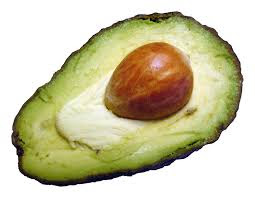
It exploits waste devoid of any added value until now: residues from the pruning of the avocado tree; Spain is the main producer of avocados at the European level, with production being concentrated in the Axarquia region of Málaga.


Although plastic allows food to be packaged safely and hygienically, its extensive use constitutes a significant environmental challenge due to its limited recyclability and short shelf life. Thus, industry and the scientific community have been looking for more sustainable alternatives for decades.


Through a semi-chemical and mechanical process through which the leaves and branches are mixed with soda, refined and defibrated, the study has managed to isolate the fibers from the pruning's woody residue and use them as reinforcing material, replacing a portion of the bioplastic used in food packaging.


According to researcher Ramón Morcillo, lead author of the work and a researcher with the 'Bioproducts and Process Engineering' group at the University of Cordoba, the study has managed to integrate the cellulose resulting from avocado residues using a compatibilizing agent, and at least partially reduce the use of biopolyethylene, a type of bioplastic widely used in the packaging industry and which, despite being of plant origin, is not biodegradable.


Achieving Up to 49% Increase in Tensile Strength:

In addition to its sustainability, this new compound has proven to be more durable, due in part to the strong mechanical properties of natural fibers from avocado pruning residues. The work analyzed how the material performs at different fiber ratios, achieving up to a 49% increase in tensile strength.

The next step within the group's line of research, explained the study's author, will be to evaluate other properties of interest to the industry; for example, the antimicrobial or antioxidant capacities that the new compound may feature, thus opening the door to new forms of conservation that are more sustainable, specialized, and adapted to different types of products.


Challenges in the Face of Regulatory Change

Just days ago, the European Parliament approved a series of measures to reduce and recycle packaging. Some types of single-use plastic packaging will be banned as of 2030, which poses a real challenge for the industry.


source: University of Córdoba/omnexus.specialchem.com

Wednesday, May 15, 2024

Today's KNOWLEDGE Share :Microrobots in bacteria pollution

Today's KNOWLEDGE Share

Microrobotic Swarms Tackle Microplastics and Bacteria Pollution

In a recent study published in the journal ACS Nano, researchers reported how swarms of microscale robots, or microrobots, collected microorganisms and plastic fragments from water. The bots were then cleaned and put to use again.


Cleaning up outdated food packaging, abandoned kid's toys, and other poorly managed plastic garbage from rivers and oceans becomes harder when it degrades into microplastics. These microscopic pieces of plastic also draw bacteria, even pathogenic ones.


The minute size of microplastics, measuring 5 millimeters or less, introduces an additional layer to the plastic pollution issue. Animals can ingest these particles, posing potential harm and leading to their incorporation into the food chain, ultimately impacting humans. While the complete health implications for humans remain unclear, it is important to note that microplastics themselves are not the sole focus of concern.

These fragments draw pathogenic and other bacteria that can be consumed. Martin Pumera and colleagues used microscale robotic systems, which are made up of several tiny parts that cooperate to simultaneously remove plastic and bacteria from water. These systems mirror natural swarms, like schools of fish.

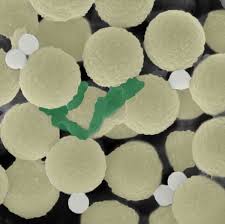
The researchers used magnetic microparticles, which can only move in the presence of a magnetic field, to connect positively charged polymer strands to create the robots. Microbes and plastics are drawn to the polymer strands that emanate from the beads' surface.


The completed items, or individual robots, had a diameter of 2.8 mm. The robots clustered together when they were subjected to a rotating magnetic field. The robots that self-organized into flat clusters could be changed in quantity, allowing the researchers to modify the swarm's movement and pace.

Pseudomonas aeruginosa, a bacteria that causes pneumonia and other diseases, was added to a water tank along with fluorescent polystyrene beads that were 1 µm wide. This allowed the scientists to reproduce microplastics and bacteria seen in the environment in laboratory settings.


The microrobots were then incorporated into the tank and subjected to a rotating magnetic field for half an hour, with 10-second intervals of on-and-off exposure. Approximately 80 % of the germs were collected by a robot concentration of 7.5 mg per mL, the densest of the four concentrations examined.

As the loose plastic beads were pulled to the microrobots, their quantity rapidly decreased at this constant concentration. The scientists then employed a permanent magnet to gather the robots and ultrasonic therapy to separate the germs attached to them.

They finished the cleaning by subjecting the eliminated microorganisms to UV light. The decontaminated robots continued to collect plastic and bacteria when they were utilized again, albeit in reduced quantities.


source:azorobotics.com


SABIC Introduces High-performance Injection Molding PBT for Medical Applications

SABIC announced the availability of VALOX™ HX325HP resin. It is a new high-performance, medical-grade, injection molding polybutylene terephthalate (PBT) resin.


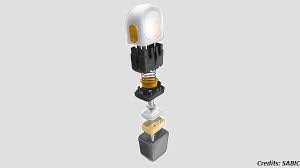
This resin is developed especially for high-precision parts, such as components of insulin delivery pens, insulin pumps, auto-injectors and continuous glucose monitors. It combines outstanding processability with high chemical resistance and validated biocompatibility. SABIC featured VALOX™ HX325HP resin at NPE2024.


Complies to International Biocompatibility Standards:

The new medical-grade PBT resin has passed stringent injection molding trials. It demonstrated high flow even in complex designs. It has excellent mold release properties with lower shrinkage variation compared with competitive engineering plastics.


In service, VALOX™ HX325HP resin delivers high resistance to a wide range of chemicals for the mitigation of environmental stress cracking (ESC). It offers compatibility with ethylene oxide (EtO), gamma irradiation and steam sterilization.


The new material has been successfully tested to international biocompatibility standards. Preliminary assessments according to ISO 10993 or USP Class VI are available upon request. In addition, the grade is subject to SABIC’s Healthcare Policy. It provides reliable formulation lock and change control management in line with FDA and EU guidelines for medical-grade plastics.


Formaldehyde-free Alternative to POM Materials

“Global diabetes cases are expected to soar from 529 million to 1.3 billion by 2050, leading manufacturers in the medical and pharmaceutical markets to invest in easy-to-use, consistent and accurate devices that put diabetes treatment in patients’ hands,” Roble Amanda, director, Advanced Consumer Solutions, SABIC.


“This trend requires materials capable of providing high levels of safety, reliability and durability without compromising productivity or precision in high-volume applications. We are pleased to introduce our new VALOX™ HX325HP grade as a thermoplastic polyester solution that is engineered to exceed the high expectations and strict specifications of manufacturers in these demanding industry segments.”


VALOX™ HX325HP resin also serves as a formaldehyde-free alternative to polyoxymethylene (POM) materials.The resin is supplied as an unreinforced, neat material, as well as in a limited range of standard colors.


Source: SABIC/omnexus.specialchem.com

Tuesday, May 14, 2024

Shindo releases innovative one-part and low viscosity matrix resins for composites

Shimteq™ RSN ACS01 is a very low viscosity resin that exhibits 50 mPa-s at 25℃ and can be stored at room temperature. As a one-part curable type, it is a thermosetting resin that undergoes a curing reaction when heated as it is.


Commercially available two-part thermosetting resins such as epoxy resins and unsaturated polyesters are normally used by adding hardening agents and other additives to the main resin before mixing. Shimteq™ RSN ACS01, however, is a one-part curable type, eliminating the need for mixing process and allowing storage at room temperature, contributing to simplified material storage management in the manufacturing process and stable quality of cured products.


In addition, the use of low molecular weight liquid monomers and oligomers allows for low viscosity for use in RTM and infusion moulding methods. Even when composites with high fibre volume content, which are difficult to impregnate with resin, can be easily impregnated in both the in-plane and out-of-plane directions of the reinforcing fibres.


The cured Shimteq™ RSN ACS01 composite properties showed high toughness while maintaining an elastic modulus equivalent to that of epoxy resins. The high toughness of Shimteq™ RSN ACS01 is that the base resin, which has a unique molecular design, allows the main chain to lengthen through polymerisation without cross-linking during curing. As described above, the new resin has both low viscosity and high toughness at a high level, which was difficult to achieve with conventional thermosetting resins such as unsaturated polyester resin, vinylester resin and epoxy resin. These characteristics expand the possibilities of application to composite moulding processes in environments where material temperature control during moulding is difficult, and to applications requiring impact resistance, making it possible to provide new solutions.


source:Shindo/jeccomposites.com

Today's KNOWLEDGE Share : Frozen Layer Thickness

Today's KNOWLEDGE Share

I recently heard of a customer observing huge differences in pressure to fill from two PP batches with checked identical viscosity data from capillary tests.


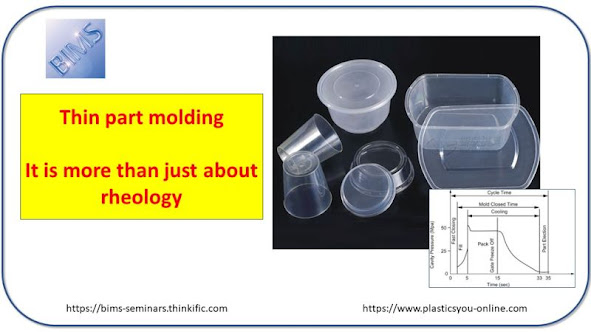
When molding thin parts, the pressure drop becomes overwhelmingly dominated by the actual "frozen skin" thickness that develops rapidly during filling.

With a thickness in the 100's of microns range the effective available thickness for flow will dramatically decrease in the case of thin parts.

The pressure drop in a plate scales essentially with one over the cube of the thickness, so a tiny difference in the frozen layer makes a huge difference in pressure to fill !


In PP we see a very strong effect of nucleation, both induced by additives/pigments or due to flow ( Flow Induced nucleation). The tremendous amount of shear in the outer layers of the flow in Injection Molding will lead to a frozen layer thickness that varies a lot with molecular architecture (Mw in particular).


This could be a major issue in recycled PP where "same viscosity" batches may actually have variable amounts of long chain fraction, key for nucleation and therefore crystallization kinetics.


source:Vito leo

Michelin ResiCare launches two new alternatives to phenolic resins

Michelin ResiCare, a brand of the #MichelinGroup , announces the commercial launch of #Resi4 carbon/carbon and Resi4 ablation, two innovati...