Friday, May 17, 2024

Today's KNOWLEDGE Share:Avocadro Fibers

Today's KNOWLEDGE Share

Researchers Use Fibers from Avocado Trees as Reinforcing Material in Packaging

A study published by the University of Cordoba, in which the University of Girona also participated, has found a way to manufacture a prototype of a material for food packaging that is more ecofriendly.

The study manages to produce a prototype of a more durable material that increases the biodegradability of food packaging. It partially replaces its bioplastic with cellulose fibers extracted from the branches and leaves of the avocado tree.
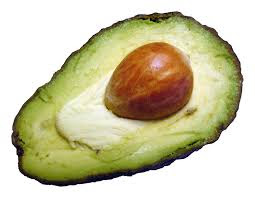


Replacing a Portion of the Bioplastic Used in Food Packaging:

It exploits waste devoid of any added value until now: residues from the pruning of the avocado tree; Spain is the main producer of avocados at the European level, with production being concentrated in the Axarquia region of Málaga.


Although plastic allows food to be packaged safely and hygienically, its extensive use constitutes a significant environmental challenge due to its limited recyclability and short shelf life. Thus, industry and the scientific community have been looking for more sustainable alternatives for decades.


Through a semi-chemical and mechanical process through which the leaves and branches are mixed with soda, refined and defibrated, the study has managed to isolate the fibers from the pruning's woody residue and use them as reinforcing material, replacing a portion of the bioplastic used in food packaging.


According to researcher Ramón Morcillo, lead author of the work and a researcher with the 'Bioproducts and Process Engineering' group at the University of Cordoba, the study has managed to integrate the cellulose resulting from avocado residues using a compatibilizing agent, and at least partially reduce the use of biopolyethylene, a type of bioplastic widely used in the packaging industry and which, despite being of plant origin, is not biodegradable.


Achieving Up to 49% Increase in Tensile Strength:

In addition to its sustainability, this new compound has proven to be more durable, due in part to the strong mechanical properties of natural fibers from avocado pruning residues. The work analyzed how the material performs at different fiber ratios, achieving up to a 49% increase in tensile strength.

The next step within the group's line of research, explained the study's author, will be to evaluate other properties of interest to the industry; for example, the antimicrobial or antioxidant capacities that the new compound may feature, thus opening the door to new forms of conservation that are more sustainable, specialized, and adapted to different types of products.


Challenges in the Face of Regulatory Change

Just days ago, the European Parliament approved a series of measures to reduce and recycle packaging. Some types of single-use plastic packaging will be banned as of 2030, which poses a real challenge for the industry.


source: University of Córdoba/omnexus.specialchem.com

Wednesday, May 15, 2024

Today's KNOWLEDGE Share :Microrobots in bacteria pollution

Today's KNOWLEDGE Share

Microrobotic Swarms Tackle Microplastics and Bacteria Pollution

In a recent study published in the journal ACS Nano, researchers reported how swarms of microscale robots, or microrobots, collected microorganisms and plastic fragments from water. The bots were then cleaned and put to use again.


Cleaning up outdated food packaging, abandoned kid's toys, and other poorly managed plastic garbage from rivers and oceans becomes harder when it degrades into microplastics. These microscopic pieces of plastic also draw bacteria, even pathogenic ones.


The minute size of microplastics, measuring 5 millimeters or less, introduces an additional layer to the plastic pollution issue. Animals can ingest these particles, posing potential harm and leading to their incorporation into the food chain, ultimately impacting humans. While the complete health implications for humans remain unclear, it is important to note that microplastics themselves are not the sole focus of concern.

These fragments draw pathogenic and other bacteria that can be consumed. Martin Pumera and colleagues used microscale robotic systems, which are made up of several tiny parts that cooperate to simultaneously remove plastic and bacteria from water. These systems mirror natural swarms, like schools of fish.

The researchers used magnetic microparticles, which can only move in the presence of a magnetic field, to connect positively charged polymer strands to create the robots. Microbes and plastics are drawn to the polymer strands that emanate from the beads' surface.


The completed items, or individual robots, had a diameter of 2.8 mm. The robots clustered together when they were subjected to a rotating magnetic field. The robots that self-organized into flat clusters could be changed in quantity, allowing the researchers to modify the swarm's movement and pace.

Pseudomonas aeruginosa, a bacteria that causes pneumonia and other diseases, was added to a water tank along with fluorescent polystyrene beads that were 1 µm wide. This allowed the scientists to reproduce microplastics and bacteria seen in the environment in laboratory settings.


The microrobots were then incorporated into the tank and subjected to a rotating magnetic field for half an hour, with 10-second intervals of on-and-off exposure. Approximately 80 % of the germs were collected by a robot concentration of 7.5 mg per mL, the densest of the four concentrations examined.

As the loose plastic beads were pulled to the microrobots, their quantity rapidly decreased at this constant concentration. The scientists then employed a permanent magnet to gather the robots and ultrasonic therapy to separate the germs attached to them.

They finished the cleaning by subjecting the eliminated microorganisms to UV light. The decontaminated robots continued to collect plastic and bacteria when they were utilized again, albeit in reduced quantities.


source:azorobotics.com


SABIC Introduces High-performance Injection Molding PBT for Medical Applications

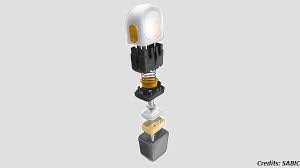
SABIC announced the availability of VALOX™ HX325HP resin. It is a new high-performance, medical-grade, injection molding polybutylene terephthalate (PBT) resin.


This resin is developed especially for high-precision parts, such as components of insulin delivery pens, insulin pumps, auto-injectors and continuous glucose monitors. It combines outstanding processability with high chemical resistance and validated biocompatibility. SABIC featured VALOX™ HX325HP resin at NPE2024.


Complies to International Biocompatibility Standards:

The new medical-grade PBT resin has passed stringent injection molding trials. It demonstrated high flow even in complex designs. It has excellent mold release properties with lower shrinkage variation compared with competitive engineering plastics.


In service, VALOX™ HX325HP resin delivers high resistance to a wide range of chemicals for the mitigation of environmental stress cracking (ESC). It offers compatibility with ethylene oxide (EtO), gamma irradiation and steam sterilization.


The new material has been successfully tested to international biocompatibility standards. Preliminary assessments according to ISO 10993 or USP Class VI are available upon request. In addition, the grade is subject to SABIC’s Healthcare Policy. It provides reliable formulation lock and change control management in line with FDA and EU guidelines for medical-grade plastics.


Formaldehyde-free Alternative to POM Materials

“Global diabetes cases are expected to soar from 529 million to 1.3 billion by 2050, leading manufacturers in the medical and pharmaceutical markets to invest in easy-to-use, consistent and accurate devices that put diabetes treatment in patients’ hands,” Roble Amanda, director, Advanced Consumer Solutions, SABIC.


“This trend requires materials capable of providing high levels of safety, reliability and durability without compromising productivity or precision in high-volume applications. We are pleased to introduce our new VALOX™ HX325HP grade as a thermoplastic polyester solution that is engineered to exceed the high expectations and strict specifications of manufacturers in these demanding industry segments.”


VALOX™ HX325HP resin also serves as a formaldehyde-free alternative to polyoxymethylene (POM) materials.The resin is supplied as an unreinforced, neat material, as well as in a limited range of standard colors.


Source: SABIC/omnexus.specialchem.com

Tuesday, May 14, 2024

Shindo releases innovative one-part and low viscosity matrix resins for composites

Shimteq™ RSN ACS01 is a very low viscosity resin that exhibits 50 mPa-s at 25℃ and can be stored at room temperature. As a one-part curable type, it is a thermosetting resin that undergoes a curing reaction when heated as it is.


Commercially available two-part thermosetting resins such as epoxy resins and unsaturated polyesters are normally used by adding hardening agents and other additives to the main resin before mixing. Shimteq™ RSN ACS01, however, is a one-part curable type, eliminating the need for mixing process and allowing storage at room temperature, contributing to simplified material storage management in the manufacturing process and stable quality of cured products.


In addition, the use of low molecular weight liquid monomers and oligomers allows for low viscosity for use in RTM and infusion moulding methods. Even when composites with high fibre volume content, which are difficult to impregnate with resin, can be easily impregnated in both the in-plane and out-of-plane directions of the reinforcing fibres.


The cured Shimteq™ RSN ACS01 composite properties showed high toughness while maintaining an elastic modulus equivalent to that of epoxy resins. The high toughness of Shimteq™ RSN ACS01 is that the base resin, which has a unique molecular design, allows the main chain to lengthen through polymerisation without cross-linking during curing. As described above, the new resin has both low viscosity and high toughness at a high level, which was difficult to achieve with conventional thermosetting resins such as unsaturated polyester resin, vinylester resin and epoxy resin. These characteristics expand the possibilities of application to composite moulding processes in environments where material temperature control during moulding is difficult, and to applications requiring impact resistance, making it possible to provide new solutions.


source:Shindo/jeccomposites.com

Today's KNOWLEDGE Share : Frozen Layer Thickness

Today's KNOWLEDGE Share

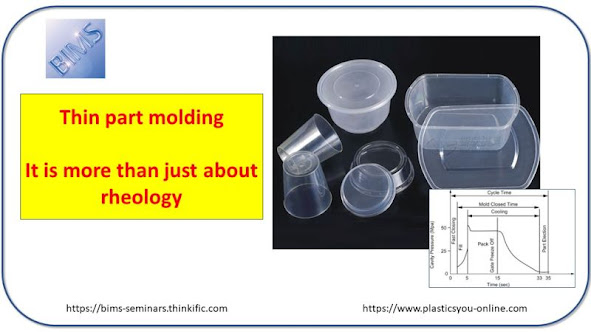
I recently heard of a customer observing huge differences in pressure to fill from two PP batches with checked identical viscosity data from capillary tests.


When molding thin parts, the pressure drop becomes overwhelmingly dominated by the actual "frozen skin" thickness that develops rapidly during filling.

With a thickness in the 100's of microns range the effective available thickness for flow will dramatically decrease in the case of thin parts.

The pressure drop in a plate scales essentially with one over the cube of the thickness, so a tiny difference in the frozen layer makes a huge difference in pressure to fill !


In PP we see a very strong effect of nucleation, both induced by additives/pigments or due to flow ( Flow Induced nucleation). The tremendous amount of shear in the outer layers of the flow in Injection Molding will lead to a frozen layer thickness that varies a lot with molecular architecture (Mw in particular).


This could be a major issue in recycled PP where "same viscosity" batches may actually have variable amounts of long chain fraction, key for nucleation and therefore crystallization kinetics.


source:Vito leo

Monday, May 13, 2024

Today's KNOWLEDGE Share: Chemovator Teams up with Heartland, a Detroit Startup for Hemp-based Additives

Today's KNOWLEDGE Share

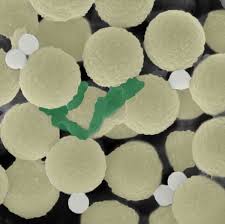
Chemovator, the business incubator and early-stage investor of BASF, has successfully finalized an investment in Heartland.The Detroit-based startup is a frontrunner in the production of natural fiber plastic additives, and the latest addition to Chemovator's external-facing Elevate program. Heartland helps manufacturers to reduce the product carbon footprint of plastic and rubber products.


Able to Reduce Carbon Footprint on an Industrial Scale


Supported by a team of scientists, engineers, and technologists, Heartland has developed hemp-based materials that can be used as additives within plastic compounds.

This breakthrough advancement in the world of sustainable material innovation improves properties with regard to flammability, bonding, dispersion, and bulk density, which are historically associated with processing natural fibers. As a result, natural fibers are now a viable market opportunity to reduce scope 3 carbon emissions in numerous industries.

By working with global brands and their suppliers, Heartland is able to reduce the carbon footprint of plastics on an industrial scale,” comments Jesse Henry, CEO of Heartland.

As an additive for industrial materials such as plastic, rubber, and concrete, Heartland’s Imperium Masterbatch, a product designed to be blended with polymers, enables the production of high-performance natural fiber products and packaging.

Aims to Support Early-stage Startups in Chemical Industry


With this funding, Heartland becomes Chemovator’s first portfolio company in North America and the latest addition to the Chemovator Elevate program. The program aims to support early-stage startups in the chemical industry through monetary investment, access to BASF and its experts, as well as support from a network of experienced entrepreneurs.

Heartland’s dedication to developing natural fiber additives aligns perfectly with our purpose of shaping the future of the chemical industry. This investment not only expands our portfolio to a new geography, but also underscores our commitment to innovation and sustainability. We look forward to supporting the Heartland team on its journey,” adds Gati Kalim, head of Portfolio Management at Chemovator.

The Investment builds on an existing partnership between Heartland and BASF’s North America Open Research Alliance (NORA).

We are not only continuing our collaboration with Heartland; we are strengthening this collaboration. Supported by the tireless efforts of our colleagues in the Performance Materials division, we work together to deliver sustainable solutions for our customers,” says Thomas Holcombe, head of NORA at BASF Corporation. “BASF's partnership with Heartland will enable us to advance on our commitment to reduce scope 3 emissions* and create chemistry for a sustainable future."

Source: Chemovator/
omnexus.specialchem.com

Friday, May 10, 2024

Today's KNOWLEDGE Share: Biodegradable TPU

Today's KNOWLEDGE Share:

Researchers Develop Biodegradable TPU Using Bacterial Spores

A new type of bioplastic could help reduce the plastic industry’s environmental footprint. Researchers from University of California San Diego have developed a biodegradable form of thermoplastic polyurethane (TPU).


TPU is a soft yet durable commercial plastic used in footwear, floor mats, cushions and memory foam. It is filled with bacterial spores that, when exposed to nutrients present in compost, germinate and break down the material at the end of its life cycle.


The work is detailed in a paper published on April 30 in Nature Communications.


Resistant to Harsh Environmental Conditions:

The biodegradable TPU was made with bacterial spores from a strain of Bacillus subtilis that has the ability to break down plastic polymer materials.


“It’s an inherent property of these bacteria,” said study co-senior author Jon Pokorski, a nanoengineering professor at the UC San Diego Jacobs School of Engineering and co-lead of the university’s Materials Research Science and Engineering Center (MRSEC). “We took a few strains and evaluated their ability to use TPUs as a sole carbon source, then picked the one that grew the best.”


The researchers used bacterial spores, a dormant form of bacteria, due to their resistance to harsh environmental conditions.Unlike fungal spores, which serve a reproductive role, bacterial spores have a protective protein shield that enables bacteria to survive while in a vegetative state.


Self-degrade up to 90% within 5 Months:

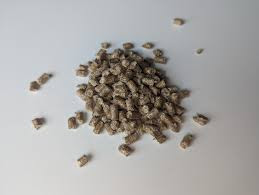
To make the biodegradable plastic, the researchers fed Bacillus subtilis spores and TPU pellets into a plastic extruder. The ingredients were mixed and melted at 135 degrees Celsius, then extruded as thin strips of plastic.


To assess the material’s biodegradability, the strips were placed in both microbially active and sterile compost environments. The compost setups were maintained at 37 degrees Celsius with a relative humidity ranging from 44 to 55%. Water and other nutrients in the compost triggered germination of the spores within the plastic strips, which reached 90% degradation within five months.


“What’s remarkable is that our material breaks down even without the presence of additional microbes,” said Pokorski. “Chances are, most of these plastics will likely not end up in microbially rich composting facilities. So this ability to self-degrade in a microbe-free environment makes our technology more versatile.”


Although the researchers still need to study what gets left behind after the material degrades, they note that any lingering bacterial spores are likely harmless. Bacillus subtilis is a strain used in probiotics and is generally regarded as safe to humans and animals—it can even be beneficial to plant health.


Engineered to Survive High Extrusion Temperatures:

In this study, the bacterial spores were evolutionary engineered to survive the high temperatures necessary for TPU production. The researchers used a technique called adaptive laboratory evolution to create a strain that is resilient to extrusion temperatures.


The process involves growing the spores, subjecting them to extreme temperatures for escalating periods of time, and allowing them to naturally mutate. The strains that survive this process are then isolated and put through the cycle again.


“We continually evolved the cells over and over again until we arrived at a strain that is optimized to tolerate the heat,” said study co-senior author Adam Feist, a bioengineering research scientist at the UC San Diego Jacobs School of Engineering. “It’s amazing how well this process of bacterial evolution and selection worked for this purpose.”


Spores Work as a Strengthening Filler:

The spores also serve as a strengthening filler, similar to how rebar reinforces concrete. The result is a TPU variant with enhanced mechanical properties, requiring more force to break and exhibiting greater stretchability.


“Both of these properties are greatly improved just by adding the spores,” said Pokorski. “This is great because the addition of spores pushes the mechanical properties beyond known limitations where there was previously a trade off between tensile strength and stretchability.”


Efforts on Scaling up the Process:

While the current study focused on producing smaller lab-scale quantities to understand feasibility, the researchers are working on optimizing the approach for use at an industrial scale. Ongoing efforts include scaling up production to kilogram quantities, evolving the bacteria to break down plastic materials faster, and exploring other types of plastics beyond TPU.


“There are many different kinds of commercial plastics that end up in the environment—TPU is just one of them,” said Feist. “One of our next steps is to broaden the scope of biodegradable materials we can make with this technology.”


Paper title: “Biocomposite Thermoplastic Polyurethanes Containing Evolved Bacterial Spores as Living Fillers to Facilitate Polymer Disintegration.” Co-authors include Han Sol Kim, Myung Hyun Noh, Debika Datta, Hyun Gyu Lim and Ehtan Smiggs, UC San Diego; Evan M. White, Michael V. Kandefer, Austin F. Wright and Jason J. Locklin, University of Georgia; and Md Arifur Rahman, BASF Corporation.


Source: UC San Diego/omnexus.specialchem.com

The BIOVALSA project: making bioplastics from agricultural waste and pruning residues

Every year, the Valencian agricultural sector generates around 800 000 tons of plant waste, such as rice straw and citrus pruning waste. The...