Tuesday, March 22, 2022

Polyurethane Composites: New Alternative to Polyester and Vinyl Ester, Trend

PUR composites are produced with rigid thermoset resins, as opposed to elastomeric or thermoplastic polyurethane (TPU). “Composites manufactured from these PU resins have superior tensile strength, impact resistance, and abrasion resistance compared with composites based on unsaturated polyester and vinyl ester resins,”


PUR composites are also said to be attractive for their processing advantages. Cure times are much faster than for polyester spray-up—about 20 min versus 2 to 4 hr in non-automotive applications, notes Bayer’s Snyder. PUR spray processes are also much less labor-intensive than polyester spray-up, which requires rolling out the glass to remove air and ensure complete wet-out.

In automotive parts, PUR SRIM takes 30 sec to 2 min vs. 2 to 10 min for polyester and vinyl ester SMC, says Terry Seagrave, Bayer’s market channel manager for NAFTA automotive business.


 Get more information here: https://lnkd.in/eNSCjwbj

Bioethanol – the environmentally-friendly fuel

Ethanol is versatile: The alcohol which we are familiar with in alcoholic beverages can also be used as an organic fuel. 

In Europe, bioethanol is mainly manufactured from starch-rich cereal crops (wheat and corn) as well as from concentrated sugar beet juice, i.e. from plants grown locally. Bioethanol (not to be confused with biodiesel) is either used as a pure fuel or as an admixture to normal petrol. Double usage: The starch-rich components of the plants are used to make ethanol while the protein-rich components are used to make valuable animal feed.


Download PDF Copy of this Study: https://lnkd.in/e4dcy8qa


Sunday, March 20, 2022

A fiberglass staircase manufactured for the Museum of The Future

 📢It's time for our segment Endless Possibilities!📢


A fiberglass staircase manufactured for the Museum of The Future!


The Museum of the Future, a new addition to Dubai’s skyline by architects Killa Design, engineers Buro Happold and contractor BAM International, opened on Feb. 22, 2022, and features a large percentage of composite materials within its interior construction!


For example, @Advanced Fiberglass Industries manufactured 230 double-curved interior panels, a unique double-helix DNA structure staircase that scales the full seven levels of the museum, and 228 glass fiber-reinforced polymer (GFRP) oval-shaped light structures for the museum’s car parking area.


Lightweight, quick-to-install, durable and highly formable fire-retardant composites provided the optimum material solution for the torus-shaped Museum’s double-curved interior panels, that were decorated with a raised calligraphy design featuring quotes from His Highness Sheikh Mohammed bin Rashid Al Maktoum, vice president and prime minister of the UAE and Ruler of Dubai.


In what is said to be a first of its kind for a large-scale composites project, adaptable mold technology from Danish company @Adapa, was introduced by AFI to ensure that the interior panels could be delivered in line with the project schedule. As well as enabling the rapid configuration of each panel without the machining of traditional molds, the adaptive mold technology significantly reduced waste generated in the molding process, contributing to the building’s low-carbon LEED platinum credentials.


With a challenging structural and fire safety specification defined, @Sicomin’s bio-based SGi128 intumescent Gelcoat and SR1122 fire-retardant laminating epoxy were chosen for the panels. In addition to high fire properties, SGi 128 is also formulated with more than 30% carbon from renewable sources, reducing the final carbon footprint significantly.


Source: CompositesWorld

#managingcomposites


Visit MY BLOG http://polymerguru.blogspot.com

Friday, March 18, 2022

Genomatica and Asahi Kasei Partner to Commercialize Renewably-sourced Nylon 6,6

Genomatica and Asahi Kasei announce a strategic partnership to commercialize renewably-sourced nylon 6,6 made from Genomatica’s bio-based HMD (hexamethylenediamine, also abbreviated as HMDA) building block. Asahi Kasei looks to this partnership to support its goal to be first-to-market with a more sustainable nylon 6,6 for the automotive and electronics industries, based on plant-based HMD, and to accelerate the achievement of its corporate sustainability objectives.


Genomatica’s Sustainable HMD

HMD is a key component of nylon 6,6 (also known as polyamide 6,6) and multiple other types of nylon, with a global market of 2 million tons per year. Conventional HMD is made starting from fossil fuels, such as crude oil or natural gas. Renewably sourced HMD made with Genomatica’s technology is derived from renewable feedstocks, such as plant-based sugars, and can improve the sustainability of the many materials made from it.

Genomatica develops complete, integrated process and manufacturing plant designs that use biotechnology, fermentation, and renewable feedstocks to make widely-used ingredients and materials with lower carbon footprints. Asahi Kasei expects Genomatica’s innovation to help the company reach its goal of becoming carbon neutral by 2050.


GENO™ HMD Process Technology

Building upon Genomatica’s recently announced breakthrough to successfully produce significant volumes of plant-based HMD, Asahi Kasei intends to apply the GENO™ HMD process technology to make more sustainable materials for use in products such as high-temperature automotive parts, electronics, or yarns to produce airbags. Asahi Kasei will have preferential access to early volumes of renewably sourced HMD and perform nylon application testing, leveraging Asahi Kasei’s deep experience developing successful nylon applications. Asahi Kasei anticipates licensing Genomatica’s GENO™ HMD process technology to commercialize bio-based nylon 6,6.

“Just as the sustainable energy transition is reinventing how we power our lives, we are at the start of a sustainable material's transition that will reinvent the products we use every day and where they come from,” said Christophe Schilling, Genomatica CEO. “Genomatica’s partnership with Asahi Kasei utilizing the GENO™ HMD process for nylon 6,6 and other specialty nylons marks another important step forward in this transition and leads the way toward more renewably-sourced, bio-based manufacturing plants replacing those utilizing fossil fuels.”

Source: Genomatica

Thursday, March 17, 2022

A pilot project in India set to assess hydrogen fuel cell vehicles viability in the country

 The Indian hydrogen economy has received a boost with the Transport Ministry launching a new pilot project to study and evaluate a fuel cell Toyota Mirai on Indian roads and assess its performance in the country’s climatic conditions.

This is according to The Print, with hydrogen fuel cell vehicles holding promise in the transportation sector due to their adaptability whilst also being highly regarded as a zero-emission fuel for vehicles.


Should this study and assessment be successful it could see an influx of hydrogen technology and vehicles on Indian roads creating further demand for the clean energy carrier and investment opportunities in India.

India has also been progressing its hydrogen economy in the past year and this adds to the existing potential the country has to become a key player in the global value chain.

Nitin Gadkari, Union Minister for Road Transport and Highways India, said, “Green Hydrogen can be generated from renewable energy and abundantly available biomass. Introduction and adoption of technology to tap into the green hydrogen’s potential will play a key role in securing a clean and affordable energy future for India.


Source:h2-view.com


Wednesday, March 16, 2022

The Composites Bandwagon!

 📢The Composites Bandwagon!📢


Today we would like to showcase one of our first customers and longest partnership! A global group that covers a wide spectrum of activities; from the development and assembly of electric powertrains, battery packs, and fast loading infrastructure programs, to the development of high-performance electric vehicles: @QEV Technologies!


Fun fact: Our relationship with them started when @Lluc Marti Fibla (our CEO) accepted the role of Composites Manager and Hispano Suiza Project Manager at QEV!


So, back to QEV! The company offers a unique and masterful engineering service in this sector and uses a model focused on the development of custom electric cars, carrying out all the aspects involved in the process. With many years of experience in motor racing, which includes its successful participation in the FIA Formula-E World Championship, QEV has the incredible ability to design, build and offer all the necessary technical support for new electric prototypes. So far, the company has developed 16 vehicles completely and homologated 6!


Managing Composites is honored to work alongside QEV, giving them composite technical support for many different automotive projects!


#managingcomposites


Pressurized steam-based composites recycling for full fiber reclamation!

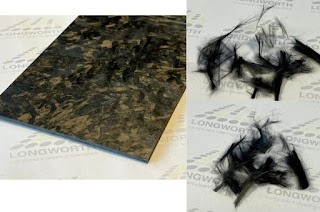
 📢Spreading the Word!📢 Pressurized steam-based composites recycling for full fiber reclamation!


"To date, the most common methods of recycling composite components and materials are pyrolysis (flame-based) or thermolysis (heat-based), solvolysis (chemical-based), hydrolysis (water-based), or some type of mechanical process (chopping or shredding whole parts for reuse, etc.). The end product for most of these processes is a fiber with reduced mechanical properties (the resin having been burned or chemically melted off), suitable for chopping up for potential reuse as a filler, in a nonwoven, mat, or perhaps in injection molding or spray-up applications."


"@Longworth is one company promising a new method for reclaiming both near-virgin-grade fibers and resins. Called DEECOM, the process uses high-temperature steam and pressure to separate and reclaim materials. After a decade of development and proving out the technology, the company is ready to launch DEECOM commercially for composites recycling this year."


"The first iteration of the DEECOM system is set up to process waste in batches. The part to be recycled is fed into the top of a large pressure vessel. Saturated steam is piped into DEECOM’s heating system, superheated to at least 400°C, and then enters the pressure vessel. While the superheated steam is still present, the vessel is pressurized by at least 0.5 bar above atmospheric pressure and goes through several cycles of compression and decompression — the frequency and intensity of the cycles depending on the properties of each material. In practice, each decompression separates more of the resin from the fiber."


"The resin, now a gas or liquid depending on the type of resin and its reaction to the process, drops down into a collection area, and the fibers are left as intact as they can be, Hill says: “It’s not bent, damaged or burnt, it’s literally just cleaned. It’s in the exact same state as when you put it in, the same length and everything.” The only other waste output is steam expelled via a chimney. This steam can be captured for heat reclamation if required, further reducing the process’ environmental footprint. The timing of the overall process depends on the number of compression/decompression cycles needed for a particular part."


Source: #managingcomposites


WORKPLACE FLOOR MARKINGS : Simple Lines. Clear Rules. Fewer Incidents.

  WORKPLACE FLOOR MARKINGS Simple Lines. Clear Rules. Fewer Incidents. Clear floor markings are a visual management tool that improves safet...