Saturday, September 29, 2018

Researchers Identify Latex Proteins to Enhance Natural Rubber Production

The Yokohama Rubber Co., Ltd., has announced that the results of joint research projects conducted since 2013 with two universities in Thailand, a major producer of natural rubber, were recently presented at The International Polymer Conference of Thailand 2018 (PCT-8). 
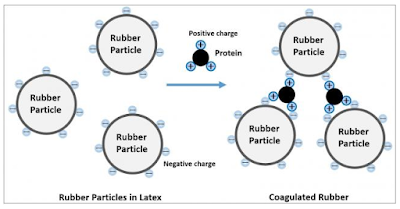
The joint research projects were conducted with researchers at Mahidol University and Prince of Songkla University. The research with Mahidol University succeeded in analyzing proteins contained in sap (latex), the base raw material for natural rubber, and identifying the proteins deeply involved in natural rubber biosynthesis. The research deepens the understanding of the biosynthesis of natural rubber, making it possible to accelerate research related to quality and production.


Evaluating Physical and Chemical Properties of Rubber


The research conducted at Mahidol University entailed the extraction and nano-level analysis of proteins from fresh latex and seedlings from Para rubber trees. The analysis covered more than 800 kinds of proteins contained in latex, some of which were found to be related to natural rubber biosynthesis and stress resistance. In addition, by comparing proteins from different varieties of Para rubber trees, the researchers were able to identify the proteins that promote biosynthesis and the proteins that inhibit biosynthesis. The proteins are expected to be used as biomarkers of biosynthesis.

The research at Prince of Songkla University was fundamental research on natural rubber that focused on analyzing the differences in latex related to different seasons and regions, different varieties and different processing methods. The research also evaluated the presence or absence of changes in the physical and chemical properties of rubber over long periods of time. To date, natural rubber has been a very stable material, from its composition to its physical properties, and it has been highly resistant to external factors. 


Enhancing Maintenance and Development of Natural Rubber Plantations:

Natural rubber is a raw material made from latex taken from Para rubber trees. It is one of the main raw materials used in automotive tires, accounting for about 30% of tires made. However, natural rubber’s production is concentrated in Southeast Asia, which exposes large-scale production to risks from abnormal weather and disease. Expecting tire demand to expand in the future, Yokohama Rubber regards the improvement of the quality of natural rubber and the promotion of technological development contributing to stable production as an important corporate duty. Accordingly, the Company plans to use the results of this research to promote the maintenance and development of natural rubber plantations.

The Yokohama Rubber Group has positioned “Promotion of CSR activities throughout the value chain” as one of the important issues of the Group’s corporate social responsibility (CSR) activities. Accordingly, in addition to the above joint research projects on natural rubber, the Group is engaged in activities that will contribute to sustaining farmlands. These activities have included biodiversity surveys on natural rubber plantations and promoting widespread use of an “agroforestry farming method” that contributes to more stable income for rubber tree growers by planting bamboo, fruit trees and other plants in natural rubber forests.


Source: Yokohama Rubber Co


Thursday, September 27, 2018

Indorama Ventures and Loop Industries launch a JV to manufacture and commercialize sustainable Polyester Resin

Indorama Ventures Public Company Limited, one of the world’s leading petrochemical companies, and Loop Industries, Inc., a leading technology innovator in sustainable plastic resin and polyester has launched a 50/50 joint venture company to manufacture and commercialize sustainable polyester resin to meet the growing global demand from beverage and consumer packaged goods companies.
The world-class manufacturing footprint of Indorama and proprietary science and technology of Loop will form a world leader in the ‘circular’ economy for 100% sustainable and recycled PET resin and polyester fiber. The JV will use an exclusive worldwide license for Loop’s technology to produce 100% sustainably produced PET resin and polyester fiber.

Aloke Lohia, Group CEO of Indorama Ventures, said, “At Indorama Ventures, we continue to pursue the right opportunities to fill gaps that are intrinsic to our sustainable and profitable business by deploying resources in order to support the circular economy. This joint venture with Loop Industries emphasizes our belief in recycling and is aimed at investing in new technologies that can steer further our aspiration of being a world-class chemical company making great products for society.”

Daniel Solomita, Founder and CEO of Loop Industries, commented, “We are excited to launch this partnership with Indorama Ventures, who provide a global leadership platform in petrochemical manufacturing and a shared commitment to sustainability. This joint venture combines each of our companies’ area of expertise so that we may both play a leading role in the global shift by business and consumers to the circular economy. This is a first strategic step in our global commercialization plan and mission to accelerate the world’s shift toward sustainable plastic and away from the traditional, take, make and dispose economy.”

Thursday, September 13, 2018

OCSiAl’s Graphene Nanotubes Replace Ammonium Salts & Carbon Black in PU System

Graphene nanotubes have demonstrated their ability to impart permanent and homogeneous anti-static properties to polyurethane (PU) materials, overcoming previous difficulties with nanotube dispersion in PU systems. The recently developed nanotube-based concentrate TUBALL MATRIX 202 has already built up a solid track record in applications such as industrial rollers and castors, PU shoes, printing rollers and cleaning pigs. 


TUBALL MATRIX 202 - Concentrate of High-quality TUBALL™ SW CNTs


OCSiAl’s TUBALL graphene nanotubes are rapidly gaining ground in customer-oriented applications with high-performance requirements. One remarkable example is PU discs in cleaning pigs for industrial pipelines. To avoid explosions and fires while also preventing static noise and improving diagnostic accuracy, manufacturers of cleaning pigs are replacing ammonium salts as an anti-static agent with TUBALL MATRIX 202. In addition to a permanent and stable resistivity level of 10^7–10^5 Ω·cm, the preliminary results have shown a 30% reduction in the rate of equipment failure. 

Applications of TUBALL MATRIX 202


  • Another specific application of TUBALL MATRIX 202 is anti-static shoes, where the PU elastomer material used in the outsole and midsole allows the shoes to be used in various static-sensitive facilities in the chemistry, oil and gas, electronics and mining industries. 
  • These nanotubes have also been well received by industrial roller manufacturers, as PU printing rollers can now be produced with a permanent volume resistivity level of 10^8–10^6 Ω·cm without dust formation at the facility and while preserving the essential mechanical performance characteristics such as abrasion resistance and hardness. 
  • TUBALL MATRIX 202 is also gaining ground in rollers and castors used in the mining industry, where anti-static properties are critical for safety reasons. 

According to data supplied by one of OCSiAl’s customers, graphene nanotubes preserve or even improve mechanical properties of the system, whereas previously the 6.5 wt.% of carbon black that had been used for anti-static purposes led to a nearly two-fold reduction in tear strength. 

The TUBALL MATRIX 202 concentrate carrier is a plasticizer based on fatty carboxylic acid ester derivatives. 

To obtain a resistivity level of 10^9–10^5 Ω·cm, the working dosage range of graphene nanotubes is 100 times less than the working dosage of ammonium salts, 500 times less than that of carbon black, and 1000 times less than that of conductive mica.

In comparison with ammonium salts, graphene nanotubes enable a wider range of resistivity levels that are totally independent of humidity and temperature conditions, and these nanotubes’ superiority over carbon black is rooted in their easy dispersion and the preserved mechanical properties of the system. 

Source: OCSiAl

Saturday, August 11, 2018

OCSiAl’s Graphene Nanotubes Enhance Polymers at Very Low Dosages

TUBALL graphene nanotubes, also known as single wall carbon nanotubes, are extremely thin single-layer rolled-up sheets of graphene more than 5 µm in length and with a diameter of 1.6 nm. They have a number of exceptional characteristics, such as superior electrical conductivity and strength, high temperature resistance and flexibility, and they translate these properties by enhancing the characteristics of polymers at very low working dosages.


With its unique facility for industrial-scale production of low-cost graphene nanotubes, OCSiAl has transformed these nanotubes from being an interesting laboratory material into a highly competitive industrial technology. Together with its partners, the company has achieved a number of exciting results in applying graphene nanotubes in key thermoplastic compounds, such as polyethylene, ABS plastics, PVC plastisols, polyamide and polycarbonate.

Among the products containing TUBALL nanotubes that have already been successfully launched on the market, there are semiconductive compounds destined for medium- and high-voltage power cables with a volume resistivity below 20 Ω·cm at 23°C and below 100 Ω·cm at 90°C. Graphene nanotubes are also being applied in ABS plastics produced by injection molding, resulting in a surface resistivity below 10^8 Ω/sq while maintaining high impact resistance.

Source: OCSiAl

Monday, August 6, 2018

Korea sets out to seize lead in hydrogen energy


After a decade of dragging its feet, the South Korean government has come up with a set of measures to nurture an ecosystem for hydrogen vehicles, seeking a transition from fossil fuels to zero emission energy.For more than a decade, the state drive for a hydrogen economy has been sidelined, due to policy inconsistencies through different administrations and a global preference for batteries over fuel cells.


Amid problems of energy intermittency being addressed over renewables, however, interest in the potential role of hydrogen in South Korea’s de-carbonization has grown. 

In June, the Ministry of Industry, Trade and Energy announced a 2.6 trillion won plan to supply 16,000 hydrogen-powered vehicles and build 310 hydrogen refilling stations across the country. Under the five-year plan, businesses are expected to get state support for the development of fuel cell stacks and fuel cell storage containers, as well as tax breaks for hydrogen vehicle drivers. 

The announcement is a follow-up to a pan-industrial alliance launched in April. The ministry signed a memorandum of understanding with local automakers, state-run utilities companies and related organizations to establish a special purpose company to build hydrogen fueling stations in major cities and on highways.
Park Jong-won, of the automobiles and aviation department of the Ministry of Industry, sees hydrogen and battery-powered vehicles (EVs) as complementary, not rivals.
Although there are only 170 hydrogen powered vehicles currently registered here, he expects that to reach 15,000 by 2022 –the same order of magnitude as the current number of EVs.For EVs, which now have a head-start on hydrogen, the ministry also expects the number registered in South Korea to grow, from 25,500 to 350,000 over the same period. 

“The technology of electric vehicles has become widely available now, but that of hydrogen cars are still in an infant stage and there should be more basic infrastructure like refilling stations (to buttress its growth),” he said. 
Both hydrogen and battery-powered vehicles are electrically driven and have no carbon emissions -- qualities sought after by most advanced economies to minimize the use of gas or diesel in order to curb pollutants. Hybrids and plug in hybrids are also considered eco-friendly, using electric power to reduce the emissions from their regular diesel or gasoline engines.
The difference between hydrogen cars and EVs is that the latter are charged with electricity externally, while hydrogen powered cars generate energy by converting the chemical energy of hydrogen by reacting hydrogen with oxygen in a fuel cell. Aside from the difference in where the electricity comes from, the charging time for hydrogen vehicles is shorter than that of EVs, while a single charge gives a longer driving distance.
There are only a handful of commercial hydrogen vehicles in the market that include the world’s first Hyundai Tucson ix35 FCEV along with the Toyota Mirai and the Honda Clarity. Hyundai has also recently unveiled the newest flagship Nexo this year.
“Currently, South Korea is one of the leading countries in fuel cell electric vehicle (FCEV) technology which is yet taking a small portion both in domestic and global market,” said Ryan Lee, principal analyst at IHS Markit. 
“However, the investment will accelerate popularizing FCEVs with more realistic numbers of charging infrastructure (only 11 FC charging stations in Korea currently) and sufficient subsidy support,” he said.

But the South Korean government’s focus appears to be limited to auto industry and is far from comprehensive, experts say
In a hydrogen economy, vehicles would play a crucial part. But more comprehensive work has to be carried out -- such as building nationwide networks of energy supply and storage system, which cost a lot of money and require a high level of technology.
Japan has also been active in hydrogen. 

By 2020, the year the country hosts the Tokyo Olympics, Japan plans to increase the number of hydrogen-powered vehicles by 40,000 units and 800,000 units by 2030. Under its 2014 road map toward a hydrogen economy, not only carmakers that have already succeeded in commercial production of fuel-cell electric vehicles, but also other traditional industrial players -- energy firms, steelmakers and shipbuilders -- have formed an alliance to switch to hydrogen energy.
Japan has currently 97 hydrogen filling stations across the country. The number is set to grow to 160 by 2020 and 900 by 2030. Under its grand plan, Japan will build massive electrolysis plants in Australia and the Middle East, and transport them back to Japan on vessels designed to store and carry hydrogen.
Germany has also set a long-term project in 2007 to take the lead in fuel cell technology, while participating in a joint project by EU-member countries aimed at testing efficiencies of hydrogen-powered vehicles and pushing for the commercialization of the green cars. By 2023, Germany plans to operate 650,000 fuel cell electric vehicles and 1.8 million by 2030.

South Korea had also set a master plan in 2005 aimed at increasing the portion of hydrogen-based energy to 15 percent.
Since the late 90s, the government has supported R&D projects initiated by the local carmaker Hyundai to develop hydrogen-powered cars. President Roh Moo-hyun was an ardent hydrogen supporter, according to sources, citing an exchange between him and Hyundai Motor Chairman Chung Mong-koo when the former was in power. Roh reportedly had told the corporate mogul that he would “fully support” the carmaker’s hydrogen project, after taking a ride on a fuel cell vehicle prototype back then.

The power transfer from the liberal to the conservative government led by former President Lee Myung-bak in 2007, however, brought a dark age for hydrogen projects, an industry insider who declined to be named. Instead, Lee promoted the nation’s strength in nuclear energy, curbing the state drive toward hydrogen. Lee himself played a crucial part in signing $40 billion nuclear deal with UAE.
Also, the political shift in US from the Bush administration to Obama was a setback for Korea’s hydrogen drive, said Cho Sang-min, head of new energy development team at Korea Energy Economics Institute.


“President Bush paid keen interest in hydrogen energy, but Obama didn’t. After he took office, the market interest in hydrogen also simmered down, deeply affecting policymakers in South Korea,” he said.
As the government turned a cold shoulder to hydrogen power, projects at small and medium-sized companies died, but some projects pushed by wealthy conglomerates survived. 
To take a lead in the uncharted market of hydrogen vehicles, Hyundai spent more than 20 years and succeeded in developing the world’s first fuel cell electric car, the Tucson ix35. Posco and Doosan both invested in fuel-cell production, but reports say that Posco's energy arm is considering shutting down its fuel-cell business. 
Along with inconsistent government policies, the absence of hydrogen-related law, safety concerns and lack of public awareness add to uncertainty over whether the hydrogen business can turn profitable, experts noted.


And there is another fundamental issue that needs addressing: Where will the hydrogen come from?
Even though local petrochemical plants produce a considerable amount of hydrogen, it is mostly used as a desulfurizing agent to generate high-value added petroleum products, and none of them has plans to supply them as a new energy source. Gas companies are reportedly reviewing the economic feasibility of investing in hydrogen production, but they are still reluctant.“It is difficult for Korean companies to invest in a sector that has no infrastructure to begin with. The government needs to ensure them that it is a new market to be created,” an industry insider declined to be named.
Despite the 2.6 trillion won plan, the government feels pressure to go on with hydrogen due to its complexity.
“Energy transition from fossil fuels to hydrogen is more complex, more than many would think,” Ahn Kook-young, chairman of the Korean Hydrogen and New Energy Society, stressing that the transition is equivalent of the introduction of the internal combustion engine in the 19th century’s.
“Building hydrogen infrastructure will take years of effort, money and political consideration,” he said. It cost around 3 billion won to build a hydrogen refilling station, compared to 200 million won for a gasoline station, he added.

Still, South Korea keeping its hydrogen dream has a point.

“The world of hydrogen is still unknown, but we are standing on the path toward the hydrogen economy,” said Shin Jae-haeng, the head of H2Korea, a think tank under the Ministry of Energy.“The government is determined to complete its goal on climate change to comply with the global consensus on reducing emission.”
The Moon Jae-in administration’s nuclear phase-out policy in October was widely expected to include some support for hydrogen power. But last year, hydrogen was not mentioned when President Moon vowed to slowly end nuclear power.For businesses, particularly conventional ones facing pressures to cut down CO2 emissions, a transition to a hydrogen economy could secure their survival.

“To keep its hegemony in the market, carmakers will continue to develop (hydrogen technology). So too, the government, (will push the drive) to keep jobs (in the traditional industries),” said Im Eun-young, an analyst at Samsung Securities and Investment.

Source:Korean Herald


Monday, July 30, 2018

New Light-sensitive Polymer Material with Reversibly Switching Topology

MIT researchers have designed a polymer material that can change its structure in response to light, converting from a rigid substance to a softer one that can heal itself when damaged.

Ability to Heal After Being Damaged:

The material consists of polymers attached to a light-sensitive molecule that can be used to alter the bonds formed within the material. Such materials could be used to coat objects such as cars or satellites, giving them the ability to heal after being damaged, though such applications are still far in the future, Johnson says.

“You can switch the material states back and forth, and in each of those states, the material acts as though it were a completely different material, even though it’s made of all the same components,” says Jeremiah Johnson, an associate professor of chemistry at MIT, a member of MIT’s Koch Institute for Integrative Cancer Research and the Program in Polymers and Soft Matter, and the leader of the research team.

The lead author of the paper, which appears in the July 18 issue of Nature, is MIT graduate student Yuwei Gu. Other authors are MIT graduate student Eric Alt, MIT assistant professor of chemistry Adam Willard, and Heng Wang and Xiaopeng Li of the University of South Florida.


Controlled Structure


Many of the properties of polymers, such as their stiffness and their ability to expand, are controlled by their topology — how the components of the material are arranged. Usually, once a material is formed, its topology cannot be changed reversibly. For example, a rubber ball remains elastic and cannot be made brittle without changing its chemical composition.

Different Topological States


In this paper, the researchers wanted to create a material that could reversibly switch between two different topological states, which has not been done before.

Johnson and his colleagues realized that a type of material they designed a few years ago, known as polymer metal-organic cages, or polyMOCs, was a promising candidate for this approach. PolyMOCs consist of metal-containing, cage-like structures joined together by flexible polymer linkers. The researchers created these materials by mixing polymers attached to groups called ligands, which can bind to a metal atom. 

Rigid Cage-like Clusters


Each metal atom — in this case, palladium — can form bonds with four ligand molecules, creating rigid cage-like clusters with varying ratios of palladium to ligand molecules. Those ratios determine the size of the cages.

In the new study, the researchers set out to design a material that could reversibly switch between two different-sized cages: one with 24 atoms of palladium and 48 ligands, and one with three palladium atoms and six ligand molecules.

To achieve that, they incorporated a light-sensitive molecule called DTE into the ligand. The size of the cages is determined by the angle of bonds that a nitrogen molecule on the ligand forms with palladium. When DTE is exposed to ultraviolet light, it forms a ring in the ligand, which increases the size of the angle at which nitrogen can bond to palladium. This makes the clusters break apart and form larger clusters.

When the researchers shine green light on the material, the ring is broken, the bond angle becomes smaller, and the smaller clusters re-form. The process takes about five hours to complete, and the researchers found they could perform the reversal up to seven times; with each reversal, a small percentage of the polymers fails to switch back, which eventually causes the material to fall apart.

When the material is in the small-cluster state, it becomes up to 10 times softer and more dynamic. “They can flow when heated up, which means you could cut them and upon mild heating that damage will heal,” Johnson says.

This approach overcomes the tradeoff that usually occurs with self-healing materials, which is that structurally they tend to be relatively weak. In this case, the material can switch between the softer, self-healing state and a more rigid state.

“Reversibly switching topology of polymer networks has never been reported before and represents a significant advancement in the field,” says Sergei Sheiko, a professor of chemistry at the University of North Carolina, who was not involved in the research. “Without changing network composition, photoswitchable ligands enable remotely activated transition between two topological states possessing distinct static and dynamic properties.”

Self-healing Materials:

In this paper, the researchers used the polymer polyethylene glycol (PEG) to make their material, but they say this approach could be used with any kind of polymer. Potential applications include self-healing materials, although for this approach to be widely used, palladium, a rare and expensive metal, would likely have to be replaced by a cheaper alternative.

“Anything made from plastic or rubber, if it could be healed when it was damaged, then it wouldn’t have to be thrown away. Maybe this approach would provide materials with longer life cycles,” Johnson says.

Another possible application for these materials is drug delivery. Johnson believes it could be possible to encapsulate drugs inside the larger cages, then expose them to green light to make them open up and release their contents. Applying green light could enable recapture of the drugs, providing a novel approach to reversible drug delivery.

The researchers are also working on creating materials that can reversibly switch from a solid state to a liquid state, and on using light to create patterns of soft and rigid sections within the same material.

The research was funded by the National Science Foundation.

Source: Massachusetts Institute of Technology (MIT)

Wednesday, July 25, 2018

BASF Further Develops Hydrolysis-resistant Polyesters for Automotive Industry

The demand of the automotive industry for highly effective sensors for the expansion of electric mobility and autonomous driving is increasing. So BASF has further developed its range of hydrolysis-resistant thermoplastic polyesters.

Expanded Range of Ultradur® HR

The expanded range of Ultradur® HR (HR= hydrolysis resistant) comprises Ultradur® B4330 G6 HR High Speed, a particularly flowable and laser markable grade with 30% glass-fiber reinforcement, Ultradur® B4330 G10 HR, a highly reinforced grade with 50% glass fibers as well as Ultradur® B4331 G6 HR, the next generation with optimized processing characteristics. Ultradur® B4331 G6 HR is available from now on as uncolored grade, in a black laser markable version, and in orange for components in electric cars.


Highly Resistant PBT Materials


With its Ultradur® HR grades, BASF offers highly resistant PBT materials (PBT= polybutylene terephthalate) which are especially suitable for use in challenging environments. They thus enable a long service life and an excellent operational reliability of automotive components. The HR grades also have a considerably increased resistance to alkaline media which trigger stress corrosion cracking.

This is also true of the new Ultradur® B4331 G6 HR grade with considerably improved melt stability and flowability. In tests, Ultradur® B4331 G6 HR does not display any increase in viscosity even with long residence times and at high temperatures - the best basis for stable and easy processing. The material can also be colored in orange (RAL 2003) in order to produce high-voltage plug-in connectors for electric cars. Thanks to the unusually high tracking resistance for PBT, the plug-in connectors can be designed smaller and still withstand the higher voltages in electric vehicles. Thus savings on costs and component weight are possible.

Laser-markable Grade

The Ultradur® 4330 G6 HR series which is already available with 30% glass-fiber reinforcement has been expanded to include the particularly flowable and laser-markable Ultradur® B4330 G6 HR High Speed bk15045. With this grade, thin-walled parts and components which show a high ratio of flow path to wall thickness can easily be produced.

The new Ultradur® B4330 G10 HR is filled with 50% glass fibers. It can therefore be processed to components which are simultaneously exposed to moisture and high temperatures (160°C, short term up to 180°C) and keep a high stiffness, e.g. steering modules in the charge air duct. In the temperature range from 140°C to 180°C, the material reaches almost the property level of polyphenylene sulfide (PPS), which is usually employed in this kind of applications.

Developed for Selected Automotive Applications

For selected automotive applications BASF has developed Ultradur® B4450 G5 HR. The PBT is reinforced with 25% glass fibers, RoHS-compliant and flame retardant. It can be colored in light colors and laser-printed. With its low fogging values according to the VDA 278 emission test, it is suitable for applications in car interiors and also for housings of control units.

The newly developed material combines hydrolysis resistance with flame retardancy, high tracking resistance and low smoke density. This property profile is also aimed at electric vehicles with their considerable safety requirements and much higher currents than in conventional drive trains.

Since the market launch, BASF has developed around a dozen HR-modified Ultradur® grades, with 15%, 30% and 50% glass-fiber reinforcement, particularly flowable, impact-modified, laser markable, laser transparent or flame-retardant. Typical applications can be found primarily in automotive electronics, e.g. housings of control units, connectors, sensors, but also charging plugs, housings of battery stacks or connectors in the high-voltage circuit of electric cars.

Source: BASF


The BIOVALSA project: making bioplastics from agricultural waste and pruning residues

Every year, the Valencian agricultural sector generates around 800 000 tons of plant waste, such as rice straw and citrus pruning waste. The...