Monday, July 18, 2011

Researchers Develop Nanocomposite-based Trachea Scaffold for Medical Applications

A UCL scientist and his team designed and built the synthetic windpipe 'scaffold' used in an operation in Sweden announced by the Karolinska University Hospital and Karolinska Institutet.
The windpipe (trachea) implanted in this patient was developed using nanocomposite materials which were developed and patented by Professor Alexander Seifalian (UCL Division of Surgery & Interventional Science), whose labs are based at the Royal Free Hospital.
Together with Professor Paolo Macchiarini at Karolinska, who also holds an Honorary appointment at UCL, Professor Seifalian designed and developed the trachea scaffold using a material known as a novel nanocomposite polymer.
Professor Seifalian has worked closely with UCL Business (UCLB), responsible for technology development and commercial transactions at UCL, to patent these materials and develop their use in medical devices. As well as being used for tissue scaffolds, the materials have other potential uses such as coronary stents and grafts.
A nanocomposite is a material containing some components that are less than 100 nanometres (nm) in size. To give a sense of scale, a human hair is about 60,000 nanometres in thickness. A polymer is a repeating chain of small, identical molecules (called monomers) which are linked together.
Polymers are already used in medical devices, but the properties of these novel polymers reduce the risk of rejection, rupture, or the need for repeat surgery. They have better elasticity, strength and versatility and are formulated to encourage cell growth.
A full size 'y-shaped' trachea scaffold was manufactured in Professor Seifalian's labs. This was accomplished using a CT (computerised tomography) scan of the patient as a guide, to create the exact shape and dimension needed. A mould was then made using glass.
When the polymer scaffold had been made, it was taken to Karolinska where the patient's stem cells were incorporated to it (or 'seeded') by Professor Paolo Macchiarini's team, and the full biological trachea was grown in a bioreactor - a device designed for the procedure by Harvard Bioscience which provides the correct environment for the tissue to grow. This process means the trachea very effectively simulates natural tissue and has the same properties as a 'real' trachea.
Professor Seifalian said: "Professor Macchiarini has previously performed successful transplants of tissue engineered tracheas, but on those occasions the tracheas used were taken from organ donors and then reseeded with the patient's own stem cells."
"What makes this procedure different is it's the first time that a wholly tissue engineered synthetic windpipe has been made and successfully transplanted, making it an important milestone for regenerative medicine. We expect there to be many more exciting applications for the novel polymers we have developed."

Thursday, July 14, 2011

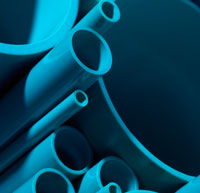
Victrex lntroduces Corrosion-resistant PEEK-based Pipes for Harsh & Demanding Environments

In response to growing market demand for superior performing pipes in harsh and demanding environments, Victrex Polymer Solutions, one of the leaders in high performance polyaryletherketones, has launched its VICTREX Pipes™ product family.

Developed to replace the corrosion resistant alloys (CRAs) used to make pipes and piping systems for extraction and transportation in the oil and gas industries, VICTREX Pipes offer an opportunity to replace CRAs in pipes and piping systems by lining pipes manufactured in other metals.

VICTREX Pipes represent the latest in a long line of material and technical innovation from Victrex. "The launch of VICTREX Pipes is the culmination of six years of intensive research, development, market assessment and customer liaison. VICTREX Pipes can also deliver performance solutions in a broad range of applications beyond the original lined pipes for oil and gas, from industrial to aerospace to electrical sheathing and conduit," said James Simmonite, Business Leader Pipes, Victrex Polymer Solutions. "Victrex has an unrivalled reputation for identifying challenges in key markets and delivering a solution. VICTREX Pipes are a demonstration of this skill and offer a broad range of properties, including chemical, corrosion, abrasion and permeation resistance at high temperatures, in a flexible lightweight format."
The new product line of extruded pipes and tubing made from VICTREX® PEEK™ polymer makes full use of the material's performance capabilities, including the ability to withstand extreme temperatures and corrosive conditions and reduce weight. VICTREX Pipes open up new application opportunities, with the capability to deliver greater long-term reliability in the demanding operating conditions found in the high temperature, pressures and corrosive conditions in the oil and gas sector. As well as addressing the needs of the oil and gas sector to search for new fields in more demanding environments, its weight reduction capabilities can facilitate fuel efficiency in the aerospace sector while also addressing the harsh corrosive, temperature and electrical demands of the industrial sectors.
VICTREX Pipes are currently available in a range of sizes, from 6mm (0.24") outer diameter (OD), up to 200mm (8") OD, with wall thicknesses depending on the OD, from 0.8mm (0.03") up to 5mm (0.2"). They are available either as straight lengths or, for smaller diameters, in coiled lengths of up to 3000m (10,000 feet). VICTREX PEEK polymer-based pipes can be joined using a range of connectors and adhesives, and also by using conventional welding equipment. VICTREX Pipes can also be laser marked by using suitable equipment.
"Mounting performance expectations and harsh environments are increasing the emphasis on material selection in application design," said Simmonite. "The properties of VICTREX Pipes provide the option to line metal pipes with VICTREX Pipes as an alternative to expensive CRAs, in challenging applications such as those found in the oil and gas industry, where it is not uncommon to find operating temperatures above 140°C (284°F), in the presence of hydrogen sulfide (H2S), methane, carbon dioxide, brine and crude oil. Drilling deeper to access crude oil reserves requires a material that will withstand the harshest conditions found in these environments."
"Tests have shown that pipes and tubes extruded from VICTREX PEEK polymer display chemical resistance to H2S at high temperature. It is also unaffected after 2,000 hours of exposure to steam at 200°C (392°F)," noted Simmonite. "The exceptional chemical resistance and very low permeability make them ideal for oil and gas applications, where steel pipes may suffer the severely corrosive effects of H2S and carbon dioxide gases, and where existing thermoplastic solutions are reaching the limit of their thermal endurance."
VICTREX Pipes, being made with VICTREX PEEK polymer, are also lightweight and inherently halogen-free, with low levels of smoke and toxic gas emissions, ensuring they not only satisfy the stringent safety, quality and performance regulations within the aerospace industry, but also offer a significant weight reduction potential, when replacing metals.
Additionally, offering electrical insulation, mechanical stability and fatigue strength, as well as chemical, corrosion and hydrolysis resistance at high temperatures, VICTREX Pipes offer potential solutions to the numerous performance requirements of industrial applications, from corrosive and high temperature conditions in chemical, geothermal and mining plant to insulation and protection demands in electrical and industrial sheathing.
Victrex has dedicated in-house pipes extrusion lines, solely for the production of pipes and tubing made from VICTREX PEEK polymer. Having a fully integrated supply chain, Victrex manufactures from raw materials through to finished product, enabling guaranteed product quality, supply, consistency and performance.
The launch of the VICTREX Pipes family is just the latest step on the company's continuous path of innovation and unique solutions based on the proven capability of its high performance VICTREX PAEK family of polymers.

NatureWorks to Commercialize Ingeo M700 Lactide Biopolymer for Industrial Applications by 2013

NatureWorks LLC has announced that as part of a major capital investment at its Blair, Nebraska, Ingeo™ lactide and biopolymer manufacturing facility, the company will be the world's first to offer in commercial quantities a high-purity, polymer-grade lactide rich in the stereoisomer meso-lactide. Identified as Ingeo M700 lactide, the new material can be used as an intermediate for copolymers, amorphous oligomers and polymers, grafted substrates, resin additives/modifiers, adhesives, coatings, elastomers, surfactants, thermosets, and solvents.
Until now, several niche-focused producers have attempted to address the functionality requested by the market with what are described chemically as racemic lactides. "Compared to these, the high-purity Ingeo M700 will be lower in cost, easier to process, and an overall better alternative to high-priced racemic lactide, as well as L and D-lactides, in a host of industrial applications," said Dr. Manuel Natal, Global Segment Leader for lactide derivatives at NatureWorks.
As compared to racemic lactide's melting point of nearly 130° C, and L and D lactide's 97° C, Ingeo M700's melting point is below 60° C. This makes for a more effective chemical intermediate on a number of different levels. For example, Ingeo M700 offers a more efficient way to deliver ester functionality and, because it is effectively an anhydrous form of lactic acid, processors will not have to deal with water when using Ingeo M700. Meso-lactide is up to two times more susceptible to ring-opening reactions than L, D, or racemic lactides, which can mean less catalyst usage, lower reaction temperatures, or both. It can be processed below 70° C, which under most circumstances eliminates the need to handle expensive solid particles and allows easier processing.
NatureWorks was the first company in the world to manufacture a biopolymer in commercial quantities. Today, Ingeo is one of the world's leading biopolymer brands and is used in rigid and flexible packaging, electronics, clothing, housewares, health and personal care, semi-durable products, and food service ware. In 2010, NatureWorks began offering high-performance L-lactide intermediates.
By early 2013, the company will offer thousands of tons of Ingeo M700 lactide. Prior to this availability, meso-lactide samples will be available in 2012 to advance market development.

Monday, July 11, 2011

Andromeda Selects Net Cages Made of Dyneema® Fiber for Maintaining Efficient Aquaculture

Fish farming plays a key role in providing a sustainable source of protein to the earth's ever-growing population. Increasing international demand for all types of sea food is driving the aquaculture industry to develop more economic and extensive operations. (Aquaculture encompasses not only fish farming but also farming for shrimps, oyster, seaweed and other species.) This places huge demands on equipment, manpower and materials as well as the environment.
Greek aquaculture company Andromeda aims to become the leader in its field in the Mediterranean. It is using nets and cages with Dyneema® ultra-high molecular weight polyethylene (UHMWPE) fiber to sustain healthy growth and above-average profitability. Greece is a key country in aquaculture in the Mediterranean and Andromeda is one of the country's top five aquaculture companies.
Andromeda started using netting made from Dyneema® more than five years ago (2005). Today it has over 80 nets with Dyneema® installed. This accounts for almost 25% of all nets Andromeda uses for sea bream farming. Andromeda is considering using nets with Dyneema® for sea bass as well.
"Net cages made with Dyneema® fiber are lighter and stronger than cages made in other, traditional fibers. They are also much easier to handle. As a result, they provide a safer working environment by reducing bodily strain and physical requirements. The lighter nets also require 40% less use of antifoulants than nylon nets", says Antonis Raftopoulos, Purchasing Manager at Andromeda. "This not only has a positive environmental impact but also produces significant cost savings."
Dyneema® fibers are highly impervious to wear and tear. They resist fish bites much better than other materials, so fewer fish escape, and their high resilience hampers predators like seals, turtles and bluefish from damaging and entering the cages. Dyneema® is also helping Andromeda cut maintenance costs. "We are confident that with Dyneema®, we can reduce diving inspections by 50%" says George Tzamalis, Production Supervisor at Andromeda. "Furthermore, nets made from Dyneema® only need cleaning every 12 months, while nylon nets have to be cleaned after 7 months. Netting with Dyneema® has a smaller diameter meaning up to 30% less surface area to catch dirt. When using a clean net from Dyneema® the fish grow faster and better."
Andromeda expects the benefits to last over time too. "We expect nets with Dyneema® to have a lifetime at least equaling that of nylon nets," comments Antonis Raftopoulos. "Our experience is that nylon nets show a steep decline in performance after some years. In contrast, nets with Dyneema® only lose strength gradually over time. They are worth the investment as they lead to overall savings of 10 to 15%."
"Dyneema® enables net manufacturers and fish farmers to harness a range of performance benefits that aid sustainable development," says Andre van Wageningen, Global Marketing Manager at DSM Dyneema. "Andromeda is the latest of many end users to have experienced the various benefits that nets with Dyneema® bring, and I am sure there will be many to come. DSM is committed to a sustainable future by driving innovation that generates value."

Wednesday, July 6, 2011

Applied Nanotech Gets Grant to Develop CNT Reinforced Improved Hydrogen Fuel Tanks for Vehicles

Applied Nanotech Holdings, Inc., has announced that it has been awarded a Phase I SBIR grant, in the amount of $149,426, from the US Department of Energy to develop ultra lightweight hydrogen fuel tanks using carbon nanotube reinforcement.
This grant was awarded for a 9-month program with an overall objective to significantly improve the mechanical properties of the carbon fiber/epoxy material used to construct the hydrogen fuel tanks using carbon nanotube reinforcement. The primary goal is to reduce the weight of the tanks by 20 to 30 percent. A weight reduction of this magnitude will not only significantly lower the hydrogen fuel tank costs but also increase the vehicle's fuel efficiency.
The International Association of Natural Gas Vehicles reported that sales of composite pressure vessels are expected to reach $250 million by 2013, and upwards of $560 million by the end of the decade; the adoption of nanotechnology enhanced resins in high pressure hydrogen storage vessels represents an immense opportunity for near term commercialization. Today, the price of carbon fiber is the main driver of the hydrogen pressure vessel's cost; by incorporating carbon nanotubes into the resin matrix, the resin itself can absorb much of the load currently absorbed by the carbon fiber reinforcement. Using carbon nanotube enhanced resins will undoubtedly decrease the carbon fiber required to construct a functioning hydrogen pressure vessel. The value of this decrease will not only be realized in lower material costs but also in lighter pressure vessels, enabling a more streamlined manufacturing and supply chain process and ultimately a more efficient vehicle.

Applied Nanotech has developed carbon nanotube reinforced epoxies, vinyl esters, and polyesters for carbon fiber and glass fiber reinforced composites. These composites can apply to a wide range of products including: sporting goods, aerospace, automotive, renewable energy, ballistics, and many other applications.
"I am very pleased to see that our nanocomposite technology, first commercialized for sporting goods badminton racquets and golf club shafts with Yonex Corporation, is starting to gain traction in other commercial applications with very large market potential," said Dr. Zvi Yaniv, CEO of Applied Nanotech, Inc.
"Nanocomposite materials are a very important part of our business. We are currently working with a variety of companies across several industries to tailor our composite materials to improve the underlying products of our potential customers," said Doug Baker, CEO of Applied Nanotech Holdings, Inc.

Monday, July 4, 2011

Japan Wool Utilizes SABIC's Flame-retardant PEI Fiber for Blending to Produce Protective Garments

SABIC Innovative Plastics has announced that its versatile, high-performance Ultem* polyetherimide (PEI) fiber has found an important new application in high-end work wear and protective clothing. Japan Wool Textile Company, a division of NIKKE Group, is now blending Ultem fiber with wool and other materials to produce yarn, fabrics and garments that offer a unique combination of comfort and protection, including permanent, non-halogenated flame retardance (FR) and excellent ultraviolet (UV) resistance. Unlike traditional aramid materials, Ultem fiber can be easily and cost-effectively colored in a wide range of shades using conventional polyester dyeing processes, enabling Japan Wool Textile Company to enhance the aesthetic appeal of its new line. SABIC Innovative Plastics continues to penetrate and grow new market segments and expand the range of applications for its globally proven Ultem resin technology to give customers innovative new options for product differentiation and exceptional performance.


"The work wear and protective clothing sector has outgrown traditional materials, and our Ultem fiber offers a significantly better option," said Kim Choate, Global Product Marketing Manager, SABIC Innovative Plastics. "This flexible, soft and colorable fiber provides superior comfort and aesthetics, plus sustainable FR technology and the highest level of protection and durability for workers in safety-focused industries such as oil and gas and chemicals. We foresee many other uses for this versatile fiber, which has already broken new ground in composite aerospace boards for aviation interiors, filtration media and other demanding applications."
"Following a rigorous development process, we launched a completely new flame-retardant material by using Ultem fiber," said Takanobu Matsumoto, General Manager, Japan Wool Textile Company. "Particularly in the areas of improved comfort and colorability, our new work wear products will provide major benefits for customers and address unmet market needs. This SABIC Innovative Plastics technology has also helped us to establish an overseas market for our work wear."
Japan Wool Textile currently offers shirts, trousers, jackets and coveralls in an Ultem fiber-rich blend, as well as yarn and woven fabrics.

Tough on Protection, Easy on the Worker:

Ultem fiber's unique combination of properties fills a longstanding need in the high-end work wear marketplace. Traditional work wear, particularly clothes made from meta-aramids, are stiff and uncomfortable. They also are difficult to dye, thus limiting the ability to produce custom-colored items that support a company's brand. In contrast, Ultem fiber is soft and flexible for improved wearability, and can be dyed in many different colors using existing infrastructure, helping to drive down system costs. It resists degradation from UV light, making the material a potential candidate for outdoor wear.
Ultem fiber is inherently and permanently flame retardant. It utilizes proprietary technology that avoids the addition of environmentally hazardous halogens and cannot wash out of the garment, as many FR agents in low-end fabrics can.
This material offers excellent heat resistance meeting the European Union (EU) EN 531/ISO 11612 and U.S. National Fire and Protection Association (NFPA) 2112 standards, and provides low smoke and toxicity performance.

Friday, July 1, 2011

NJIT Researchers Focus on Making Corn-based Epoxy for Promoting Green Plastics

NJIT Research Professor Mike Jaffe's recent book chapter about sugar-based chemicals is topping the American Chemical Society (ACS) book series' must-read list.
"Sugar-Based Chemicals for Environmentally Sustainable Applications" appeared in the most recent ACS Symposium Series and is racking up kudos. Co-authors were Xianhong Feng, a Doctoral Student and Research Professors A. J. East and W. Hammond, all at NJIT.
The popularity stems from the topic, an overview of isosorbide and its potential role creating polymers and small molecules. The chapter features new and better ways to replace the dreaded bisphenol A (BPA) in manufacturing processes. In 2009, Jaffe's team was awarded a patent for a chemical derived from sugar. The new material uses a corn byproduct, isosorbide, to create a derivative that can be used to replace bisphenol A (BPA) in epoxy resins. Such resins are used in a number of adhesives and coatings of consumer products, including those used in the lining of tin cans. The researchers recently received another patent to compliment the earlier one.
"The new patent will help create a less toxic epoxy resin," said Jaffe. Such resins are polymers widely used as adhesives, paints and coatings to protect food in cans. Jaffe has been developing sugar-based materials in conjunction with the Iowa Corn Promotion Board (ICPB) in an effort to promote and create new, commercially attractive, sustainable chemistries from wider uses of corn. This new sugar derivative can be obtained from corn. The two patents are part of a series filed by the ICPB and NJIT to develop applications and markets for sugar-based chemistry.
"Renewable materials made from corn are gaining ground for new industrial plastics markets," said Rod Williamson, Iowa Corn Director of Research and Business Development. "Making epoxy from corn can be a win-win for public health, plastic manufacturers and for farmers."
Sugar-based chemicals can be used as building blocks to produce new monomers, polymers and additives for the commercial plastics and cosmetics industry. These are materials generally recognized as safe sugar compounds with a unique stereochemistry providing a ubiquitous platform for making cost-effective chemicals and polymers.
The book chapter focuses on isosorbide and its isomers as sugar-derived dianhydrohexitols. The two can be either incorporated in the backbone of new polymers or converted to low molar mass additives for thermoplastics and thermosets or as specialty chemicals. As the cost of petroleum rises, the attractiveness of renewable feedstocks for producing value-added products increases. The emergence of sustainable sugar derived chemicals (especially isosorbide modified products) offers attractive prospects with high potential for the next generation chemical industry.
Much attention has recently focused on BPA, which has been known to have estrogenic properties since the 1930s. BPA is widely used in processes that result in the lining for tin cans and key ingredients in plastics ranging from baby bottles to nail polish. Unfortunately, the chemical bonds that link BPA in polymer structures are not completely stable and the polymer may slowly decay with time, releasing small amounts of it into materials with which it comes into contact, such as food or water. Recent studies have shown the widespread presence of tiny amounts of BPA in the environment. Even at minute levels BPA may still exert estrogen-like effects on living organisms.
The ACS Symposium Series contains high-quality, peer-reviewed books developed from the ACS technical divisions' symposia. Each chapter is carefully authored by an expert in the field, and the collection of chapters edited by an internationally recognized in the field. The series covers a broad range of topics including agricultural and food chemistry, cellulose and renewable materials, chemical education, organic chemistry, polymer chemistry, materials, and many others.

SABIC further divests its European Petrochemical (EP) business and its Engineering Thermoplastics (ETP) business in the Americas and Europe

The Saudi Basic Industries Corporation (SABIC) today announced the signing of two strategic transactions to divest its European Petrochemica...