Thursday, July 22, 2021

What are SMC's? How are they manufactured?
 ðŸ“¢Time to Get Technical...📢


What are SMC's? How are they manufactured?


Sheet molding compounds (SMC) are high-strength composite materials comprising primarily a thermosetting resin, filler(s), and fiber reinforcement (which is usually chopped). The thermosetting resin is typically based on unsaturated polyester, vinyl ester, phenolic, or a modified vinyl urethane. Typical fillers are calcium carbonate (reduced cost), clay (improved surface), alumina trihydrate (fire retardance), talc (improved temperature resistance), mica (improved weathering), and hollow glass microspheres (weight reduction, thermal insulation).


SMC is a flow molding material and can therefore be used for manufacturing relatively complex-shaped parts, although the level of complexity reduces as the degree of aligned reinforcement is increased.


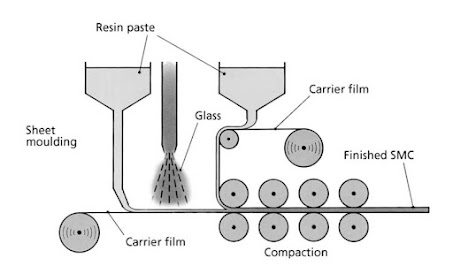
This schematic summarizes how they are manufactured. The manufacturing of SMC’s is a continuous process that starts when a paste is spread uniformly in a carrier film (made of polyethylene or nylon). Then, chopped fibers are randomly deposited onto the paste. The top film is introduced and the sandwich is rolled into a pre-determined thickness.


Bibliographical Reference:

An Introduction to Automotive Composites - Page 116


Wednesday, July 21, 2021

Half of the Fortune 500 companies have lost the market

52% of #Fortune500 companies have disappeared since the start of the 21st century. 9 out of 10 most valuable companies (public-traded by #marketcap) are #tech companies


#DigitalTransformation #AI #futureofwork #success #EmergingTech #SocialMedia #AutonomousVehicles #innovation


Source: Dr.Joerg Storm


Tuesday, July 20, 2021

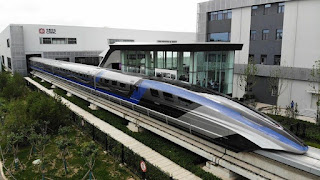
World's fastest ground vehicle!

 China's new high-speed maglev train rolls off the production line on Tuesday. It has a designed top speed of 600km per hour.


Source David Chang


The first-ever 3D-printed steel bridge opens in Amsterdam

The 12-meter long structure was developed by engineers at Imperial College London, in partnership with the Dutch Company MX3D. It was created by robotic arms using welding torches to deposit the structure of the bridge layer by layer. The construction took over four years, using about 4,500 kilograms of stainless steel. 


“A 3D-printed metal structure large and strong enough to handle pedestrian traffic has never been constructed before,” Imperial co-contributor Professor Leroy Gardner, who was involved in the research, said in a statement. “We have tested and simulated the structure and its components throughout the printing process and upon its completion.”


The bridge will be used by pedestrians to cross the capital’s Oudezijds Achterburgwal canal. Its performance will be regularly monitored by the researchers at Imperial College, who set up a network of sensors in different parts of the bridge. The data will also be made available to other researchers worldwide who also want to contribute to the study.

The researchers will insert the data into a “digital twin” of the bridge, a computerized version that will imitate the physical bridge in real-time as the sensor data comes in. The performance of the physical bridge will be tested against the twin and this will help answer questions about the long-term behavior of the 3D-printed steel and its use in future projects. 


“For over four years we have been working from the micrometer scale, studying the printed microstructure up to the meter scale, with load testing on the completed bridge,” co-contributor Craig Buchanan said in a statement. “This challenging work has been carried out in our testing laboratories at Imperial, and during the construction process on-site in Amsterdam.”

Mark Girolami at the University of Cambridge, who worked on the digital model of the bridge, told New Scientist that investigations into bridge failures often reveal deterioration that was missed. Now, with constant data coming from the bridge, they may be able to detect these failures before they do any damage, he added. 

3D printing has been consistently making headlines over the past few years, slowly becoming a reality for us commoners. Companies are building houses either fully on 3D or with most of their elements made out of a printer. In Mexico, the world’s first 3D printed neighborhood is already moving forward, while Germany’s first 3D residential building is under construction.

A set of research papers were published by Imperial academics during the construction and testing of the bridge. One was published in September 2020 in the Journal of Construction Steel Research, another one in July 2020 in the journal Materials & Design, and the third one in February 2019 in the journal Engineering Structures. 

Source:ZME SCIENCE

Our universe might be a giant three-dimensional donut, really

Imagine a universe where you could point a spaceship in one direction and eventually return to where you started. If our universe were a finite donut, then such movements would be possible and physicists could potentially measure its size.
"We could say: Now we know the size of the universe," astrophysicist Thomas Buchert, of the University of Lyon, Astrophysical Research Center in France, told Live Science in an email. 


Examining light from the very early universe, Buchert and a team of astrophysicists have deduced that our cosmos may be multiply connected, meaning that space is closed in on itself in all three dimensions like a three-dimensional donut. Such a universe would be finite, and according to their results, our entire cosmos might only be about three to four times larger than the limits of the observable universe, about 45 billion light-years away.

A tasty problem
Physicists use the language of Einstein's general relativity to explain the universe. That language connects the contents of spacetime to the bending and warping of spacetime, which then tells those contents how to interact. This is how we experience the force of gravity. In a cosmological context, that language connects the contents of the entire universe — dark matter, dark energy, regular matter, radiation, and all the rest — to its overall geometric shape. For decades, astronomers had debated the nature of that shape: whether our universe is "flat" (meaning that imaginary parallel lines would stay parallel forever), "closed" (parallel lines would eventually intersect), or "open" (those lines would diverge).

That geometry of the universe dictates its fate. Flat and open universes would continue to expand forever, while a closed universe would eventually collapse in on itself.
Multiple observations, especially from the cosmic microwave background (the flash of light released when our universe was only 380,000 years old), have firmly established that we live in a flat universe. Parallel lines stay parallel and our universe will just keep on expanding.

But there's more to shape than geometry. There's also topology, which is how shapes can change while maintaining the same geometric rules.
For example, take a flat piece of paper. It's obviously flat — parallel lines stay parallel. Now, take two edges of that paper and roll it up into a cylinder. Those parallel lines are still parallel: Cylinders are geometrically flat. Now, take the opposite ends of the cylindrical paper and connect those. That makes the shape of a donut, which is also geometrically flat.
While our measurements of the contents and shape of the universe tell us its geometry --it's flat — they don't tell us about the topology. They don't tell us if our universe is multiply-connected, which means that one or more of the dimensions of our cosmos connect back with each other.


Look to the light

While a perfectly flat universe would extend out to infinity, a flat universe with a multiply-connected topology would have finite size. If we could somehow determine whether one or more dimensions are wrapped in on themselves, then we would know that the universe is finite in that dimension. We could then use those observations to measure the total volume of the universe.

But how would a multiply-connected universe reveal itself?

A team of astrophysicists from Ulm University in Germany and the University of Lyon in France looked to the cosmic microwave background (CMB). When the CMB was released, our universe was a million times smaller than it is today, and so if our universe is indeed multiply connected, then it was much more likely to wrap in on itself within the observable limits of the cosmos back then. Today, due to the expansion of the universe, it's much more likely that the wrapping occurs at a scale beyond the observable limits, and so the wrapping would be much harder to detect. Observations of the CMB give us our best chance to see the imprints of a multiply connected universe.

The team specifically looked at the perturbations — the fancy physics term for bumps and wiggles — in the temperature of the CMB. If one or more dimensions in our universe were to connect back with themselves, the perturbations couldn't be larger than the distance around those loops. They simply wouldn't fit.

As Buchert explained to Live Science in an email, "In an infinite space, the perturbations in the temperature of the CMB radiation exist on all scales. If, however, space is finite, then there are those wavelengths missing that are larger than the size of the space."

In other words: There would be a maximum size to the perturbations, which could reveal the topology of the universe. 

Maps of the CMB made with satellites like NASA's WMAP and and the ESA's Planck have already seen an intriguing amount of missing perturbations at large scales. Buchert and his collaborators examined whether those missing perturbations could be due to a multiply-connected universe. To do that, the team performed many computer simulations of what the CMB would look like if the universe were a three-torus, which is the mathematical name for a giant three-dimensional donut, where our cosmos is connected to itself in all three dimensions.

"We therefore have to do simulations in a given topology and compare with what is observed," explained Buchert. "The properties of the observed fluctuations of the CMB then show a 'missing power' on scales beyond the size of the universe." A missing power means that the fluctuations in the CMB are not present at those scales. That would imply that our universe is multiply-connected, and finite, at that size scale.

"We find a much better match to the observed fluctuations, compared with the standard cosmological model which is thought to be infinite," he added.

"We can vary the size of the space and repeat this analysis. The outcome is an optimal size of the universe that best matches the CMB observations. The answer of our paper is clearly that the finite universe matches the observations better than the infinite model. We could say: Now we know the size of the universe."

The team found that a multiply-connected universe about three to four times larger than our observable bubble best matched the CMB data. While this result technically means that you could travel in one direction and end up back where you started, you wouldn't be able to actually accomplish that in reality. We live in an expanding universe, and at large scales the universe is expanding at a rate that is faster than the speed of light, so you could never catch up and complete the loop.

Buchert emphasized that the results are still preliminary. Instrument effects could also explain the missing fluctuations on large scales.

Still, it's fun to imagine living on the surface of a giant donut.


Source: LiveScience

Saturday, July 17, 2021

UK consortium leads project to develop the next generation of hydrogen storage tanks for HGV and buses

A consortium of UK companies, Ultima Forma, Lentus Composites and the National Composites Centre (NCC), have joined forces to develop a novel, high-pressure hydrogen storage tank aimed for use in HGV, bus and off-highway applications.

Project HYSTOR has secured funding as part of the Advanced Propulsion Centre’s (APC) Automotive Transformation Fund. The project, led by Ultima Forma, brings together a novel electroformed integrated metallic liner overwrapped with composite that will bring weight reduction and other advantages over current solutions in the market today. The patented thin walled liner provides an impermeable hydrogen membrane onto which structural carbon fibre is wound by Lentus Composites using automated filament winding equipment.


Steve Newbury, MD at Ultima Forma, said:

“We are delighted to be working alongside Lentus and the NCC to bring to market improved storage solutions for high pressure hydrogen. Hydrogen propulsion systems are clearly identified as part of the UK’s Technology Roadmap and will play an increasingly significant role in the energy mix in the coming years. Pressurised storage systems are a key component where the UK supply chain can play an influential role in this growing energy economy.”

The project will undertake analysis, manufacture and initial testing of the vessel design proving feasibility and clear route to industrialisation and exploitation. The prototype vessels will be subjected to tests critical to achieving certification in the future, generating confidence that the product will perform to the challenging standards required in service.


Marcus Walls-Bruck, Chief Engineer for Hydrogen at the National Composites Centre, said:

“Composite materials will have a significant role in the deployment of hydrogen. The NCC are excited to support the development of UK hydrogen supply chains, leveraging the investments the NCC have made in developing composites for hydrogen applications, and the expertise of Ultima Forma and Lentus Composites.”


Daniel Chilcott, Business Development Director at Lentus Composites, said:

“We’re very excited about the opportunity this collaboration offers the UK in developing clean energy such as hydrogen propulsion.”

As well as focusing on HGV applications where there is a compelling case for hydrogen propulsion, the HYSTOR team see opportunities for this technology in the adjacent rail, aerospace and space markets where hydrogen storage and minimal weight are critical requirements.

The project aims to complete in April 2022 at which stage the partners will shift their focus onto commercialization and certification testing of first market-entry products.


Source:www.polartechnology.co.uk


Friday, July 16, 2021

Japan just shattered the internet speed record: 319 Terabits per Second

 How’s your internetworking these days? At a recent conference, researchers from Japan demonstrated a whopping data transmission rate of 319 Terabits per second (Tb/s). Remarkably, the transmission was carried out over a long distance (3001 km / 1864 miles) and using technology that is already available today.


A minute of footage, in high definition, takes about 100 Megabytes. That means that with this speed, you could download around 5,300 hours of footage every second. You could download the entire Spotify library in a few seconds. Wikipedia, you’d download in 0.01 seconds.

This speed is almost double the previous record of 178 Tb/s, and almost seven times the earlier record of 44.2 Tb/s. Meanwhile, NASA’s internet tops out at 91 Gb/s (1 Tb = 1,000 Gb = 1,000,000 Mb) and the fastest home internet you can get is about 10 Gb/s. We at ZME feel fortunate to be working with a 1 Gb/s connection.


The record was achieved with infrastructure that already exists, though researchers did add a few pieces of key equipment. The team used fiber-optic equipped with four “cores” — glass tubes within the cable — instead of the standard one core. To amplify the speed, the researchers divided the signal into different wavelengths. The key innovation seems to be that they employed a rarely-used band of wavelengths.


“In this demonstration, in addition to the C and L-bands, typically used for high-data-rate, long-haul transmission, we utilize the transmission bandwidth of the S-band, which has not yet been used for further than single-span transmission,” the researchers write in the study.


With more bands, researchers were able to take the normal data sending process (which starts with a “comb” laser fired at different wavelengths), and extend it over a much longer distance. After 70 km (43.5 miles), the signal was boosted with optical amplifiers. But the researchers didn’t use regular boosters. They used two novel types of fiber optic amplifies: one doped in thulium and the other in erbium — both materials have been used as boosters before. This amplification process is called Raman amplification. After this, the process is repeated on and on, enabling the signal to span the whopping 3,000 km distance.


Although the researchers did implement a few innovations, the whole structure uses the same diameter as the conventional, single-core fiber optic — which means conventional cables can be replaced with these novel ones. This would make it much easier to transition to a new type of infrastructure.

“The standard cladding diameter, 4-core optical fiber can be cabled with existing equipment, and it is hoped that such fibers can enable practical high data-rate transmission in the near-term, contributing to the realization of the backbone communications system.”


So, what would you use 319 Terabits per Second for?


Source: ZME SCIENCE


Continuous Marketing leads you taste more profits

If your marketing team is being forced to justify every single action by ROI or ROAS, you're strangling your own growth. The biggest dri...