Monday, May 13, 2024

Today's KNOWLEDGE Share: Chemovator Teams up with Heartland, a Detroit Startup for Hemp-based Additives

Today's KNOWLEDGE Share

Chemovator, the business incubator and early-stage investor of BASF, has successfully finalized an investment in Heartland.The Detroit-based startup is a frontrunner in the production of natural fiber plastic additives, and the latest addition to Chemovator's external-facing Elevate program. Heartland helps manufacturers to reduce the product carbon footprint of plastic and rubber products.

Able to Reduce Carbon Footprint on an Industrial Scale


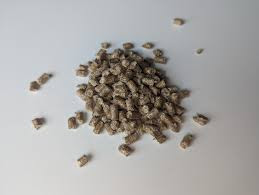
Supported by a team of scientists, engineers, and technologists, Heartland has developed hemp-based materials that can be used as additives within plastic compounds.

This breakthrough advancement in the world of sustainable material innovation improves properties with regard to flammability, bonding, dispersion, and bulk density, which are historically associated with processing natural fibers. As a result, natural fibers are now a viable market opportunity to reduce scope 3 carbon emissions in numerous industries.

By working with global brands and their suppliers, Heartland is able to reduce the carbon footprint of plastics on an industrial scale,” comments Jesse Henry, CEO of Heartland.

As an additive for industrial materials such as plastic, rubber, and concrete, Heartland’s Imperium Masterbatch, a product designed to be blended with polymers, enables the production of high-performance natural fiber products and packaging.

Aims to Support Early-stage Startups in Chemical Industry


With this funding, Heartland becomes Chemovator’s first portfolio company in North America and the latest addition to the Chemovator Elevate program. The program aims to support early-stage startups in the chemical industry through monetary investment, access to BASF and its experts, as well as support from a network of experienced entrepreneurs.

Heartland’s dedication to developing natural fiber additives aligns perfectly with our purpose of shaping the future of the chemical industry. This investment not only expands our portfolio to a new geography, but also underscores our commitment to innovation and sustainability. We look forward to supporting the Heartland team on its journey,” adds Gati Kalim, head of Portfolio Management at Chemovator.

The Investment builds on an existing partnership between Heartland and BASF’s North America Open Research Alliance (NORA).

We are not only continuing our collaboration with Heartland; we are strengthening this collaboration. Supported by the tireless efforts of our colleagues in the Performance Materials division, we work together to deliver sustainable solutions for our customers,” says Thomas Holcombe, head of NORA at BASF Corporation. “BASF's partnership with Heartland will enable us to advance on our commitment to reduce scope 3 emissions* and create chemistry for a sustainable future."

Source: Chemovator/
omnexus.specialchem.com

Friday, May 10, 2024

Today's KNOWLEDGE Share: Biodegradable TPU

Today's KNOWLEDGE Share:

Researchers Develop Biodegradable TPU Using Bacterial Spores

A new type of bioplastic could help reduce the plastic industry’s environmental footprint. Researchers from University of California San Diego have developed a biodegradable form of thermoplastic polyurethane (TPU).


TPU is a soft yet durable commercial plastic used in footwear, floor mats, cushions and memory foam. It is filled with bacterial spores that, when exposed to nutrients present in compost, germinate and break down the material at the end of its life cycle.


The work is detailed in a paper published on April 30 in Nature Communications.


Resistant to Harsh Environmental Conditions:

The biodegradable TPU was made with bacterial spores from a strain of Bacillus subtilis that has the ability to break down plastic polymer materials.


“It’s an inherent property of these bacteria,” said study co-senior author Jon Pokorski, a nanoengineering professor at the UC San Diego Jacobs School of Engineering and co-lead of the university’s Materials Research Science and Engineering Center (MRSEC). “We took a few strains and evaluated their ability to use TPUs as a sole carbon source, then picked the one that grew the best.”


The researchers used bacterial spores, a dormant form of bacteria, due to their resistance to harsh environmental conditions.Unlike fungal spores, which serve a reproductive role, bacterial spores have a protective protein shield that enables bacteria to survive while in a vegetative state.


Self-degrade up to 90% within 5 Months:

To make the biodegradable plastic, the researchers fed Bacillus subtilis spores and TPU pellets into a plastic extruder. The ingredients were mixed and melted at 135 degrees Celsius, then extruded as thin strips of plastic.


To assess the material’s biodegradability, the strips were placed in both microbially active and sterile compost environments. The compost setups were maintained at 37 degrees Celsius with a relative humidity ranging from 44 to 55%. Water and other nutrients in the compost triggered germination of the spores within the plastic strips, which reached 90% degradation within five months.


“What’s remarkable is that our material breaks down even without the presence of additional microbes,” said Pokorski. “Chances are, most of these plastics will likely not end up in microbially rich composting facilities. So this ability to self-degrade in a microbe-free environment makes our technology more versatile.”


Although the researchers still need to study what gets left behind after the material degrades, they note that any lingering bacterial spores are likely harmless. Bacillus subtilis is a strain used in probiotics and is generally regarded as safe to humans and animals—it can even be beneficial to plant health.


Engineered to Survive High Extrusion Temperatures:

In this study, the bacterial spores were evolutionary engineered to survive the high temperatures necessary for TPU production. The researchers used a technique called adaptive laboratory evolution to create a strain that is resilient to extrusion temperatures.


The process involves growing the spores, subjecting them to extreme temperatures for escalating periods of time, and allowing them to naturally mutate. The strains that survive this process are then isolated and put through the cycle again.


“We continually evolved the cells over and over again until we arrived at a strain that is optimized to tolerate the heat,” said study co-senior author Adam Feist, a bioengineering research scientist at the UC San Diego Jacobs School of Engineering. “It’s amazing how well this process of bacterial evolution and selection worked for this purpose.”


Spores Work as a Strengthening Filler:

The spores also serve as a strengthening filler, similar to how rebar reinforces concrete. The result is a TPU variant with enhanced mechanical properties, requiring more force to break and exhibiting greater stretchability.


“Both of these properties are greatly improved just by adding the spores,” said Pokorski. “This is great because the addition of spores pushes the mechanical properties beyond known limitations where there was previously a trade off between tensile strength and stretchability.”


Efforts on Scaling up the Process:

While the current study focused on producing smaller lab-scale quantities to understand feasibility, the researchers are working on optimizing the approach for use at an industrial scale. Ongoing efforts include scaling up production to kilogram quantities, evolving the bacteria to break down plastic materials faster, and exploring other types of plastics beyond TPU.


“There are many different kinds of commercial plastics that end up in the environment—TPU is just one of them,” said Feist. “One of our next steps is to broaden the scope of biodegradable materials we can make with this technology.”


Paper title: “Biocomposite Thermoplastic Polyurethanes Containing Evolved Bacterial Spores as Living Fillers to Facilitate Polymer Disintegration.” Co-authors include Han Sol Kim, Myung Hyun Noh, Debika Datta, Hyun Gyu Lim and Ehtan Smiggs, UC San Diego; Evan M. White, Michael V. Kandefer, Austin F. Wright and Jason J. Locklin, University of Georgia; and Md Arifur Rahman, BASF Corporation.


Source: UC San Diego/omnexus.specialchem.com

Thursday, May 9, 2024

Today's KNOWLEDGE Share:Compostable Biopolymers Used to Develop Greenhouse Twines

Today's KNOWLEDGE Share

BASF's Compostable Biopolymers Used to Develop Greenhouse Twines

BASF expands its offering for sustainable food production. Its certified compostable biopolymer ecovio® can now also be used to manufacture black twines. These twines are used to grow annual fruit and vegetables in commercial greenhouses.


The grade ecovio® T 2206 is certified industrial compostable according to EN13432. This means that after harvesting the twines can be collected together with the plant residues and transported to industrial composting facilities (depending on local regulations) where they biodegrade.


Supports Organic Recycling and Helps Close the Nutrient Loop

With this new end-of-life option for twines, persistent microplastics in organic waste can be avoided while at the same time more green waste can be turned into valuable compost. The industrial compostable ecovio® thus supports organic recycling and helps to close the nutrient loop to achieve a circular economy.


Twines made of ecovio® T 2206 can be used to help creepers like tomatoes and cucumbers to climb upwards in greenhouse structures in many climates from Europe, South America to Asia and Canada. Tests show the twines’ excellent performance until the end of the crop cycle. After harvesting farmers do not have to laboriously separate the twines from the plants but simply collect them together for composting. The certified industrial compostable twines do not only show benefits for farmers but also for manufacturers. ecovio® T 2206 can be produced on standard polypropylene (PP) machinery for twines.


More BASF Biopolymers for Agricultural Applications

BASF’s biopolymers portfolio for sustainable agriculture and food production also includes the certified soil-biodegradable grade ecovio® M 2351 (according to EN 17033). It was especially developed for mulch films used in agriculture and horticulture to increase the yield, speed up harvesting as well as to save water and herbicides.


Mulch films made of ecovio® M 2351 are completely and biologically degraded by microorganisms like bacteria and fungi that exist naturally in the soil. Farmers can simply plough the mulch films made of ecovio® M 2351 back into the ground after harvest. This saves time and money - and it helps to avoid persistent microplastics in agricultural soil which would occur, if farmers used conventional mulch films made of non-biodegradable polyethylene (PE).


Certified Biodegradability in Industrial and Home Composting:

BASF’s biopolymer ecovio® is certified compostable in accordance with standards such as EN13432. It is a blend of BASF’s PBAT ecoflex® and renewable raw materials. Typical applications for ecovio® are organic waste bags, cling film, fruit and vegetable bags, as well as agricultural mulch films and food packaging applications.


Studies show the advantages of ecovio® for production, packaging and shelf life of food as well as for the collection of food waste.


Source: BASF/omnexus.specialchem.com


Tuesday, May 7, 2024

Today's KNOWLEDGE Share:Von Mises stress

Today's KNOWLEDGE Share

Can a critical value of Equivalent Von Mises stress predict such a brittle failure of your part ?


NO


Von Mises is a scalar that sort of captures the "average Shear Stresses" in your point of interest in the part. It totally ignores the hydrostatic components of your stress tensor. As such, Von Mises can only predict DUCTILE failure observed when exceeding the appropriate Yield threshold.


In "layman" words, Von Mises is totally useless at predicting brittle failure. And this is why we tend to consider brittle failure as "unexpected".

The truth is we often fail to use the right approach to predict this type of failure.


source:vito leo

Monday, May 6, 2024

Today's KNOWLEDGE Share:New Measures to Make Packaging More Sustainable

Today's KNOWLEDGE Share

EU Parliament Adopts New Measures to Make Packaging More Sustainable

Parliament adopts new measures to make packaging more sustainable and reduce packaging waste in the EU.


The regulation, which aims to tackle constantly growing waste, harmonize internal market rules and boost the circular economy, was approved with 476 votes in favor, 129 against and 24 abstentions.


Ban on the Use of PFAS above Certain Thresholds:

The rules, which have been provisionally agreed on with the Council, include packaging reduction targets (5% by 2030, 10% by 2035, and 15% by 2040) and require EU countries to reduce, in particular, the amount of plastic packaging waste. To reduce unnecessary packaging, a maximum empty space ratio of 50% is set for grouped, transport and e-commerce packaging; manufacturers and importers will also have to ensure that the weight and volume of packaging are minimized.


Certain single use plastic packaging types will be banned from 1 January 2030. These include packaging for unprocessed fresh fruit and vegetables, packaging for foods and beverages filled and consumed in cafés and restaurants, individual portions (for e.g. condiments, sauces, creamer, sugar), accommodation miniature packaging for toiletry products and very lightweight plastic carrier bags (below 15 microns).


To prevent adverse health effects, the text includes a ban on the use of so called “forever chemicals” above certain thresholds in food contact packaging.


Encourage Reuse and Refill Options for Consumers

Specific 2030 reuse targets are foreseen for alcoholic and non-alcoholic beverages packaging (except e.g. milk, wine, aromatized wine, spirits), transport and sales packaging, as well as grouped packaging. Member states may grant a five-year derogation from these requirements under certain conditions.


Final distributors of beverages and take-away food will have to offer consumers the option of bringing their own container. They will also be required to endeavor to offer 10% of products in a reusable packaging format by 2030.


Recyclable Packaging, Better Waste Collection and Recycling

Under the new rules, all packaging (except for lightweight wood, cork, textile, rubber, ceramic, porcelain, and wax) will have to be recyclable by fulfilling strict criteria.

Measures also include minimum recycled content targets for plastic packaging and minimum recycling targets by weight of packaging waste.


By 2029, 90% of single use plastic and metal beverage containers (up to three liters) will have to be collected separately (via deposit-return systems or other solutions that ensure the collection target is met).


Background

In 2018, packaging generated a turnover of EUR 355 billion in the EU. It is an ever-increasing source of waste, the EU total having increased from 66 million tons in 2009 to 84 million tons in 2021. Each European generated 188.7 kg of packaging waste in 2021, a figure that is expected to increase to 209 kg in 2030 without additional measures. In adopting this legislation, Parliament is responding to citizens’ expectations to build a circular economy, avoid waste, phase out non-sustainable packaging and tackle the use of single use plastic packaging, as expressed in proposals 5(1), 5(3), 5(4), 5(5), 11(1), 11(4) and 20(3) of the conclusions of the Conference on the Future of Europe.


Source: European Parliament/polymeradditives.specialchem.com

Saturday, May 4, 2024

Bibby Marine Orders First Battery and Methanol Powered eCSOV

 A shipbuilding contract has been completed for what is being called the “world’s first truly zero-emission, electric Commission Service Operation Vessel,” which is being built as part of UK sponsored demonstration project. The ship is expected to enter service in the UK in 2026 using a combination of a powerful battery system along with dual-fuel methanol engines.

A coalition of leading maritime companies led by Bibby Marine proposed the project as part of the UK’s Zero Emission Vessels and Infrastructure (ZEVI) project staged by the UK Department of Transportation. A total of £80 million was awarded to 10 projects in the 2022 round with the Bibby effort being awarded $25 million. They estimated the cost of the project for the vessel at $37.5 million total.

Bibby Marine reports that it completed a tender process and has selected Gondan to build the vessel. The Asturias shipyard in Spain won out of a variety of yards in the UK and internationally. Bibby cites the timeline, budget, and quality reputation as the deciding factors in the tender.

In the project proposal, the team called for a 295-foot vessel that would be primarily powered by electricity and batteries and have dual-fuel methanol-powered engines as backup. The ship will be ready for offshore charging and can recharge its batteries at night.

“The delivery of this vessel has the potential to be a game changer for our industry by accelerating our path to net zero, as well as showcasing marine innovation at its finest,” said Nigel Quinn, CEO of Bibby Marine. “This project will demonstrate that clean ships can be built at the same total cost of ownership as a conventional fossil burning vessel, coupled with significantly reduced operating costs.” 

The eCSOV, which has been designed in collaboration with UK-based ship designers Longitude. To facilitate zero-emission operations, the eCSOV will feature high-voltage offshore charging facilities for rapid recharging. The vessel will have the capability to operate solely on battery power for over 16 hours between charging cycles.

Describing the project in their application for the funding grant, the team said they expect that it will be possible to operate the vessel with a two-week cycle onsite at an offshore wind farm emissions-free. Near shore and onsite the vessel will operate solely on battery power. For the longer transits between the shore homeports and the wind farms, the vessel will use its methanol fuel engines.

One of the challenges that ZEVI also looks to address is the need for offshore charging capabilities. In the application, the group said the CSOV would still achieve a 50 percent reduction in emissions compared to a conventional SOV, if offshore charging is not available.

source:maritime-executive.com


Friday, May 3, 2024

Today's KNOWLEDGE Share:Shoes from Bio-PU Resin.

Today's KNOWLEDGE Share

SK chemicals and Partners Develop Trekking Shoes from Bio-PU Resin.

In light of global initiatives to combat climate change, domestic industries have joined forces to reduce carbon emissions in the outdoor industry.

SK chemicals, Dongsung Chemical, and BYN Black Yak announced on the 18th that they've developed sustainable footwear materials using the naturally-derived material "ECOTRION".They have applied them to Black Yak's "Trekking Shoes 343 MAX."


Consumers are attracted to the trekking shoes, launched as a new product this spring. This is because they satisfy both the high functionality required for outdoor activities and the value consumption trend for eco-friendly materials that reduce greenhouse gases.


Foot Pillow Cushioning Foam for Minimized Load on Ankle:

The three companies introduced this product after a year of collaboration. SK chemicals is the supplier of 100% bio-based polyol "ECOTRION," while Dongsung Chemical develops the bio-polyurethane resin "NEOPAN®" for footwear using this as a raw material. Utilizing this material, Black Yak produced the "Foot Pillow Cushioning Foam," which is applied to the heel support layer of the midsole to minimize loading on the ankle and knee joints.


The midsole of trekking shoes is a key component that determines the footwear’s weight and acts like a car’s suspension to provide the level of function. Cushioning is important because the midsole must absorb the impact on the body and ensure safe strides, even on rough terrain.


Dongsung Chemical's bio-polyurethane resin "NEOPAN®" for footwear maintains the high elasticity and flexibility of existing polyurethane resins. It uses bio-based raw materials, providing the shock absorption function of the "Foot Pillow Cushioning Foam."


ECOTRION, utilized in NEOPAN®, is an eco-friendly material that uses raw materials that reduce greenhouse gas emissions by approximately 40% in comparison to conventional petrochemical raw materials. It is utilized in the production of spandex, artificial leather, and urethane elastic materials that are challenging to recycle. ECOTRION has one less carbon atom in its chemical structure compared to petrochemical materials. This gives it a helical-shaped polymer structure that enables the production of products with high elastic resilience, similar to a spring.


Customers Actively Seek Climate-friendly Products

Sustainability, which has become a material trend across all industries, is also emerging as a major topic in the outdoor industry. A presentation at the world's largest sporting goods fair, "ISPO Munich 2023," revealed that 38% of consumers indicated a willingness to change their brand if it incorporated climate-friendly elements. Manufacturers are also actively seeking materials that enhance sustainability.


Source: SK chemicals/omnexus.specialchem.com

WORKPLACE FLOOR MARKINGS : Simple Lines. Clear Rules. Fewer Incidents.

  WORKPLACE FLOOR MARKINGS Simple Lines. Clear Rules. Fewer Incidents. Clear floor markings are a visual management tool that improves safet...