Monday, April 15, 2024

Today's KNOWLEDGE Share: A fully recycled composite bicycle bottle cage

Today's KNOWLEDGE Share

A fully recycled composite bicycle bottle cage!

Swancor and the Taiwanese brand Massload have jointly developed bicycle parts, a bicycle bottle cage highlighted in particular, crafted entirely from recycled composite materials."

"The low-carbon bottle cage, which weighs only 17 grams, has undergone a year of rigorous testing and validation. It blends 50% of Swancor’s recycled carbon fiber with 50% recycled polyamide 6 (PA6) pellets, manufactured through an injection process. The companies anticipate commencing mass production of this environmentally friendly solution in the first quarter of 2024, with help from Massload, which has extensive know-how in supplying components to global bicycle brands."


"Swancor’s own expertise has contributed to the bicycle bottle cage’s development. The company has been actively promoting the use of recycled materials, alongside the development of its recyclable thermosetting resin EzCiclo and CleaVER degradation liquid, which has enabled Swancor to repurpose carbon fiber plates from the wind industry and factory scraps."


"Using CleaVER, Swancor is able to separate and processes recycled carbon fiber for reuse. Notably, Swancor’s materials achieved GRS certification for 100% recycled carbon fiber in 2023. Moreover, in February 2024, it obtained ISO 14067 certification, showcasing low carbon emission of only 1.689kgCO₂e/KG, a 97% emissions reduction compared to virgin carbon fiber, (55.181.689kgCO₂e/KG)."


Source: CompositesWorld/ #managingcomposites #thenativelab

Toyo Ink India to Boost Solvent-based Adhesives Production in Gujarat

Toyo Ink India, a member of the Japan-based chemicals manufacturer artience group (formerly Toyo Ink Group), announces plans to expand its production capacity for solvent-based adhesives at its manufacturing site in Gujarat, India.


Meet Market Demands:

A new production facility will be built on-site at the Gujarat plant as part of the expansion to meet rising local demand. The plant is slated to begin operations in April 2026 and will help to boost the Gujarat site’s adhesive capacity by 3.5 times its current output.


In 2014, Toyo Ink India began importing adhesives from Japan and selling them to the local market for automotive interiors and has over the years expanded applications to home appliances and labels.


In December 2021, a production operation was established in India, Gujarat, enabling the company to more promptly respond to customer needs and to further grow its business. As demand from these markets grew, the capacity for adhesive production became tight, leading to the decision to further invest in production to support current and future growth.


Expansion Strategy in Growing Indian Market:

India ranks fifth in the world’s GDP rankings in 2024 and is expected to jump to the second spot in 20 years’ time. Accordingly, industrial adhesive demand in the country is projected to rise due to growing sales of new automobiles as a result of urbanization and a shift to nuclear families, as well as the rapid growth of consumer electronics market.


"Toyo Ink India is on track to become the top solvent-based adhesive manufacturer in India, with a targeted market share of 30% in 2026,” said Naotoshi Nakamura, chairman of Toyo Ink India. “In line with the artience group’s global strategy, we are working on expanding adhesives applications to the healthcare and other fields, while positioning India as an export hub to the Middle East and Africa, regions where economic growth is expected in the future.”


Source: Toyo Ink/specialchem

Saturday, April 13, 2024

Orion Set to Produce Conductive Additives for Batteries at Texas Plant

Orion broke ground on a plant in Texas that will be the only facility in the U.S. producing acetylene-based conductive additives.

These additives will be for lithium-ion batteries and other applications vital for the global shift to electrification.


Producing Additives having One-tenth of Carbon Footprint:

The site in the city of La Porte, southeast of Houston, will create many high-skilled jobs, both in construction and technical fields and bring innovative technology to the American economy. The battery additives produced by Orion’s plant will be super clean, with only one-tenth of the carbon footprint of other commonly used materials.


“Orion is already the sole producer of acetylene-based conductive additives in Europe,” Orion CEO Corning Painter said at the groundbreaking ceremony. “Our plant in La Porte will be a pivotal step toward strengthening the regional supply of conductive additives in the rapidly growing U.S. battery market.”

Every battery requires conductive additives. They enable a more efficient flow of electricity and extend the lifetime of lithium-ion batteries, the most valuable components of electric vehicles. The material also plays an essential role in high-voltage cables used for wind and solar farms.


Reducing Carbon Emissions Across Industries

The additives produced at the La Porte plant will be made from acetylene, a colorless gas that Orion’s production process turns into powder with exceptional purity demanded by leading battery manufacturers. The acetylene will be supplied by a neighboring site owned by Equistar Chemicals LP, a subsidiary of LyondellBasell.


At Tuesday’s groundbreaking ceremony, Kim Foley, LyondellBasell executive vice president of Global Olefins and Polyolefins, Refining and Supply Chain, said “At LYB, we see electrification as a crucial part of our plan to reduce carbon emissions across our industries. By supporting the production of key battery components, we're contributing to solutions for a better tomorrow.”


Orion’s plant in La Porte is similar to one the company has in the city of Berre-l'Étang in southern France. The facility also uses acetylene from LyondellBasell. With the LaPorte project, key equipment procurement and off-site fabrication are already at an advanced stage. Field construction activities are ramping up, with the facility start-up expected in the second quarter of 2025.


Source: Orion/www.polymer-additives.specialchem.com


India's FIRST Hydrogen Fuel Cell Coach

 India is consistently pushing the boundaries.

Launching India’s first Hydrogen Fuel cell coach.


BharatBenz & Reliance recently released the coach has a range of 400 km.

Hydrogen fuel cells provide an inherently clean source of energy.

This is an amazing first step to make hydrogen fuel from greener sources which paves way for a sustainable future!


source:Brendan Rogers

Friday, April 12, 2024

Today's KNOWLEDGE Share:Characterizing the excited states of individual atoms through the combination of tunneling microscopy and pulsed laser

Today's KNOWLEDGE Share

Characterizing the excited states of individual atoms through the combination of tunneling microscopy and pulsed laser

The characterization of the dynamics of the excited states of a single atom localized on a surface remains to this day an experimental challenge. By combining a tunable pulsed laser at the junction of a low-temperature tunneling microscope, researchers have highlighted rapid photocurrent signals that can be attributed to the dynamics of excited states of an individual erbium atom deposited on the silicon surface.


In a vast majority of physico-chemical processes, the excited states of atoms are obtained either by absorbing light or by interacting with electrons. The most common method for measuring the characteristics of the quantum state of an excited atom is to analyze the light emitted during its relaxation to its ground state. In a gas, it is possible to observe many atoms relaxing simultaneously and thus collect enough light signal. When it comes to performing this type of analysis on a single atom localized on a surface, the emitted light signal is often too weak to be detected. It is therefore essential to be able to couple the optical measurement of the excited state with another type of measurement, via interaction with electrons. However, the electronic readout of the excited state of a nano-object is often hindered by its rapid dynamics, and the readout disturbs its state, posing several fundamental and technical challenges that have not been addressed until now.


By locally coupling a tunable pulsed laser to excite erbium atoms deposited on a silicon surface at the junction of a tunneling microscope, researchers from the Institute of Molecular Sciences of Orsay (ISMO, CNRS / Université Paris-Saclay) have demonstrated that the tunneling current measured above each erbium atom simultaneously contains information regarding the excited states of both the surface and the atom itself. Thanks to the high precision and stability of this type of microscope, physicists were able to distinguish between the origins of the two sources of photocurrent (surface versus atom). Furthermore, by conducting precise measurements of photocurrent spectra on two types of erbium adsorption conformations on silicon, it is also possible to establish a precise relationship between the photocurrent peaks and the electronic structure (quantum state) of each erbium conformation. Through collaboration with the Franche-Comté Institute of Electronics, Mechanics, Thermics and Optics - Sciences and Technologies (FEMTO-ST, CNRS / Université de Bourgogne Franche-Comté), numerical calculations using density functional theory were performed, taking into account the relativistic aspect of erbium's electronic interactions as well as spin-orbit couplings. These calculations confirmed that the experimental measurements acquired by scanning the laser wavelength indeed contain information about the most probable electronic transitions of the excited erbium in relation to the photocurrent peaks observed experimentally.


All these results suggest that the reading of erbium's excited states via the tunnel current of the STM occurs during their de-excitation (optical relaxation), locally leading to the dissociation of excitons (electron-hole pairs) created by the laser and strongly localized at the erbium atoms on the surface of silicon. This sudden dissociation induces a burst of photoelectrons measured in the tunnel current, which occurs at the optical resonance of the probed excited state of erbium as the tunable laser sweeps wavelengths from 800 nm to 1200 nm. The researchers were able to define that the spectral resolution of this new spectroscopic method is less than 5 cm-1, primarily limited by the resolution of the laser used.


These findings, published in ACS Nano, may pave the way for new tools to explore the dynamics of future nano-objects such as atomic or molecular assemblies. This technique thus offers new perspectives for experimental and theoretical explorations aimed at controlling model devices by preparing specific quantum states.


Reference Optoelectronic Readout of Single Er Adatom’s Electronic States Adsorbed on the Si(100) Surface at Low Temperature (9 K)

Eric Duverger and Damien Riedel

https://pubs.acs.org/doi/10.1021/acsnano.4c01008


source:nanotechnologyworld.org

Thursday, April 11, 2024

Today's KNOWLEDGE Share: Full carbon fiber composite fairing

Today's KNOWLEDGE Share

Full carbon fiber composite fairing delivered for first flight of Tianbing Technology’s Tianlong 3 

The large-diameter full carbon fiber composite fairing of Tianbing Technology’s Tianlong 3 (TL-3) launch vehicle rolled off the production line.


“Tianbing Technology has fully mastered the development capabilities of large-scale composite cabin sections and achieves another major breakthrough in the development of high-quality, high-efficiency, low-cost products.

The rocket fairing is located at the front end of the rocket and is an extremely important and complex section of the rocket. The TL-3 large fairing has a diameter of 4200 mm and a length of about 13 meters. It is made entirely of carbon fiber composite materials. It is the largest fairing in domestic commercial aerospace and the largest full carbon fiber fairing in China. It is also the first domestic fairing that is customized for satellite internet constellations. It can be called the most advanced composite fairing in the country.


Through innovative technology, the development cost of the TL-3 fairing was reduced by 30% and production efficiency was increased by more than 20%, which greatly shortened the product development cycle and ensured the success rate of mass production of Tianbing Technology’s subsequent products and high-intensity launch missions, according to the company.


source: Tianbing Technology/www.spacepioneer.cc/jeccomposites

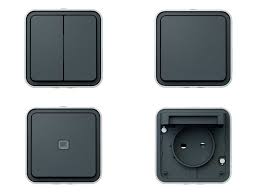
Avient Partners with Hager to Develop Waterproof Switches Using Ocean-bound Plastic

Avient Corporation, a provider of specialized and sustainable materials solutions and services, announces a successful collaboration with its long-standing and valued customer, Hager Group.


Avient supported Hager to incorporate 27% recycled ocean-bound plastic into its new cubyko leaf waterproof outdoor sockets and switches, providing its customers with a more eco-conscious option. This success was achieved in further collaboration with Plastic Bank. It provides the recycled ocean-bound plastic waste that Avient formulates into high-performance polyolefin materials.


Replaces Primary Materials by Meeting Technical Specifications


Avient constributed to this success by developing customized versions of its Maxxam™ REC Recycled Polyolefin Formulations. It contains 50% recycled ocean-bound plastic content, using Social Plastic® feedstock from Plastic Bank. As a result, the final assembly of the Hager cubyko leaf includes 27% ocean-bound plastic content. These formulations effectively replace the primary materials used by Hager and meet the required technical specifications, including coloration to specific RAL colors, while also providing good resistance to ultraviolet (UV) light, scratches, and impacts.


source:Avient/omnexus.specialchem

The BIOVALSA project: making bioplastics from agricultural waste and pruning residues

Every year, the Valencian agricultural sector generates around 800 000 tons of plant waste, such as rice straw and citrus pruning waste. The...