Wednesday, March 16, 2022

Pressurized steam-based composites recycling for full fiber reclamation!

 📢Spreading the Word!📢 Pressurized steam-based composites recycling for full fiber reclamation!


"To date, the most common methods of recycling composite components and materials are pyrolysis (flame-based) or thermolysis (heat-based), solvolysis (chemical-based), hydrolysis (water-based), or some type of mechanical process (chopping or shredding whole parts for reuse, etc.). The end product for most of these processes is a fiber with reduced mechanical properties (the resin having been burned or chemically melted off), suitable for chopping up for potential reuse as a filler, in a nonwoven, mat, or perhaps in injection molding or spray-up applications."


"@Longworth is one company promising a new method for reclaiming both near-virgin-grade fibers and resins. Called DEECOM, the process uses high-temperature steam and pressure to separate and reclaim materials. After a decade of development and proving out the technology, the company is ready to launch DEECOM commercially for composites recycling this year."


"The first iteration of the DEECOM system is set up to process waste in batches. The part to be recycled is fed into the top of a large pressure vessel. Saturated steam is piped into DEECOM’s heating system, superheated to at least 400°C, and then enters the pressure vessel. While the superheated steam is still present, the vessel is pressurized by at least 0.5 bar above atmospheric pressure and goes through several cycles of compression and decompression — the frequency and intensity of the cycles depending on the properties of each material. In practice, each decompression separates more of the resin from the fiber."
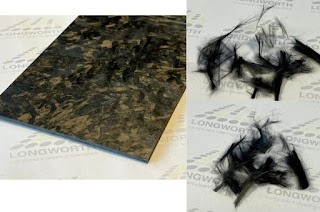


"The resin, now a gas or liquid depending on the type of resin and its reaction to the process, drops down into a collection area, and the fibers are left as intact as they can be, Hill says: “It’s not bent, damaged or burnt, it’s literally just cleaned. It’s in the exact same state as when you put it in, the same length and everything.” The only other waste output is steam expelled via a chimney. This steam can be captured for heat reclamation if required, further reducing the process’ environmental footprint. The timing of the overall process depends on the number of compression/decompression cycles needed for a particular part."


Source: #managingcomposites


Sunday, March 13, 2022

Hublot's unique spirit of the big bang gold tiger watch

 📢It's time for our segment Endless Possibilities!📢


Hublot roars in the year of the tiger with the unique spirit of the big bang gold tiger watch!


As the lunar year begins, Hublot introduces a version of its barrel-shaped icon in Frosted Carbon and gold, a first for the Swiss fine watchmaker.


The watch, which is based on the barrel-shaped 42mm Spirit of Big Bang, is a striking execution of Hublot’s famous fusion principles. This is the first Spirit of Big Bang with a case made of Frosted Carbon and 18-carat yellow-gold, a black and gold fusion of materials Hublot has used in its collection only once before.


This unique, complex, beautiful material, developed by Hublot, fuses carbon fiber with gold to create a unique finish defined by its glimmering gold occlusions. The watch is limited to 200 pieces and no two will be exactly the same. The patterns created by the process are random, just like a tiger’s majestic stripes.


Interested? Better start saving some money, because this watch has a price tag of 33 thousand euros!


Source:#managingcomposites


Monday, March 7, 2022

ARAMID FIBER through SEM

 📢Microscopic Mondays!📢


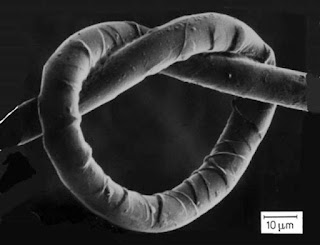
Have a look at this knotted aramid fiber! What is going on?


The anisotropic behavior of aramid fiber can be revealed in a vivid manner through SEM micrographs like this one: Note the buckling or kink marks on the compressive side... Meanwhile, the tensile side is smooth!


Such markings on the aramid fiber surface have also been reported when the aramid fiber is subjected to uniform compression or torsion!


Do you know why this happens? Let us know in the comments! 


Bibliographical Reference:

Composite Materials - Science and Engeneering - Page 50


Source:#managingcomposites

Visit MY BLOG http://polymerguru.blogspot.com


Sunday, March 6, 2022

Healing Halogens

 Healing Halogens #medicine


A significant number of drugs are halogenated.


Typically, insertion of halogen atoms on hit or lead compounds is performed to occupy the binding site of molecular targets in order to improve the drug−target binding affinity and/or reduce metabolism. 14 out of the 50 molecules approved by the FDA in 2021 contain halogens.


The introduction of F onto a chemical scaffold is able to infer changes that affect the physicochemical properties and the conformation of a molecule. Being the most electronegative element in the periodic table, F plays an important role in the modulation of pKa of neighboring functionalities. Substituting F for H on aromatic groups is also well known to improve metabolic stability.


Lipophilicity is also affected by the addition of F onto aliphatic and aromatic scaffolds. The monofluorination or trifluoromethylation of saturated alkyl groups usually decreases the lipophilicity due to the strong electron-withdrawing capabilities of fluorine. F-arenes are more lipophilic than des-F ones due to the low polarizability of the C-F bond. The installation of a fluorine atom in the ortho-position to an NH function on the aromatic ring is often used to enhance membrane permeability.


From a conformational perspective, the addition of one single F has a reduced steric effect, leaving mostly unchanged the interaction with the receptor site if compared to the same interaction with a molecule bearing an H atom in the same position. This can be explained by the similar van der Waals radii of F and H: 1.47 Å and 1.20 Å, respectively.

The commonly used trifluoromethyl group is sterically more demanding and almost equivalent to an ethyl group. The highly electronegative nature of fluorine makes it a hydrogen bond acceptor from HBD but does not establish as good of halogen bonds as Cl and Br, because it does not typically feature a σ-hole. Another important use is that fluorinated functionality can be incorporated into endogenous substrates or ligands through 19F-markers to investigate protein functions.


Cl is greater in size than F, and the C–Cl bond is stable enough that it allows its insertion in diverse heterocyclics. Cl is a better halogen bond acceptor compared to F. The most important impact of a nonreactive Cl atom on the biological activity of many compounds comes when it is a substituent on an aromatic, heteroaromatic or olefinic moiety. In these cases, the steric and/or electronic effects of the chlorine substituents lead to local electronic attraction or repulsion and/or to steric interference with any surrounding amino acids of target proteins. The Cl atom is often viewed as isosteric and has similar physicochemical properties to the methyl group; therefore, it is very often selected as a bioisosteric replacement because of its ability to alter the in vivo metabolism.


>250 FDA-approved chlorine-containing drugs are available on the market (as of 2019). 


Friday, March 4, 2022

Leonardo, Vertical Aerospace to jointly develop VX4 eVTOL carbon fiber fuselage!

 📢Spreading the Word!📢 Leonardo, Vertical Aerospace to jointly develop VX4 eVTOL carbon fiber fuselage!


"Vertical Aerospace an aerospace and technology company pioneering zero-emissions aviation has agreed to a joint development program with Leonardo for the design, testing, manufacture, and supply of the carbon fiber composite fuselage for Vertical’s VX4 electric aircraft."


"The VX4 is a near-silent, entirely electric, piloted aircraft that is expected to have a range of more than 100 miles and to reach top speeds of up to 200 miles per hour. With a four-passenger capacity, Vertical says the zero-operating emissions VX4 will also have a low cost-per-passenger mile, similar to that of a taxi."


"Vertical and Leonardo will work together on optimizing lightweight composite structures, modular design, systems installation, and structural testing for the co-development of the aircraft’s fuselage. According to Vertical, this is currently in place for at least six certification aircraft, up to the successful certification of the VX4."


Source:#managingcomposites


Wednesday, March 2, 2022

Evonik Develops Osteoconductive PEEK Filament for Improved Bone and Implant Fusion

Evonik is further expanding its portfolio of 3D-printable biomaterials for medical technology: The specialty chemicals company has developed VESTAKEEP® iC4800 3DF, a new osteoconductive PEEK filament that improves fusion between bone and implants.


The high-performance polymer can be processed in common extrusion-based 3D printing technologies such as fused filament fabrication (FFF). Evonik will present the new product for the first time at the AAOS trade show in Chicago, USA (March 22-26, 2022).


Excellent Biocompatibility and Biostability


The new PEEK filament is a biomaterial from Evonik's VESTAKEEP® Fusion product line launched in 2020. The high-performance polymer impresses with excellent biocompatibility and biostability as well as improved osteoconductive properties. The osteoconductivity was achieved by using a functional special additive - biphasic calcium phosphate (BCP). The BCP additive allows bone cells to adhere to implants more quickly, thus positively influencing the boundary, so-called osteointegration, between the bone and the implant. This, in turn, will accelerate bone fusion and thus patient recovery.


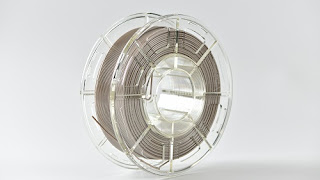
VESTAKEEP® iC4800 3DF was developed for use in the Fused Filament Fabrication (FFF) technology. With a diameter of 1.75 mm, the PEEK filament in natural color is wound onto 250 gram or 500-gram spools. They can be used directly in standard FFF 3D printers for PEEK materials. Tests on various 3D printers as well as customer feedback confirm the excellent processability of Evonik’s new filament.


Manufactured Under Strict Quality Management


Furthermore, VESTAKEEP® iC4800 3DF has been specially designed so that the functional additives are available directly on the surface of the 3D printed implant without further post-processing steps - a novelty for osteointegrative PEEK biomaterials. Like all products of the Fusion range, VESTAKEEP® iC4800 is manufactured under strict quality management for biomaterials.


"No other application field showcases more the classic advantages of 3D printing, such as individualization or design freedom, than medical technology," says Marc Knebel, Head of Medical Systems at Evonik. "Since the product launch of the first PEEK filament a good three years ago, we have been expanding the possibilities of modern medical technology in the individual treatment of patients using additive manufacturing by constantly developing new innovative biomaterials."


Source:EVONIK


Tuesday, March 1, 2022

A carbon fiber electric skateboard

 📣Composites Showcase!📣


A carbon fiber electric skateboard?


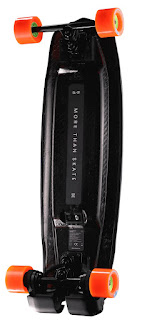
Conventional skateboards usually consist of a relatively flat wooden board where the rider stands, also known as the deck. Underneath the deck for electric skateboards is a plastic box containing equipment, including the battery. EMI's design, however, features a trough-shaped deck. With the exception of the motors, which are mounted on the back of the skateboard, this houses all the electric and electronic functions, including the battery. The trough is enclosed by a cover. Using @Lanxess' Tepex, EMI is able to manufacture the trough-shaped part with a wall thickness of just three millimeters, and despite the thin walls, the electric and electronic components in the deck are said to be safely protected against impact as well as moisture.


The result is a very light structure: the Okmos SL-01 deck weighs just 2.5 kilograms!


According to the manufacturer, the trough-shaped composite part is manufactured in a single hybrid molding process step. A robot inserts the metal base plate used to attach the truck axles into an injection molding tool. Then, a heated and plasticized Tepex section is placed within the tool. In one operation, the section is formed and the entire structure overmolded with a short glass-fiber-reinforced plastic compound. 🕵🏻‍♀️


The composite section is made from polyamide-6 (PA6)-based Tepex dynalite 102-RG600(6), which is reinforced with six layers of continuous glass fiber rovings. The deck cover is also made from this material. Lanxess’ PA6 Durethan BKV30H2.0EF is used for overmolding. Containing 30% short glass fibers by weight, the compound melt flows easily, making it suitable for this type of application.


Source: CompositesWorld

TheNativLab


Fraunhofer IWU experts present new materials for additive manufacturing at their self-printed booth

This year’s exhibits at Formnext focuse on materials particularly suited for aerospace applications but so far rarely used in LPBF (Laser Po...