Wednesday, March 2, 2022

Evonik Develops Osteoconductive PEEK Filament for Improved Bone and Implant Fusion

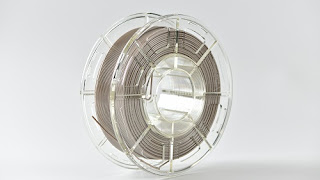
Evonik is further expanding its portfolio of 3D-printable biomaterials for medical technology: The specialty chemicals company has developed VESTAKEEP® iC4800 3DF, a new osteoconductive PEEK filament that improves fusion between bone and implants.


The high-performance polymer can be processed in common extrusion-based 3D printing technologies such as fused filament fabrication (FFF). Evonik will present the new product for the first time at the AAOS trade show in Chicago, USA (March 22-26, 2022).


Excellent Biocompatibility and Biostability


The new PEEK filament is a biomaterial from Evonik's VESTAKEEP® Fusion product line launched in 2020. The high-performance polymer impresses with excellent biocompatibility and biostability as well as improved osteoconductive properties. The osteoconductivity was achieved by using a functional special additive - biphasic calcium phosphate (BCP). The BCP additive allows bone cells to adhere to implants more quickly, thus positively influencing the boundary, so-called osteointegration, between the bone and the implant. This, in turn, will accelerate bone fusion and thus patient recovery.


VESTAKEEP® iC4800 3DF was developed for use in the Fused Filament Fabrication (FFF) technology. With a diameter of 1.75 mm, the PEEK filament in natural color is wound onto 250 gram or 500-gram spools. They can be used directly in standard FFF 3D printers for PEEK materials. Tests on various 3D printers as well as customer feedback confirm the excellent processability of Evonik’s new filament.


Manufactured Under Strict Quality Management


Furthermore, VESTAKEEP® iC4800 3DF has been specially designed so that the functional additives are available directly on the surface of the 3D printed implant without further post-processing steps - a novelty for osteointegrative PEEK biomaterials. Like all products of the Fusion range, VESTAKEEP® iC4800 is manufactured under strict quality management for biomaterials.


"No other application field showcases more the classic advantages of 3D printing, such as individualization or design freedom, than medical technology," says Marc Knebel, Head of Medical Systems at Evonik. "Since the product launch of the first PEEK filament a good three years ago, we have been expanding the possibilities of modern medical technology in the individual treatment of patients using additive manufacturing by constantly developing new innovative biomaterials."


Source:EVONIK


Tuesday, March 1, 2022

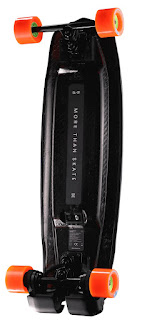
A carbon fiber electric skateboard

 📣Composites Showcase!📣


A carbon fiber electric skateboard?


Conventional skateboards usually consist of a relatively flat wooden board where the rider stands, also known as the deck. Underneath the deck for electric skateboards is a plastic box containing equipment, including the battery. EMI's design, however, features a trough-shaped deck. With the exception of the motors, which are mounted on the back of the skateboard, this houses all the electric and electronic functions, including the battery. The trough is enclosed by a cover. Using @Lanxess' Tepex, EMI is able to manufacture the trough-shaped part with a wall thickness of just three millimeters, and despite the thin walls, the electric and electronic components in the deck are said to be safely protected against impact as well as moisture.


The result is a very light structure: the Okmos SL-01 deck weighs just 2.5 kilograms!


According to the manufacturer, the trough-shaped composite part is manufactured in a single hybrid molding process step. A robot inserts the metal base plate used to attach the truck axles into an injection molding tool. Then, a heated and plasticized Tepex section is placed within the tool. In one operation, the section is formed and the entire structure overmolded with a short glass-fiber-reinforced plastic compound. 🕵🏻‍♀️


The composite section is made from polyamide-6 (PA6)-based Tepex dynalite 102-RG600(6), which is reinforced with six layers of continuous glass fiber rovings. The deck cover is also made from this material. Lanxess’ PA6 Durethan BKV30H2.0EF is used for overmolding. Containing 30% short glass fibers by weight, the compound melt flows easily, making it suitable for this type of application.


Source: CompositesWorld

TheNativLab


Friday, February 25, 2022

Scientists Develop Cellulose Nanocrystals-based Composite with Bone-hard Toughness

 An MIT team has engineered a composite made mostly from cellulose nanocrystals mixed with a bit of synthetic polymer. The organic crystals take up about 60 to 90 percent of the material — the highest fraction of CNCs achieved in a composite to date.


The researchers found the cellulose-based composite is stronger and tougher than some types of bone, and harder than typical aluminum alloys. The material has a brick-and-mortar microstructure that resembles nacre, the hard inner shell lining of some molluscs.


The Recipe for CNC-based Composite


The team hit on a recipe for the CNC-based composite that they could fabricate using both 3D printing and conventional casting. They printed and cast the composite into penny-sized pieces of film that they used to test the material’s strength and hardness. They also machined the composite into the shape of a tooth to show that the material might one day be used to make cellulose-based dental implants — and for that matter, any plastic products — that are stronger, tougher, and more sustainable.

By creating composites with CNCs at high loading, we can give polymer-based materials mechanical properties they never had before,” says A. John Hart, professor of mechanical engineering. “If we can replace some petroleum-based plastic with naturally-derived cellulose, that’s arguably better for the planet as well.”

Hart and his colleagues looked to develop a composite with a high fraction of CNCs, that they could shape into strong, durable forms. They started by mixing a solution of synthetic polymer with commercially available CNC powder. The team determined the ratio of CNC and polymer that would turn the solution into a gel, with a consistency that could either be fed through the nozzle of a 3-D printer or poured into a mold to be cast. They used an ultrasonic probe to break up any clumps of cellulose in the gel, making it more likely for the dispersed cellulose to form strong bonds with polymer molecules.

They fed some of the gel through a 3-D printer and poured the rest into a mold to be cast. They then let the printed samples dry. In the process, the material shrank, leaving behind a solid composite composed mainly of cellulose nanocrystals.

We basically deconstructed wood, and reconstructed it,” Rao says. “We took the best components of wood, which is cellulose nanocrystals, and reconstructed them to achieve a new composite material.”

Nacre-like Architecture Resists Cracks


Interestingly, when the team examined the composite’s structure under a microscope, they observed that grains of cellulose settled into a brick-and-mortar pattern, similar to the architecture of nacre. In nacre, this zig-zagging microstructure stops a crack from running straight through the material. The researchers found this to also be the case with their new cellulose composite.

They tested the material’s resistance to cracks, using tools to initiate first nano- and then micro-scale cracks. They found that, across multiple scales, the composite’s arrangement of cellulose grains prevented the cracks from splitting the material. This resistance to plastic deformation gives the composite a hardness and stiffness at the boundary between conventional plastics and metals.

Going forward, the team is looking for ways to minimize the shrinkage of gels as they dry. While shrinkage isn’t much of a problem when printing small objects, anything bigger could buckle or crack as the composite dries.

If you could avoid shrinkage, you could keep scaling up, maybe to the meter scale,” Rao says. “Then, if we were to dream big, we could replace a significant fraction of plastics, with cellulose composites.”

Source: MIT

Wednesday, February 23, 2022

LM Wind Power reports it will produce zero waste blades by 2030!

 📢Spreading the Word!📢 L

M Wind Power reports it will produce zero waste blades by 2030!


"LM Wind Power announced its pledge to produce zero waste blades by 2030 in order to reduce the carbon footprint of the company’s products. The commitment represents a step forward in the company’s sustainability journey after becoming what it says was the first carbon-neutral business in the wind industry back in 2018."


"LM Wind Power will play a central role in supporting its customers to develop fully circular wind turbines that generate less waste during their production. In practice, LM Wind Power’s vision of zero waste blades means the company aims to send no manufacturing materials and packaging to landfill and incineration without energy recovery by 2030."


"Waste from manufacturing represents one of the biggest challenges faced by many industries as they seek to reduce their carbon footprint. Nearly one-third of its operational carbon footprint comes from waste disposal. Moreover, in the wind industry, around 20-25% of the materials purchased by wind turbine blade manufacturers do not go into the final product, and research indicates that blade manufacturing waste volumes are expected to be larger than decommissioned blade volumes during the coming decade."


"For wind turbine and blade manufacturers alike, LM Wind Power says, the key to reducing the product carbon footprint lies in the supply chain. In the blade life cycle, around 75% of CO2 emissions occur in the supply chain."


Source :managingcomposites

Visit MY BLOG http://polymerguru.blogspot.com

Tuesday, February 22, 2022

Pitch based carbon fiber

 We have developed PotenCia™, pitch-based fine #carbonfiber, which can be applied as additives for the #LiB system. When used in the LiB system, it shows higher performance and can improve the durability of #battery with low concentration.


Find out more: https://lnkd.in/gtsW8ZSu


We, Teijin Group, are working tirelessly to refine our #automotive technologies and solutions for reduced CO2 emissions without compromising high performance.


Source:Teijin

Visit MY BLOG http://polymerguru.blogspot.com

Monday, February 21, 2022

DSM and Samsung Co-develop Smartphone Made from Fish Net Waste-based Polymer

 DSM Engineering Materials has supported Samsung Electronics to deliver the first smartphone device to be made with Akulon® RePurposed. This high-performance polymer is produced by DSM from repurposing discarded fishing nets collected from the Indian Ocean. The new Galaxy S22 series smartphones and Tab S8 series tablets mark an important milestone in the sustainability of smartphone devices and underline DSM’s commitment to enabling a circular economy through recycled-based innovation.


Launched in 2018, Akulon® RePurposed is made by partnering with the local community along India’s coastline to collect and retrieve abandoned fishing nets. These are then processed into the exceptional polymer, containing a minimum of 80% recycled polyamide 6.


Akulon® RePurposed for New Galaxy Series


Working with Samsung Electronics, DSM tailored Akulon® RePurposed to meet the specific high-performance requirements of the new Galaxy S22 series and Galaxy Tab S8 series. As such, the material is incorporated into key components including the Galaxy S22 series’ key bracket and inner cover of the S Pen, as well as the Tab S8 series’ inner support bracket. Thanks to its unique properties, Akulon® RePurposed offers an excellent balance and leading mechanical performance and has already been applied to various industries, such as automotive, consumer goods, and electronic devices.


DSM has developed a wide range of engineering materials over the years to help its customers in support of a sustainable, low-carbon circular economy and has committed to making available bio- and/or recycled-based alternatives for its entire portfolio by 2030. These circular materials help to de-fossilize the economy and society, reduce plastic waste and carbon footprint, and meet changing legislative and end-consumer demands.


Advancing Samsung’s Sustainability Vision


Pranveer Singh Rathore, materials R&D manager at Samsung Electronics, commented: “Through this open collaboration, which combined our technology with DSM’s expertise, we successfully developed a solution that bridges the needs of the planet and our Galaxy users. The Galaxy S22 series and Tab S8 series help advance Samsung’s sustainability vision, Galaxy for the Planet, which includes reducing our environmental footprint by incorporating recycled materials in all-new mobile products by 2025. We’re excited about strengthening our partnership with DSM and continuing to positively impact Galaxy users and the environment as we expand our efforts to integrate repurposed ocean plastics across our entire product lineup in the years to come.”


Nileshkumar Kukalyekar, business director South Asia, DSM Engineering Materials, commented: “As the first player in the electronics industry to be making its smartphone with Akulon® RePurposed from discarded fishing nets, Samsung shares our ambition to develop sustainable recycled-based solutions that help consumers make more eco-conscious choices in their daily lives. Together, we will continue to deliver sustainable and scalable solutions that help to address the climate crisis. We hope Samsung’s move to recycled ocean-bound fishing nets will inspire many others to take similar steps to make our planet a better place.”


Source: DSM Engineering Materials


COMPOSITE MICROSCOPY

 📢Microscopic Mondays!📢


We are back with another composite microscopy that could EASILY be featured in a museum!


This picture shows a composite material that has a very complicated name: carbon-graphene hierarchical core-shell nanofibers!


This microscopy won the ZEISS-sponsored Materials Today Cover Competition 2016!


Source: ZEISS

#managingcomposites


Visit MY BLOG http://polymerguru.blogspot.com

WORKPLACE FLOOR MARKINGS : Simple Lines. Clear Rules. Fewer Incidents.

  WORKPLACE FLOOR MARKINGS Simple Lines. Clear Rules. Fewer Incidents. Clear floor markings are a visual management tool that improves safet...