Monday, February 21, 2022

DSM and Samsung Co-develop Smartphone Made from Fish Net Waste-based Polymer

 DSM Engineering Materials has supported Samsung Electronics to deliver the first smartphone device to be made with Akulon® RePurposed. This high-performance polymer is produced by DSM from repurposing discarded fishing nets collected from the Indian Ocean. The new Galaxy S22 series smartphones and Tab S8 series tablets mark an important milestone in the sustainability of smartphone devices and underline DSM’s commitment to enabling a circular economy through recycled-based innovation.


Launched in 2018, Akulon® RePurposed is made by partnering with the local community along India’s coastline to collect and retrieve abandoned fishing nets. These are then processed into the exceptional polymer, containing a minimum of 80% recycled polyamide 6.


Akulon® RePurposed for New Galaxy Series


Working with Samsung Electronics, DSM tailored Akulon® RePurposed to meet the specific high-performance requirements of the new Galaxy S22 series and Galaxy Tab S8 series. As such, the material is incorporated into key components including the Galaxy S22 series’ key bracket and inner cover of the S Pen, as well as the Tab S8 series’ inner support bracket. Thanks to its unique properties, Akulon® RePurposed offers an excellent balance and leading mechanical performance and has already been applied to various industries, such as automotive, consumer goods, and electronic devices.


DSM has developed a wide range of engineering materials over the years to help its customers in support of a sustainable, low-carbon circular economy and has committed to making available bio- and/or recycled-based alternatives for its entire portfolio by 2030. These circular materials help to de-fossilize the economy and society, reduce plastic waste and carbon footprint, and meet changing legislative and end-consumer demands.


Advancing Samsung’s Sustainability Vision


Pranveer Singh Rathore, materials R&D manager at Samsung Electronics, commented: “Through this open collaboration, which combined our technology with DSM’s expertise, we successfully developed a solution that bridges the needs of the planet and our Galaxy users. The Galaxy S22 series and Tab S8 series help advance Samsung’s sustainability vision, Galaxy for the Planet, which includes reducing our environmental footprint by incorporating recycled materials in all-new mobile products by 2025. We’re excited about strengthening our partnership with DSM and continuing to positively impact Galaxy users and the environment as we expand our efforts to integrate repurposed ocean plastics across our entire product lineup in the years to come.”


Nileshkumar Kukalyekar, business director South Asia, DSM Engineering Materials, commented: “As the first player in the electronics industry to be making its smartphone with Akulon® RePurposed from discarded fishing nets, Samsung shares our ambition to develop sustainable recycled-based solutions that help consumers make more eco-conscious choices in their daily lives. Together, we will continue to deliver sustainable and scalable solutions that help to address the climate crisis. We hope Samsung’s move to recycled ocean-bound fishing nets will inspire many others to take similar steps to make our planet a better place.”


Source: DSM Engineering Materials


COMPOSITE MICROSCOPY

 📢Microscopic Mondays!📢


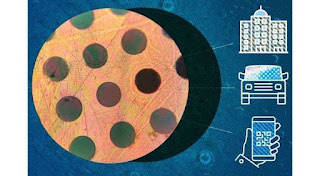
We are back with another composite microscopy that could EASILY be featured in a museum!


This picture shows a composite material that has a very complicated name: carbon-graphene hierarchical core-shell nanofibers!


This microscopy won the ZEISS-sponsored Materials Today Cover Competition 2016!


Source: ZEISS

#managingcomposites


Visit MY BLOG http://polymerguru.blogspot.com

Sunday, February 20, 2022

A carbon fiber golf driver

 📢It's time for our segment Endless Possibilities!📢


A carbon fiber golf driver?


T@aylorMade Golf Company builds on its history of groundbreaking innovation with the introduction of the Stealth™ Plus, Stealth, and Stealth HD Carbonwood™ Drivers!


Titanium has been the cornerstone of driver technology for the last 20 years, but even at the beginning of the Titanium driver era, TaylorMade engineers knew that every material had its limit. The future of driver performance begins with the one-of-one 60X Carbon Twist Face – comprised of 60 layers of carbon sheets strategically arranged to optimize energy transfer.


But why carbon?


The goal of any new technology is to create a measurable performance improvement for TaylorMade customers. The 60 layers of carbon fiber in Stealth help do exactly that by providing more speed. The red carbon face – yes, the face is red – delivers a higher COR and more precise face geometry through a lighter, but larger face. TaylorMade engineers took advantage of the lightweight carbon material by creating a 26g face, which is 40 percent lighter than a titanium face of equivalent size. Because of that weight savings, the face size of Stealth is 11 percent larger than SIM2 and SIM2 Max drivers and nearly 20 percent larger than the 2020 SIM driver.


The weight savings and larger face size made possible by the 60X Carbon Twist Face delivered a stunning ball speed increase during player testing when comparing Stealth Plus and Stealth to the 2021 SIM2 and SIM2 Max drivers at better player swing speeds, unlocking a whole new level of driver performance.


Source: JEC Group

#managingcomposites


Thursday, February 17, 2022

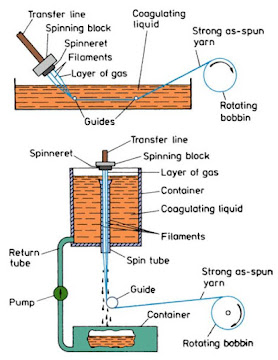
dry-jet wet spinning process of producing aramid fibers!

 #science 📢Time to Get Technical...📢


Let's learn more about the dry-jet wet spinning process of producing aramid fibers!


Aramid fiber is a generic term for a class of synthetic organic fibers called aromatic polyamide fibers. The U.S. Federal Trade Commission gives a good definition of an aramid fiber as “a manufactured fiber in which the fiber-forming substance is a long-chain synthetic polyamide in which at least 85% of the amide linkages are attached directly to two aromatic rings.” Well-known commercial names of aramid fibers include Kevlar and Nomex (DuPont) and Twaron (Teijin Aramid).


The basic chemical structure of aramid fibers consists of oriented para-substituted aromatic units, which makes them rigid rodlike polymers. The rigid rodlike structure results in a high glass transition temperature and poor solubility, which makes the fabrication of these polymers, by conventional drawing techniques, difficult. Instead, they are spun from liquid crystalline polymer solutions by dry-jet wet spinning.


The dry-jet wet spinning starts with a solution of polycondensation of diamines and diacid halides at low temperatures (near 0 °C) gives the aramid forming polyamides. Low temperatures are used to inhibit any by-product generation and promote linear polyamide formation. The resulting polymer is pulverized, washed, and dried; mixed with concentrated H2SO4; and extruded through a spinneret at about 100 °C. The jets from the orifices pass through about 1 cm of air layer before entering a cold water (0–4 °C) bath. The fiber solidifies in the air gap, and the acid is removed in the coagulation bath. The spinneret capillary and air gap cause rotation and alignment of the domains, resulting in highly crystalline and oriented as-spun fibers. The air gap also allows the dope to be at a higher temperature than is possible without the air gap. The higher temperature allows a more concentrated spinning solution to be used, and higher spinning rates are possible. Spinning rates of several hundred meters per minute are not unusual. The as-spun aramid fibers are washed in water, wound on a bobbin, and dried. Fiber properties are modified by the use of appropriate solvent additives, by changing the spinning conditions, and by means of some post-spinning heat treatments, if necessary.


Bibliographical Reference:

Composite Materials - Science and Engineering - Page 46


Source:managingcomposites


Thursday, February 10, 2022

UCalgary researchers turn Alberta oilsands bitumen into high-value carbon fibers

 University spearheads three projects out of the 12 teams chosen for Phase II of the Carbon Fibre Challenge, with a new target to produce the carbon fibers from bitumen at a lab scale.

Dr. Md Kibria, an assistant professor for the Department of Chemical and Petroleum Engineering at the Schulich School of Engineering for the University of Calgary (Calgary, Alberta, Canada), is leading one of three projects selected in the Carbon Fibre Challenge (CFGC) Phase II competition conducted by Alberta Innovates (Alberta, Canada) and the Clean Resource Innovation Network (CRIN, Canada). 


The three-phase competition is aimed at accelerating the development of carbon fiber derived from Alberta’s vast supply of oilsands bitumen, a black viscous mixture of hydrocarbons obtained naturally or as a residue from petroleum distillation. Currently, Kibria and his team have been working with asphaltenes, — molecular substances found in crude oil — spinning the gooey substance together into strands finer than a human hair.

“Asphaltenes are commonly known as the ‘bottom of the barrel,’” says Kibria. “It’s the heavy fraction in bitumen which holds great promise to serve as a cheap feedstock for a wide variety of non-combustible, high-value products such as carbon fibers.”

The asphaltenes, says Kibria, are heated up to become a gel of sorts, which a spinner then winds into carbon fibers. The fibers then go through several steps to make them stronger, with some guessing and testing along the way. “We know that it’s feasible to make the fibers. Now the question is: How strong can we make it?” he questions.

Kibria hopes to create high-end carbon fibers that meet the standard for the automotive and airline industries, for which they can be used to create body components, wheels and rims, interior finishes, and other products. He calls it a “win-win-win” situation because materials that don’t meet that high standard can still be used for other applications such as carbon fiber-reinforced concrete.

In addition to Dr. Md Kibria, two other Schulich professors, Dr. Simon Park, PhD, and Dr. Joanna Wong, Dr.sc.ETH — both with the Department of Mechanical and Manufacturing Engineering — are spearheading projects that also made it into the final 12 teams of the competition.

“One of the challenges associated with traditional carbon fiber-making is the high energy needed to convert polymer-based precursors to fibers,” Park says. “We are currently investigating new methods to generate carbon fibers by minimizing the energy usage through both chemical and electromagnetic treatments.”

In particular, his team is using both melt spinning and electrospinning processes to generate nano-scale and micro-scale fibers.

Wong, meanwhile, says her team’s approach “involves studying the chemical characteristics or particular fractions of different asphaltene samples. We are studying how their chemistries affect the rheology of the melts which, in turn, affects the quality of fibers that can be made.”

Phase II of the Carbon Fibre Challenge moves us closer to realizing the potential of Bitumen Beyond Combustion,” says Alberta Innovates CEO Laura Kilcrease. “Alberta’s vast reserves of bitumen are the building blocks to create new low-carbon opportunities throughout the province.”

In total, the 12 teams that moved on in the competition received a share of $5.27 million to produce the carbon fibers at a lab scale and develop a process with a line of sight to a demonstration plant that can be commercially scaled.

“Our target isn’t just to make a product,” says Kibria, who received $500,000 in funding for Phase II. “We want to make a carbon fiber that the end-users need for different applications.”

Park obtained $485,000 in funding and Wong secured $217,000 for the second phase of the competition, which is expected to wrap up in December 2022.

Phase III, which will see the finalists demonstrate how they can manufacture the fibers in a way to enable commercial investment, is expected to run from January 2023 to December 2024.

Saturday, February 5, 2022

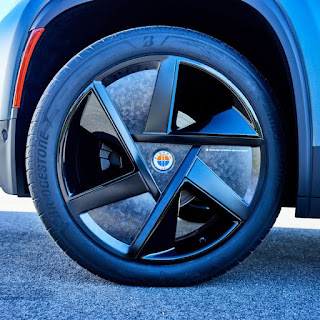
Recycled carbon fiber used in the Fisker 22” wheel for the electric Ocean SUV!

 📢Saturday Spotlight!📢 Recycled carbon fiber used in the Fisker 22” wheel for the electric Ocean SUV!


@Fisker Inc's ambitious plans to relaunch itself as an electric-vehicle manufacturer are nearing a crucial inflection point as the 2023 Ocean SUV is unveiled at the 2021 Los Angeles auto show. Led by the company's namesake and CEO, @Henrik Fisker, the revived brand is focusing on sustainability and environmental responsibility with the Ocean, which utilizes reclaimed materials such as recycled plastic bottles to line the interior of the luxury SUV. 


Designed from start to finish by Henrik and his world-class team, the Fisker Ocean zero-emissions SUV is ready to disrupt the automotive world through its beautiful craftsmanship, ingenious engineering, innovation, affordability, and sustainability. Are you ready for your all-electric future? 


Here at Managing Composites, we certainly are! However, our all-electric future NEEDS some carbon!


  Luckily for us, Frisker is not going to leave us hanging: At launch, 5000 special-edition Ocean One models will be available, featuring unique 22-inch aerodynamic wheels that are made from recycled carbon fiber and aluminum. 😍


What do you think about this design? 🤪


Source:#managingcomposites


MIT Engineers Build Impossible Material: Stronger Than Steel But Light as Plastic

 Developed with the help of a novel polymerization process, MIT chemical engineers have developed a two-dimensional polymer that self-assembles into sheets, unlike other polymers that often form one-dimensional chains. 

Polymers that consist of all kinds of plastics are formed with chains of building blocks that are known as monomers. The chains grow by adding new molecules at their ends. After formation, the polymers can be shaped into 3D objects via the process of injection molding.

Scientists have often hypothesized that if polymers could be induced to grow into a 2D sheet, they’d be strong yet lightweight. However, previous failed attempts made them believe that achieving something like this was impossible. 


One of the reasons why this was the case, as if even one monomer flips up or down out of the plane of the growing sheet, the material would start to expand in three dimensions, not allowing a sheet-like structure to form. 

However, now researchers have come up with a novel polymerization process that allows them to create a two-dimensional sheet dubbed polyaramide. For the monomer building blocks, they use a compound dubbed melamine that contains a ring of carbon and nitrogen atoms. 

In perfect conditions, these monomers can grow into two dimensions, forming discs. The discs stack above each other, held together by hydrogen bonds between layers, whilst creating a stable and strong structure. 


Moreover, since the material is self-assembled in solution, it can be mass-produced by increasing the quantity of starting materials. They also demonstrated that they could coat surfaces with films of the material that they call 2DPA-1.

Researchers also discovered that the new material’s elastic modulus -- the force it takes to deform a material -- is between four and six times more than bulletproof glass. For destroying the material, the energy required is twice that of steel even though the material has just one-sixth the density of steel. 

The material is also impermeable to gases, thanks to the monomers that lock together, preventing molecules from getting in between them. 

Researchers are now looking into more detail on how the polymer is able to form 2D sheets while also playing with changing its molecular makeup to form other kinds of novel materials. 


Source:MIT


Toray Advanced Composites completes NCAMP Qualification for Cetex® High Performance Thermoplastic Composite Materials

Toray Advanced Composites a global leader in advanced composite materials, today announces its Toray Cetex® TC1225 low-melt PAEK has achieve...