Saturday, April 17, 2021

Europe could operate 40,000 km of hydrogen pipelines by 2040 - operators

Europe could devote 40,000 km (24,800 miles) of natural gas pipelines to hydrogen by 2040 once production and imports of the alternative fuel take off, transmission systems operators (TSOs) said on Tuesday.

The hypothetical European hydrogen backbone scenario envisages how elements of 2020 "green" hydrogen strategies at the European Union and national level will fit together, said speakers during an industry webcast involving 23 grid operators from 21 countries.


On the road to decarbonization, European policymakers aim for the region to produce, transport, and market green hydrogen from renewable energy via electrolysis to replace “grey” hydrogen from gas and to substitute oil products across manufacturing industries and in heating and transport.

"We have found that it is technically possible and economically feasible to use the existing gas infrastructure to create this hydrogen backbone," chief coordinator Daniel Muthmann said during the webcast.

"It helps to integrate large amounts of renewable energy and it creates the basis for a liquid, cross-border market for renewable and low-carbon hydrogen," said Muthmann, who is head of corporate development, strategy, policy and communication at Open Grid Europe (OGE), a leading grid operator.

The TSOs estimate related costs at between 43 billion euros ($51.30 billion) and 81 billion euros.

Some 69% of the proposed hydrogen network could consist of repurposed natural gas pipelines, they said.

The remaining 31% would be needed to connect future hydrogen consumers in countries with currently few gas grids, but foreseeable high hydrogen demand and production.

The TSO report said transportation costs could be 0.11-0.21 euros per kg of hydrogen, which it estimated at a future production cost of 1-2 euros per kg.

Skeptics of the hydrogen drive argue that natural gas is not emissions-free and green hydrogen still uncompetitive.


Source:reuters.com


India’s first-ever floating LNG storage, regasification unit arrives:

 India’s first floating storage and regasification unit (FSRU) FSRU Höegh Giant has arrived at H-Energy’s Jaigarh Terminal in Maharashtra on Monday, April 12, 2021, from Keppel Shipyard, Singapore.

An FSRU is a special type of ship used for transiting and transferring Liquefied Natural Gas (LNG) through the oceanic channels.

The 2017-built Höegh Giant has a storage capacity of 170,000 cubic metres and an installed regasification capacity of 750 million cubic feet per day (equivalent to about 6 million tonnes, per year). H-Energy has chartered the FSRU for a 10 year period. Höegh Giant will deliver regasified LNG to the 56-kilometre long Jaigarh-Dabhol natural gas pipeline, connecting the LNG terminal to the national gas grid.


The facility will also deliver LNG through truck loading facilities for onshore distribution, the facility is also capable to reload LNG onto small-scale LNG vessels for bunkering services. H-Energy also intends to develop a small-scale LNG market in the region, using the FSRU for storage and reloading LNG onto smaller vessels.

Darshan Hiranandani, chief executive officer, H-Energy, said, “This will be India’s first FSRU based LNG regasification terminal, which marks a new chapter in India's mission for accelerated growth of LNG infrastructure. FSRU based LNG Terminals aim at providing the ability to enhance the pace of natural gas import capability in an environment-friendly and efficient manner”.

“We are committed to the growth of the LNG market in India. We aim to contribute to the overall development of the natural gas value chain, aligned with the prime minister’s vision of increasing the share of natural gas in India’s energy mix from precent 6 percent to 15 percent by 2030,” he added.

With the berthing of the FSRU Höegh Giant, the LNG regasification terminal will be ready to start testing and commissioning activities soon.

H-Energy has developed the LNG terminal in accordance with world-class engineering & safety standards. The LNG terminal is located at JSW Jaigarh Port in the Ratnagiri district of Maharashtra, on the west coast of India. The port is the first deepwater, 24/7 operational private port in Maharashtra.

H-Energy
H-Energy has been established to offer environmentally safe and sustainable energy solutions. H-Energy is currently developing LNG regasification terminals and cross-country pipelines on the west and east coast of India. These infrastructure projects will entail investments of up to $2.0 billion.

Source:Itln.in


Friday, April 16, 2021

Terpene Technologists Report Anti-Covid Breakthrough

 CANNABIS CULTURE – Israeli-based Technologies firm Eybna says a recently discovered combination of terpenes and CBD has the potential to manage the symptoms of COVID-19, and may even prevent infection altogether. 

We used our database and advanced data-mining and formulation design methodologies to research and isolate terpenes with elevated anti-inflammatory properties and optimize their ratios.” Says Nadav Eyal CEO and co-founder of Eybna. “This enabled us to develop and manufacture a patented data-driven terpene formulation that is effective, safe, and synergetic.

For the last 6 years, Eybna has been studying the therapeutic benefits of the cannabis plant and its phytochemicals for use in adult wellness products.  When COVID-19 first emerged, Eybna partnered with CannaSoul to analyze the potential of terpenes and cannabis phytotoxins.  Eyal states, “With the lack of safe anti-inflammatory pharmaceutical drugs, we decided to put our knowledge and formulation technology to the test – by demonstrating their efficacy versus dexamethasone, a steroid which has many unknown side effects. The results of this study exceeded our expectations.”  


NT-VRL terpene composition is being peer-reviewed in 11 studies currently, including studies that show protective agents could also prevent inflammatory illnesses in vitro directly related to COVID-19.  Testing is starting with Human Coronavirus strain E229 (HCoV-E229), which has similar properties to COVID-19 but is regarded as safer to work within lab settings.  There are a variety of COVID-19 strains now active worldwide, and Eybna plans to work with these in the near future.  

In reference to Eybna’s discovery and its value in relation to the pandemic, the journal Life wrote, “Even though the vaccination of the world’s population against COVID-19 has begun and is expected to proceed gradually, there is no clear expectation of completion. However, some individuals will not be vaccinated due to personal choice or health limitations. In addition, several population groups such as younger age groups will be the last to get vaccinated. A natural antiviral solution with minimal side effects that can be used alone or in conjunction with vaccines as a preventative treatment may be a safe and relatively easy way to reduce infection in those populations.”

Eybna looks forward to being able to continue their research into highlighting the proven scientific benefits of cannabis and evolving it into effective, safe, targeted use.  According to Eyal, “Research and technology are quickly evolving to help access the huge untapped potential of terpenes. We believe that we are positioned to have a major contribution to that evolution, and we’re working hard to continue investigating the full scope of cannabis phytochemicals functional uses for health and wellness.”

NT-VRL is already on the market along with partners such as Esteem and Provacan and Loop Labs with products such as the Nano Mist Inhaler and Oral Spray canister designed to optimize delivery, with more planned to be introduced to the US, Canada, and EU markets in Q3 of 2021.  

Eybna is currently expanding by opening a new facility in the United States and developing new partnerships, and their research potential is expected to continue to grow exponentially.  Cannabis has so much still-unrealized potential in the medical field, and Eybna plans to be at the forefront of this progress. 

Thursday, April 15, 2021

European Plastic Industry Faces Extreme Raw Material Shortage and Price Increase

 The European plastics converting industry is facing severe shortages of raw materials and extreme price increases never experienced. This situation is threatening the economic survival of numerous SMEs but also endangering the production of countless products, ranging from applications in the building and automotive industry to essential goods for the food packaging and pharmaceutical supply chains.

Increased Raw Material Scarcity Impacting Businesses

The more than 50,000 SMEs that form the plastics converting industry in Europe are under severe pressure, still recovering from the effects of the COVID-19 pandemic and now faced with a raw material scarcity that not only dramatically increased their cost of production but threatens to stop it altogether.


Recent surveys amongst plastics converters in several Member States have shown that more than 90% of them are affected by this supply crisis and many are forced to reduce their production and accept less or no new customers to be able to honor their existing agreements. If this situation continues further, the supply of essential goods for the food and pharmaceutical industries will no longer be guaranteed.

According to EuPC managing director Alexandre Dangis, “Manufacturers of plastic products all over Europe are experiencing serious bottlenecks in the supply of raw materials since the beginning of this year. Delivery problems have become increasingly widespread, affecting raw materials for example (not limited) such as polypropylene, polyvinyl chloride, and polyethylene, as well as special additives that are crucial for the manufacture of compounds and plastic products.”

The serious market disruptions currently taking place all over Europe are a symptom of the structural imbalance in Europe between the local production of and demand for raw materials and additives. Without restoration of that balance, periodic recurrence of gross disruption of the production chain is highly likely. Ultimately, end customers will also suffer damage due to disruptions in the delivery of (semi-) finished products.”

Limited Switch to Recycled Materials


In many cases, a switch to recycled material is only feasible to a limited extent. In several applications, legal safety regulations, technical hurdles, and quality requirements currently prevent the wider use of recycled materials. Especially for the mentioned essential goods. Recyclates are not available in sufficient quantities and consistent quality yet. Where recyclates are established alternatives, prices are rising significantly to parallel virgin material - and availability is declining.

Europe is a net importer for polymer raw materials and is therefore above-average vulnerable to market disruptions. The current shortages are caused by the improving global economy in combination with exports of plastics from Europe to Asia and North America. Logistical problems due to a shortage of containers to Europe also contribute, as does the lower production of plastics in the USA. Furthermore, the demand for certain raw materials used for protective articles against COVID-19 is extremely high. In addition, we see an unprecedented great number of declarations of force majeure,” said Ron Marsh, chairman of the Polymers for Europe Alliance.


Source: EuPC

Monday, April 12, 2021

Saudi Arabia takes steps to lead the $700B global hydrogen market

 Sun-scorched expanses and steady Red Sea breezes make the northwest tip of Saudi Arabia prime real estate for what the kingdom hopes will become a global hub for green hydrogen.

As governments and industries seek less-polluting alternatives to hydrocarbons, the world’s biggest crude exporter doesn’t want to cede the burgeoning hydrogen business to China, Europe or Australia and lose a potentially massive source of income. So it’s building a $5 billion plant powered entirely by sun and wind that will be among the world’s biggest green hydrogen makers when it opens in the planned megacity of Neom in 2025


The task of turning a patch of desert the size of Belgium into a metropolis powered by renewable energy falls to Peter Terium, the former chie.f executive officer of RWE AG, Germany’s biggest utility, and clean-energy spinoff Innogy SE. His performance will help determine whether a country dependent on petrodollars can transition into a supplier of non-polluting fuels.

“There’s nothing I’ve ever seen or heard of this dimension or challenge,” Terium said. “I’ve been spending the last two years wrapping my mind around ‘from scratch,’ and now we’re very much in execution mode.”

Hydrogen is morphing from a niche power source — used in zeppelins, rockets and nuclear weapons — into big business, with the European Union alone committing $500 billion to scale up its infrastructure. Huge obstacles remain to the gas becoming a major part of the energy transition, and skeptics point to Saudi Arabia’s weak track record so far capitalizing on what should be a competitive edge in the renewables business, especially solar, where there are many plans but few operational projects.

But countries are jostling for position in a future global market, and hydrogen experts list the kingdom as one to watch.

The U.K. is hosting 10 projects to heat buildings with the gas, China is deploying fuel-cell buses and commercial vehicles, and Japan is planning to use the gas in steelmaking. U.S. presidential climate envoy John Kerry urged the domestic oil and gas industry to embrace hydrogen’s “huge opportunities.”

That should mean plenty of potential customers for the plant called Helios Green Fuels. Saudi Arabia is setting its sights on becoming the world’s largest supplier of hydrogen — a market that BloombergNEF estimates could be worth as much as $700 billion by 2050.

“You’re seeing a more diversified portfolio of energy exports that is more resilient,” said Shihab Elborai, a Dubai-based partner at consultant Strategy&. “It’s diversified against any uncertainties in the rate and timing of the energy transition.”

Blueprints are being drawn and strategies are being announced, but it’s still early days for the industry. Hydrogen is expensive to make without expelling greenhouse gases, difficult to store and highly combustible.

Green hydrogen is produced by using renewable energy rather than fossil fuels. The current cost of producing a kilogram is a little under $5, according to the International Renewable Energy Agency.

Saudi Arabia possesses a competitive advantage in its perpetual sunshine and wind, and vast tracts of unused land. Helios’s costs likely will be among the lowest globally and could reach $1.50 per kilogram by 2030, according to BNEF. That’s cheaper than some hydrogen made from non-renewable sources today.

Competing on Cost

It’s more expensive to produce renewable energy in Europe, and the continent’s anticipated demand while implementing a Green Deal should exceed its own supply, Terium said. That $1 trillion-plus stimulus package will try to make the continent carbon-neutral.

“By no means will they be able to produce all the hydrogen themselves,” he said. “There’s just not enough North Sea or usable water for offshore wind.”

Terium, who is Dutch, joined Neom in 2018 to design its energy, water and food networks. His enthusiasm for technologies such as electric vehicles and digital networks wasn’t matched by Innogy’s investors, but it is by the backers of Neom.

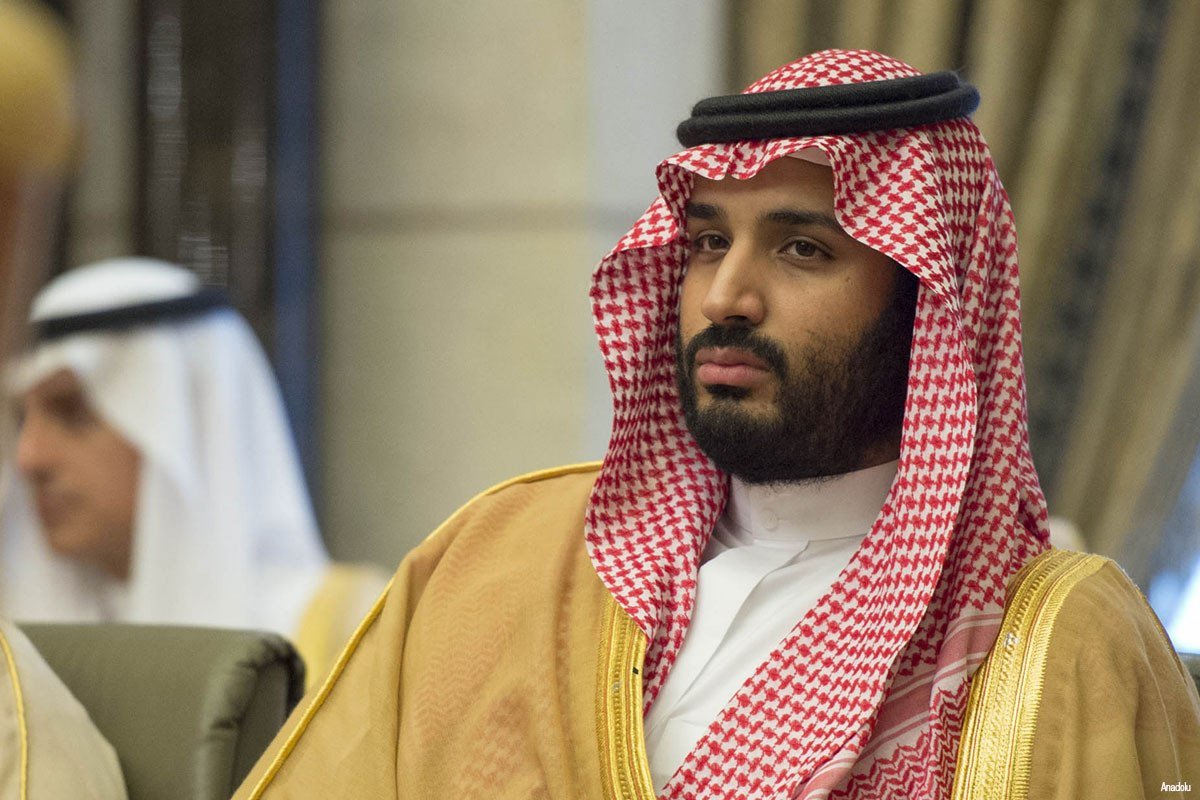
The most important of those is Crown Prince Mohammed bin Salman, the 35-year-old de facto ruler, who envisions Neom as a zero-emissions exemplar helping transform society and the economy. The hydrogen plant is part of that vision. But while Neom’s $500 billion price tag prompts questions about whether it will go ahead exactly as planned, the hydrogen effort doesn’t depend on the megacity’s overall success.

There are other challenges, too: The country produces one-eighth of the world’s oil supply, but its operational renewables capacity is small by regional standards, and it’s starting from zero with green hydrogen.

The government is partnering with Acwa Power, a Riyadh, Saudi Arabia-based power developer partly owned by the kingdom’s sovereign wealth fund, and Air Products and Chemicals Inc., a $58 billion company based in Allentown, Pennsylvania, to build the green hydrogen plant.

The trio is splitting the costs of Helios, which will use 4 gigawatts of solar and wind power.

“As the first gigawatt plant, we will have an advantage in developing further innovation,” Terium said. “This is not going to be the end of the game.”

For starters, Helios will produce 650 tons of hydrogen a day by electrolysis – enough for conversion to 1.2 million tons per year of green ammonia. Air Products will buy all of that ammonia, which is easier to ship than liquid or gaseous hydrogen, and convert it back upon delivery to customers.

Enough green hydrogen will be produced to maintain about 20,000 city buses. There are about 3 million buses operating worldwide, and Air Products wants to be a mainstay in depots switching to hydrogen, said Simon Moore, vice president of investor relations.

“We’re not going to wait until this project comes on-stream in 2025 to think about additional capacity,” he said.

Fuel-cell vehicles could capture as much as 30% of bus-fleet volume globally by 2050, with growth coming primarily from China and the European Union, according to BNEF. Moore declined to identify Helios’s clients.

Hydrogen will cost more than polluting alternatives at first, but enough governments and businesses face stringent carbon targets that need the gas to meet them, Moore said. Thirteen nations have hydrogen strategies in place, and another 11 are preparing theirs, according to BNEF.

Germany said it needs “enormous” volumes of green hydrogen, and it hopes Saudi Arabia will be a supplier.

“The interest Saudi Arabia has had from investors leads us to believe that there is a sound economic case for hydrogen, even at current prices,” a spokesman for the Energy Ministry said.

At the same time, the government is trying to boost its own scant use of renewable energy. Currently, under 700 megawatts operate nationwide -- less than 2% of Spain’s installed capacity. The nation plans to meet half of its power needs from renewables by 2030 and has several projects under construction or soon to start.

Saudi Arabia also is one of the few countries regularly burning crude to make electricity. The highly polluting practice reached a four-year peak in August, and critics say the energy used by the Neom plant should be diverted into the national grid instead.

Yet the focus remains on exports. Petrostates stand to lose as much as $13 trillion by 2040 because of climate-change targets, and Saudi Arabia is among those expected to be most affected.

The hydrogen plant will produce 15,000 barrels of oil equivalent per day at most, hardly a match for the 9 million barrels of crude the kingdom pumps daily. Even so, finding a way to corner part of the clean-fuels market represents a necessary economic lifeline.

Sunday, April 11, 2021

New research reveals how long it takes for cannabis impairment to subside

 New research has shown for the first time how long cannabis users are likely to be impaired and when it may be safe for them to drive.The findings, researchers and advocates say, strengthen the case for changes to drug-driving laws in much of Australia.

Researchers from the Lambert Initiative for Cannabinoid Therapeutics at the University of Sydney discovered users were impaired for between three and 10 hours after taking moderate to high doses of the intoxicating component of cannabis, tetrahydrocannabinol (THC).

THC can be detected in the body for weeks after cannabis consumption, meaning users can face fines and loss of their licence, despite being unaffected by the drug.


The research, published in Neuroscience & Behavioural Reviews, analysed 80 scientific studies on the effect of THC on driving performance conducted over the past 20 years.

It found the exact level of impairment depended on the dose, whether the THC was taken orally or inhaled and how often the person used the drug, among other factors.

“Our analysis indicates that impairment may last up to 10 hours if high doses of THC are consumed orally," the study's lead researcher Danielle McCartney said.

"A more typical duration of impairment, however, is four hours, when lower doses of THC are consumed via smoking or vaporization and simpler tasks are undertaken."

The study also found regular cannabis users became less affected by THC than those who used cannabis occasionally.

Dr McCartney said people could be impaired for six or seven hours if higher doses of THC were inhaled and complex tasks, like driving, were assessed.

Her research is the first comprehensive meta-analysis to put a timeframe on impairment.

"Our evidence should hopefully help people to make informed decisions and policymakers to make policies that are evidence-based and tell people how long they should wait before driving," she said.

The Therapeutic Goods Administration (TGA) has approved 100,000 prescriptions for medicinal cannabis in Australia.

Academic director of the Lambert Initiative, Iain McGregor, said medicinal cannabis users were particularly interested to know when it was safe for them to drive, despite the law being clear on the issue.

"You got this massive amount of a prescription drug going into people who are told, 'You can't drive at all, you can't even have one molecule of THC in your system', which is, you know, just ridiculous," Professor McGregor said.

"THC can be detected in the body weeks after cannabis consumption while it is clear that impairment lasts for a much shorter period of time. Our legal frameworks probably need to catch up with that."

Former magistrate David Heilpern said the research showed laws around roadside drug testing needed to change.

Mr Heilpern retired early, partly due to his frustration at seeing so many medicinal cannabis patients lose their licence, and sometimes their livelihoods, after being caught driving with small amounts of THC in their system.

"We had a situation where people were taking their medicine as prescribed, they weren’t driving in any adverse way and yet they were losing their licence, being fined and getting a criminal record,' he said.

"I started driving home from work, thinking, I just can't do this.

iption but could not drive with even a detectable level.

He is part of the Cannabis Law Reform Alliance, which is advocating for the amendment to state laws, providing medicinal cannabis users a defence if they test positive to a roadside drug test.

The defence already exists in Tasmania and there are bills before parliament in Victoria and South Australia. NSW parliament rejected a bill on the issue in October.

"In NSW, we already have that law as it applies to morphine, Mr Heilpern said.

"If you have a detectable level of morphine in your system and you can show you have a prescription for it, then you have a defence.

"All we have to do is do that for cannabis. It’s a very simple amendment and it solves the problem."

Gino Vambaca, co-founder of Harm Reduction Australia, said Australia's laws punished people for past drug use, not for unsafe driving.

"It's not a road safety campaign anymore, it's a detect and penalise campaign," he said.

"We're not condoning people using drugs and driving, but what we’re saying is, there's no attempt by the police to even measure impairment.

"We’re having to say to people using medicinal cannabis: ‘Do you want to drive or do you want your pain relief, because you can't do both.’

"And that’s a horrible choice for them to have to make."

Source:abc.net


Friday, April 9, 2021

New International Standard to Measure Structural Properties of Graphene

 NPL, in collaboration with international partners, has developed an ISO/IEC standard, ISO/TS 21356-1:2021, for measuring the structural properties of graphene, typically sold as powders or in a liquid dispersion.


The ISO/IEC standard allows the supply chain to answer the question ‘what is my material?’ and is based on methods developed with The University of Manchester in the NPL Good Practice Guide 145.

Verified Quality Control Methods


In conjunction with the international ISO/IEC terminology standard led by NPL, ISO/TS 80004-13:2017, it will be possible for commercially available material to be correctly measured and labelled as graphene, few-layer graphene or graphite.

As the UK’s National Metrology Institute, NPL has been developing and standardizing the required metrologically-robust methods for the measurement of graphene and related 2D materials to enable industry to use these materials and realize novel and improved products across many application areas.

The continuation of the NPL-led standardization work within ISO TC229 (nanotechnologies) will allow the chemical properties of graphene related 2D materials to be determined, as well as the structural properties for different forms of graphene material, such as CVD-grown graphene.


This truly international effort to standardize the framework of measurements for graphene is described in more detail in Nature Reviews Physics, including further technical discussion on the new ISO graphene measurement standard.

Dr Andrew J Pollard, science area leader at NPL said, “It is exciting to see this new measurement standard now available for the growing graphene industry worldwide. Based on rigorous metrological research, this standard will allow companies to confidently compare technical datasheets for the first time and is the first step towards verified quality control methods.”

Dr Charles Clifford, senior research scientist at NPL said, “It is fantastic to see this international standard published after several years of development. To reach international consensus especially across the 37 member countries of ISO TC229 (nanotechnologies) is a testament both to the global interest in graphene and the importance of international cooperation.”

James Baker, CEO of Graphene@Manchester said, “Standardization is crucial for the commercialization of graphene in many different applications such as construction, water filtration, energy storage and aerospace. Through this international measurement standard, companies in the UK and beyond will be able to accelerate the uptake of this 21st Century material, now entering many significant markets.”


Source: NPL

SABIC further divests its European Petrochemical (EP) business and its Engineering Thermoplastics (ETP) business in the Americas and Europe

The Saudi Basic Industries Corporation (SABIC) today announced the signing of two strategic transactions to divest its European Petrochemica...