Sunday, March 3, 2019

Braskem Announces Studies Focused on Transforming Post-Consumer Plastics

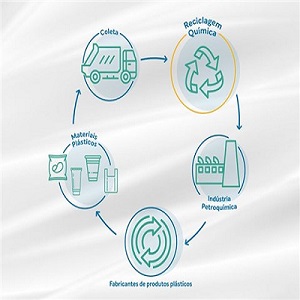
Seeking solutions that contribute to the circular economy and to sustainable development, Braskem announces new partnerships for the development of chemical recycling. It will be focused on transforming post-consumer plastics, such as grocery bags and packaging films for snacks and cookies, once again into chemical products that can be used by various different value chains and will benefit the general public. Braskem has applied its knowledge and commitment once again to move the industry towards the circular economy.


Research into Technologies Transforming Plastics


The partnerships seek to further research into technologies that can transform plastics that are more difficult to be recycled mechanically into new chemical products. The research is being conducted in partnership with:

  • Polymer Engineering Laboratory (EngePol) at the Alberto Luiz Coimbra Institute of Graduate Studies
  • Research in Engineering of the Federal University of Rio de Janeiro (COPPE/UFRJ)
  • SENAI Institute for Innovation in Biosynthetics (SENAI CETIQT)
  • Cetrel (an environmental service company that started its activities in 1978 jointly with manufacturers located in the Camaçari Petrochemical Complex)

"As we strive to reach a true circular economy, we recognize the challenges and limitations posed by traditional recycling technologies. Braskem is committed to developing, implementing and offering sustainable solutions. Chemical recycling and its potential to overcome all these challenges and limitations will enable us to achieve this goal. We are accelerating these efforts through partnerships and collaboration with other companies that think like we do in order to reach these targets as soon as possible," explained Gus Hutras, head of Process Technology at Braskem.

Technological Route Complementing Braskem’s Initiatives


This new technological route complements the initiatives that Braskem has recently undertaken to contribute to the Circular Economy, which is a production concept that involves reducing, reusing, recuperating and recycling materials to create a sustainable cycle from the production phase to the reintegration of materials in a new production process.

"These studies in chemical recycling uphold the principles of Braskem, which drives innovation to develop sustainable solutions. Every day, we want to create businesses and initiatives that increase the value of plastic waste," said Fabiana Quiroga, head of Recycling. "The advantage of chemical recycling lies in its capacity to process and transform plastic waste back into a raw material that can be used to make new plastics," she added.

To add value to materials made from recycled resins, Braskem has maintained, since 2015, the Wecycle platform, which combines the need for proper disposal with the market's demand for sustainable raw materials. The platform works to develop businesses and initiatives that add value to plastic waste through partnerships, which enhances the development of products, solutions and processes that involve all links of the plastics recycling chain by supporting businesses and actions involving recycling.

Braskem's Initiatives to Promote the Circular Economy


Braskem, the Americas' largest resin producer and the world's leading biopolymer producer, has defined a series of global initiatives to boost the Circular Economy in the production chain of manufactured plastic goods. Entitled "Braskem's Positioning for the Circular Economy," the document establishes:

  • Initiatives for forging partnerships with clients to conceive new products that will extend and facilitate the recycling and reuse of plastic packaging, especially single-use packaging
  • It also establishes higher investments in new resins derived from renewable resources, such as Green Plastic made from sugar cane, and support for new technologies, business models and systems for collecting, picking, recycling and recovering materials

Braskem invites its clients and other stakeholders to join forces. The initiatives also include encouraging consumers to get involved in recycling programs through educational actions focusing on conscientious consumerism, the use of life cycle assessment tools and support for actions that improve solid waste management to prevent the disposal of debris in marine environments.


Source: Braskem

Wednesday, February 27, 2019

SANITIZED AG Offers Non-biocidal Technology with Bluesign® Sustainability Label

Polyester sport and functional textiles treated with Sanitized® Odoractiv 10 are protected against “permastink”. Already a holder of the Swiss Technology Award, the Sanitized® Odoractiv 10 odor-management technology can now carry the bluesign® sustainability label, the Skin Friendly certification from the Hohenstein Institute and the ECO PASSPORT by OEKO-TEX® label. SANITIZED AG has been a bluesign® system partner for over 10 years.


Odor-free Polyester Functional Clothing

 An unwelcome odor can quickly develop in polyester sport and functional clothing, even if freshly washed. This is “permastink”. It’s a challenge to the textile industry as it generally reduces the attractiveness and market opportunities of sport and functional clothing made from polyester.

The patented, non-biocidal Sanitized® Odoractiv 10 technology provides specific solutions and sales arguments for the end products. It works in two ways: The odor-causing bacteria can’t stick to the textile surface and are washed out completely in a normal wash cycle. This is due to the anti-adhesive “coating” applied in the padding process. This effect has been proven in a test procedure developed in cooperation with EMPA (Swiss Federal Laboratories for Material Science and Technology). Secondly, the treatment has an adsorbing effect. The odors are “trapped” and repeatedly expelled during a normal wash cycle.

No Binder, No Nano


Another characteristic: The treatment with Sanitized® Odoractiv 10 doesn’t apply an additional binder system. As with all of our products, SANITZED AG uses no nano technology. The safety and tolerability have been confirmed by the Skin Friendly certification from the Hohenstein Institute and ECO PASSPORT by OEKO-TEX® label. These have now been joined by the bluesign® accreditation.


Source: SANITIZED AG


Sunday, February 24, 2019

Nestlé & Danimer Scientific to Produce Biodegradable Water Bottles Made from PHA

Nestlé and Danimer Scientific has announced a global partnership to develop biodegradable bottles. Nestlé and Danimer Scientific will collaborate to design and manufacture bio-based resins for Nestlé’s water business using Danimer Scientific’s PHA polymer Nodax™.
In 2018, the University of Georgia (U.S.A.) confirmed in a study that Nodax™ is an effective biodegradable alternative to petrochemical plastics. PepsiCo, an existing partner of Danimer, may also gain access to the resins developed under this collaboration.


Nodax™ PHA-based Eco-friendly Packaging


Stephen Croskrey, CEO of Danimer Scientific said: "Researchers have shown that PHA biodegrades in a wide range of environments, including industrial and home compost, soil, fresh and sea water,"
"As a material that is reliably biodegradable across both aerobic and anaerobic conditions, our Nodax™ PHA is an ideal fit to drive the creation of eco-friendly packaging for Nestlé’s products. Nodax™ PHA is suitable feedstock for industrial compost, home compost, and anaerobic digester facilities as well as reuse through recycling. We look forward to supporting Nestlé in the years to come.”


Addressing the Growing Global Plastic Waste Packaging Issue


In 2018, Nestlé announced its commitment to make 100% of its packaging recyclable or reusable by 2025. To achieve this goal, the company has already undertaken several initiatives including the creation of the Nestlé Institute of Packaging Sciences. This institute is dedicated to the discovery and development of functional, safe and environmentally friendly packaging solutions including functional paper and biodegradable materials.

Stefan Palzer, Chief Technology Officer for Nestlé said, "Strategic innovation partnerships play a key role for Nestlé as we make progress in improving the sustainability of our packaging. In order to effectively address the plastic issue in various markets, we need a wide range of technological solutions, including new paper materials and biodegradable polymers which can also be recycled."

Maurizio Patarnello, CEO of Nestlé Waters said, "Nestlé Waters is committed to addressing the growing global plastic waste packaging issue. A biodegradable bottle, which is also recyclable, can help improve the environmental impact of our business in countries without collection and recycling systems."

Source: Nestlé

New Catalytic Process to Develop Renewable Isoprene - Gevo

Gevo has announced that it has developed a proprietary, breakthrough catalytic process that transforms low-cost commercially available, or even waste by-product, renewable alcohols into renewable isoprene that would be expected to compete head-to-head on price with natural and petroleum-based chemical equivalents while reducing CO2 emissions.


Key Chemical Building Block for Producing Rubber

Isoprene is predominantly used in the production of synthetic-based rubber. The market for isoprene is estimated to be approximately $4 Billion USD by 2025, growing at a compound annual growth rate of 7% or greater driven by growth in the automotive sector.

Chemical-based Catalytic Process

Gevo recently developed a chemical-based catalytic process to convert low-value “fusel oils,” a mixture of alcohols that are byproducts from fermentation processes such as ethanol production, into renewable isoprene. Fusel oils from the ethanol industry alone equate to about 2.5 million tons of potential bio-based waste feedstock.
“Renewable, low-carbon, low-cost isoprene has been pursued by a lot of companies over the years without commercial success. Fermentation processes were always deemed to be too expensive to make isoprene directly. As it turns out, our catalytic chemistry team and engineers figured out how to make low-cost, renewable isoprene suitable for the market using a chemical catalyst that we apply to fusel oils, a mixed, renewable alcohol stream that is produced as a by-product or even as a waste during large industrial fermentations such as those in the ethanol industry."

"Our team was able to translate what we learned while developing renewable, sustainable jet fuel and isooctane, to enable other viable alcoholic feedstocks. I give credit to our catalytic chemistry team, led by Jonathan Smith, for this breakthrough. We expect to pursue a licensing strategy with this technology. Potential licensees could be ethanol producers that want to improve the profitability of their facilities, chemical plants that simply want cost competitive low-carbon isoprene, or even standalone businesses. This is the first time in my 30 years in this industry where I have seen what I believe to be a viable route to fully renewable, low-cost isoprene. I look forward to seeing this one get commercially developed. It looks as if this technology could address a large current unmet need in the marketplace and make money,”
said Dr. Patrick Gruber, Chief Executive Officer of Gevo.

Source: Gevo 

Thursday, February 21, 2019

New Study Claims FR Chemicals Increase SVOCs' Concentration in Exposed Children

Children living in homes with all vinyl flooring or flame-retardant chemicals in the sofa have significantly higher concentrations of potentially harmful semi-volatile organic compounds (SVOCs) in their blood or urine than children from homes where these materials are not present, according to a new Duke University-led study.


Higher Concentration of PBDEs in Children’s Blood Serum


The researchers presented their findings Sunday, Feb. 17 at the annual meeting of the American Association for the Advancement of Science in Washington, D.C.

They found that children living in homes where the sofa in the main living area contained flame-retardant polybrominated diphenyl ethers (PBDEs) in its foam had a six-fold higher concentration of PBDEs in their blood serum.

Exposure to PBDEs has been linked in laboratory tests to neurodevelopmental delays, obesity, endocrine and thyroid disruption, cancer and other diseases.

Vinyl Flooring Leads to Metabolite Concentrations


Children from homes that had vinyl flooring in all areas were found to have concentrations of benzyl butyl phthalate metabolite in their urine that were 15 times higher than those in children living with no vinyl flooring.

Benzyl butyl phthalate has been linked to respiratory disorders, skin irritations, multiple myeolma and reproductive disorders.

SVOCs in All Indoor Environments

SVOCs are widely used in electronics, furniture and building materials and can be detected in nearly all indoor environments,” said Heather Stapleton, an environmental chemist at Duke’s Nicholas School of the Environment, who led the research.
“Human exposure to them is widespread, particularly for young children who spend most of their time indoors and have greater exposure to chemicals found in household dust.” “Nonetheless, there has been little research on the relative contribution of specific products and materials to children’s overall exposure to SVOCs,” she noted.

Investigating Links between Products and Exposures


To address that gap, in 2014 Stapleton and colleagues from Duke, the Centers for Disease Control & Prevention, and Boston University began a three-year study of in-home exposures to SVOCs among 203 children from 190 families.

“Our primary goal was to investigate links between specific products and children’s exposures, and to determine how the exposure happened -- was it through breathing, skin contact or inadvertent dust inhalation,” Stapleton said.
To that end, the team analyzed samples of indoor air, indoor dust and foam collected from furniture in each of the children’s homes, along with a handwipe sample, urine and blood from each child.

We quantified 44 biomarkers of exposure to phthalates, organophosphate esters, brominated flame retardants, parabens, phenols, antibacterial agents and perfluoroalkyl and polyfluoroalkyl substances (PFAS),” Stapleton said.

Stapleton is the Dan and Bunny Gabel Associate Professor of Environmental Health at Duke’s Nicholas School.

Source: Duke University


Tuesday, February 19, 2019

New Enzyme-based Polymerization Method Enable Greener PEF Production

Recently, polymer chemists from the University of Groningen, led by Prof. Katja Loos, have described an enzyme-based polymerization method to produce PEF, an alternative to PET, which can be made from bio-based furan molecules.
Polyethylene terephthalate (PET) is one of the most successful plastics the material we use to make bottles and fibers for clothing. PET is used to make fizzy drink bottles because it has excellent barrier properties, which keeps the fizz inside. However, PET is made from petroleum-based building blocks.
"But furan-based polymers are a good alternative", says Prof. Katja Loos. Furans, which are characterized by an aromatic ring with four carbon and one oxygen atom, can be made from biomass-derived sugars, and polymerized into Polyethylene 2,5-furandicarboxylate (PEF). This alternative to PET, polyethylene furanoate (PEF), can be made from bio-based furan molecules, but to polymerize these furans you need toxic catalysts and high temperatures. Other copolyesters can be created from furans as well, resulting in plastics with different properties.


Viable Alternative to the Current Catalytic Polymerization


"Furans are mainly produced with enzymes. But for the polymerization, the same processes are used as have been used for PET production for the last 70 years", says Loos. Toxic metal-based catalysts and high temperatures that are needed for this process mean that it is not very environmentally friendly.

That is why Loos and her colleagues looked for an alternative polymerization method, one that uses enzymes. "We eventually found a commercially available enzyme that would do this", says Loos.

  • The polymers are made by combining furans with linear monomers, either aliphatic diols or diacidic ethyl esters.
  • The enzyme Candida antarctica lipase B (CALB) is a lipase that breaks down ester bonds, but the polymerization requires the creation of these bonds.

This may seem counter-intuitive, but it is not, explains Loos: "Enzymes catalyze equilibrium reactions, and we simply pushed the equilibrium towards the formation of ester bonds."

In their paper, the scientists describe how CALB and a number of furans and linear monomers are used to form different copolyesters. They succeeded in increasing the content of aromatic units in the polyester to a point that exceeds the properties of PET. The enzymatic polymerization therefore appears to be a viable alternative to the current catalytic polymerization.

"In our experiments, we used ether as a solvent, which you don’t want in a factory setting. But as the melting point of furans is quite low, we are confident that enzymatic polymerization will work in liquid monomers as well", says Loos.

Furan‐Based Copolyesters from Renewable Resources Using Enzymes Furan‐Based Copolyesters from Renewable Resources Using Enzymes

Greener Enzymatic Alternatives


As the CALB enzyme is commercially available, it is surprising that no one had used it before to avoid the process of toxic catalysts and high temperatures. The only explanation that Loos can offer is that most polyester production lines are geared to using these classical reactions, rather than the enzymatic alternative. And changing a production line is expensive. "However, our enzymatic polymerization process would be ideal for new companies working on green alternatives to PET."

Source: University of Groningen

Friday, February 15, 2019

Certifiably Complicated

One thing that became apparent at the IAA Commercial Vehicles 2018 was that the issue of hydrogen tank approval had yet to be resolved. Though it had already been said years ago that tanks “must only get approved,” the process is taking much longer than expected. At present, there are few 700-bar type IV units for sale in Germany.
The key reason for the lack of products seems to be that European automakers have not made a firm commitment to purchase tanks in large quantities for their vehicles. So far, OEMs have been ordering only few units for testing or integration into prototypes. At the same time, they have been demanding a lot from the manufacturers of those tanks, for example, by restricting the space in which units could be installed.

 Tank manufacturers in Europe are deeply frustrated about the entire situation. Circumstances will not permit them to ramp up production capacity and make their business economically viable, so they are waiting to get products approved until companies start asking for more.
The outlook is a bit of a different for those manufacturing tanks for a pressure of 350 bars or 500 bars. Type IV units in that pressure range are available for sale. The needed tank volume is a bit higher than that for 700-bar ones, as the lower pressure level reduces energy density. However, 350-bar tanks, for example, are mainly used in commercial and railroad vehicles, which offer more space to install a unit. And 500-bar tanks are typically found in stationary systems, which is why they are produced in higher numbers, so that unit prices have fallen as well. Sometimes, more than a hundred of them make up a single system, which is sold as a containerized solution. For instance, in Meckenheim, Cologne’s mass transit company is planning to install a fueling station that includes a stationary container housing 162 individual 500-bar pressure cylinders with a total weight of 1 metric ton.

In Asia, the above-mentioned issues have already been dealt with. Toyota has built tank factories and uses 700-bar units in its Sora buses. Hyundai has partnered with a manufacturer that can rely on Nexo car sales to drive demand. By contrast, reports say Daimler will need barely more than 1,000 units for the time being and after a few fuel cell vehicles leave the factory, production will again be put on hold.
As for the tank manufacturers, they said that those many delays in bringing fuel cell cars to market in Germany had nothing to do with their products. The bottleneck was not the tank: Approval could be obtained in around 12 months.

Duisburg’s ZBT research institute, however, has determined that there is still some more work to do when it comes to hydrogen tank regulations. In partnership with the National Organization Hydrogen and Fuel Cell Technology, or NOW for short, and Germany’s Materials Research and Testing Institute, BAM, it will hold a workshop in Berlin for tank manufacturers from all corners of the country to figure out whether there really is a need for all those efforts to remove a pressure vessel from a system and test it for leaks by filling the tank with water.


Not without reason did the German transportation ministry launch a project called Delfin right before year’s end. Its aim is to develop a pressure vessel at a reduced cost and weight. The ministry said that it would provide around EUR 7.5 million to “clear away one of the main barriers to market growth.” It is worth noting that the list of project partners includes not only automaker BMW, Daimler subsidiary NuCellSys and supplier Nproxx but also Ford. It has been a long time since the corporation announced anything fuel cell-related.

It seems there are still some points to clear up.

Sunday's THOUGHTFUL POST : THE “BENT KEY PRINCIPLE”

 🔑 THE “BENT KEY PRINCIPLE” How a Tiny Mistake Inside Toyota’s Factory Created One of the Most Powerful Ideas in Modern Business In the ear...