Wednesday, January 17, 2018

Researchers discover new catalyst for efficiently recycling waste carbon dioxide into plastic

'Paired with carbon capture technology, this could lead to an incredibly green production mechanism for everyday plastics, meanwhile sequestering harmful greenhouse gases'
Researchers have developed a method for efficiently converting carbon dioxide into plastic.
They say their findings could help divert carbon dioxide – a major contributor to climate change – from entering the atmosphere.

They could also help to reduce our reliance on fossil fuels.

A team of scientists from University of Toronto, University of California, Berkeley and the Canadian Light Source (CLS) successfully managed to work out the ideal conditions for converting carbon dioxide to ethylene.

Ethylene is used to make polyethylene, the most commonly used plastic in the world.
At the heart of the experiment was the carbon dioxide reduction reaction, which can be used to convert the gas into a variety of different substances.

Different metals can be used as a catalyst in this type of reaction, but the researchers chose copper, as its use can lead to the production of ethylene.

“Copper is a bit of a magic metal. It’s magic because it can make many different chemicals, like methane, ethylene, and ethanol, but controlling what it makes is difficult,” said lead researcher Phil De Luna.
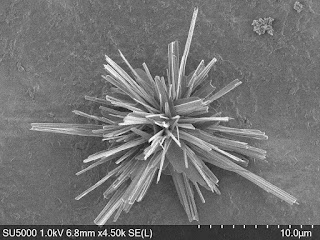


The researchers were able to design a catalyst and identify the precise conditions that maximise ethylene production during the reaction, while minimising methane and carbon monoxide production.
“I think the future will be filled with technologies that make value out of waste. It’s exciting because we are working towards developing new and sustainable ways to meet the energy demands of the future,” De Luna added.

The researchers say it is now possible to engineer a catalyst to meet those conditions, and that their findings could have “dramatic” positive effect.

“Paired with carbon capture technology, this could lead to an incredibly green production mechanism for everyday plastics, meanwhile sequestering harmful greenhouse gases.
For detailed article of this,kindly contact me on here with your email.

China develops subway car made of carbon fiber

CRRC Changchun Railway Vehicles, a subsidiary of State-owned trainmaker CRRC, announced that it has developed subway train made of carbon fiber.

The company said the new subway car is 35 % lighter than traditional metal ones, which can effectively improve its carrying capacity, save energy and operational cost, and reduce the wear and tear on the subway line.


As carbon fiber can better resist fatigue, corrosion, and UV radiation, subway cars made of such material are expected to have an operational life of at least 30 years, said experts with CRRC Changchun.

In addition, the thermal and sound insulation performance of carbon fiber is also better than traditional metal, which makes the new car more energy-saving and less noisy during operation.

CRRC Changchun has more than 18,000 employees and annually manufactures more than 8,000 trains. Its products have been exported to more than 20 countries and regions, including the United States, Australia and Brazil.

The advance will lead to the mass application of carbon fiber as a material in the area of rail transit, noted the company. While it did not say when it plans to apply carbon fiber in mass production, it said its intellectual property rights guaranteed the mass adaptation of the material.

Source:www.crrcgc.cc

Monday, January 15, 2018

Airbus and its Chinese partners strengthen cooperation

In the presence of visiting French President Emmanuel Macron and Chinese President Xi Jinping, Airbus has signed a Memorandum of Understanding with the National Development and Reform Commission of China (NDRC) on the further development of industrial cooperation in Tianjin.

The agreement was signed by He Lifeng, Chairman of the National Development and Reform Commission (NDRC) of China and Fabrice Brégier, Airbus COO and President Commercial Aircraft in Beijing today. Both sides agree to further enhance their industrial partnership in Tianjin and strengthen the cooperation with regards to technical innovation, engineering capabilities and supply chain expansion.


On the same day, Airbus and its Chinese partners have also signed a framework agreement on ramping-up its A320 production rate at its final assembly line in Tianjin to six aircraft per month. 
This industrial ramp-up targets five aircraft by early 2019 and six per month by early 2020. Since its inauguration in 2008 the Final Assembly Line in Tianjin has assembled a total of 354 A320 Family aircraft (by 31st December, 2017). Deliveries to Chinese customers and to operators throughout the Asia-Pacific region have included the first A320neo in the second half of 2017.
“The industrial cooperation between Airbus and China and its continued success are a true role-model of a winning partnership between China and Europe. Together with our Chinese partners we are proud to lift our cooperation to new heights”, says Fabrice Brégier, Airbus COO and President of Commercial Aircraft. 
Airbus’ industrial footprint in China dates back to 1985, when the first product sub-contracting agreement was signed with Xi’an Aircraft Company. The total value of industrial cooperation between Airbus and Chinese aviation industry in 2017 amounts to nearly 600 million US dollars.

Friday, January 12, 2018

Developing 100 Percent Biodegradable Plastics from Bacteria


 His idea is to use bacteria to make plastics, specifically employing cyanobacteria, a photosynthesis-happy bug, as one of the starting materials. Weiss recently published a paper in Metabolic Engineering that outlines a new production method that would be powered by cyanobacteria and the naturally occurring Halomonas boliviensis.

Weiss recently joined ASU’s Polytechnic campus, where he will work on scaling up the process at the Arizona Center for Algae Technology and Innovation (AzCATI). Here, Weiss describes his idea for making environmentally friendly bioplastics.


Present Issues with Today’s Plastics


Plastics fall into two very distinct categories:

  • Those that can be melted down and reused
  • Those that cannot be reused

Recycling some plastics can save energy, but all plastics don’t ultimately degrade like biological materials down to “nothingness” or become metabolized by a living creature. Most plastics degrade like rocks: They just break down into smaller and smaller pieces that accumulate in the environment.

Plastics Produced are 100% Biodegradable. Over what time frame?


Degradation times depend on the object and conditions, but bioplastics typically break down faster than plant celluloses, like wood. With lots of biological activity, like in a compost pile, fibers and films will biodegrade within two months. The human body takes about three months to completely dissolve bioplastic suture threads. Something like plastic utensils in the ocean would take longer, but still be unrecognizable within a year.

Essentially, because the average usage-lifetime of a disposable plastic bag in the U.S. is 12 minutes, yet take hundreds of years to degrade, we're looking to bioplastics to create the benefits of disposability without the long-term negative consequences.

How these Bioplastics are Made


Taylor Weiss said:
“We created a symbiotic partnership between two bacteria, each specializing in a specific task. The cyanobacteria use photosynthesis to create sugar and are engineered to constantly excrete that sugar. A second bacteria (Halomonas boliviensis) then consumes the sugar to alternately grow and produce bioplastics in cycles. Additionally, the cyanobacteria are captured in hydrogel beads (made from seaweed extract) that are submerged in saltwater filled with the bioplastic-producing bacteria.”

Process Advantage


Taylor Weiss said:
“In the big picture, we don’t use resources better spent on food production (fresh water and farmable land) to first grow a crop that can be processed into sugar and then fed to the bacteria to make bioplastics. We’ve done this by efficiently bringing together two bacteria species that are among the best on Earth at making sugar and bioplastics.”

Trapping the cyanobacteria in a hydrogel is also critical — it means that the same cyanobacteria can be reused instead of regrown, and because the trapped cells barely grow at all, energy otherwise spent on growth can be redirected toward even greater sugar production. As a bonus, the system seems to stand up to contamination. Weiss didn’t tightly control the system to keep out contaminating bacteria, or add chemicals to kill them. What contamination was present simply didn’t interfere — for more than five months — because our bioplastic-producing bacteria was simply so good at consuming all of the sugar.

Make Process Industrially Viable

The cyanobacteria, the Halomonas boliviensis bacteria and hydrogel have already been industrialized, so each has a lot of proven potential. Using as little of the hydrogel as possible and for as long as possible needs to be further explored. That will help keep costs down. Bringing all these elements together and in real-world conditions at large scales needs to be done. Fortunately, we have a one-of-a-kind academic test bed facility here at AzCATI that is uniquely suited to answer the remaining production questions and push development of the technology.

Source: University of Arizona

Saturday, January 6, 2018

Aerion and Lockheed Martin join forces to develop a supersonic business jet

Two leaders in supersonic technology, Aerion and Lockheed Martin announced a Memorandum of Understanding (MOU) to define a formal and gated process to explore the feasibility of a joint development of the world's first supersonic business jet, the Aerion AS2. Over the next 12 months, the companies will work together to develop a framework on all phases of the program, including engineering, certification and production.


Aerion Chairman Robert M. Bass stated, "This relationship is absolutely key to creating a supersonic renaissance. When it comes to supersonic know-how, Lockheed Martin's capabilities are well known, and, in fact, legendary. We share with Lockheed Martin a commitment to the long-term development of efficient civil supersonic aircraft."

Lockheed Martin, known for developing the world's leading supersonic combat aircraft, the F-16, the F-35, and F-22, as well as the Mach 3+ SR-71 reconnaissance aircraft, is committed to fostering new innovations and developing supersonic technologies with civil and commercial applications.
During the last two and a half years, Aerion advanced the aerodynamics and structural design of the AS2 through a previous engineering collaboration agreement with Airbus. Through that effort, the two companies developed a preliminary design of wing and airframe structures, systems layout, and preliminary concepts for a fly-by-wire flight control system.

In May 2017, GE Aviation announced an agreement with Aerion to define a supersonic engine for the AS2. The latest announcement with Lockheed Martin further positions Aerion as the leader in the nascent sector of civil supersonic aviation.

Source:Lockheedmartin

Tuesday, December 26, 2017

Teijin Limited to Integrate its Carbon Fiber Business in 2018

Teijin Limited has recently announced that it will integrate its subsidiary Toho Tenax Co., Ltd., the core company of Teijin’s carbon fibers business, on April 1, 2018.


Maximizing Corporate Value


Integrating Toho Tenax within Teijin Limited will help maximize corporate value, specifically by expanding comprehensive capabilities through greater sharing of information, technologies and the optimized deployment of human resources throughout the Teijin Group. Teijin expects to strengthen its upstream-to-downstream global business by better leveraging its group synergies in high-performance materials and technology development and know-how.

Growth & Transformation Strategies


Teijin’s current growth and transformation strategies are focusing on core strengths in materials and healthcare business fields as the pillars of its operations, as expressed in its medium-term management plan for 2017-2019 “ALWAYS EVOLVING”. The company is increasingly emphasizing its development of strong, lightweight high-performance materials that offer environmental value solutions to meet demands for higher fuel efficiency in line with intensifying environmental regulations, and businesses focused on the aircraft and automotive fields.

In accordance with the integration, Toho Tenax Europe GmbH, Toho Tenax America, Inc. and Toho Tenax Singapore Pte. Ltd will be renamed Teijin Carbon Europe GmbH, Teijin Carbon America, Inc., and Teijin Carbon Singapore Pte. Ltd., respectively.

Source: Teijin Limited

Sunday, December 24, 2017

Breakthrough Technique to 3D Print Fully Functional Electronic Circuits from Plastics

Researchers at the University of Nottingham have pioneered a breakthrough method to rapidly 3D print fully functional electronic circuits. 


Fully Functional Electronic Circuits

Single Step Printing Process


The circuits, which contain electrically-conductive metallic inks and insulating polymeric inks, can now be produced in a single inkjet printing process where a UV light rapidly solidifies the inks.

The breakthrough technique paves the way for the electronics manufacturing industry to produce fully functional components such as 3D antennae and fully printed sensors from multiple materials including metals and plastics.

Combining 2D with 3D Printing

The new method combines 2D printed electronics with Additive Manufacturing (AM) or 3D printing - which is based on layer-by-layer deposition of materials to create 3D products. This expands the impact of Multifunctional Additive Manufacturing (MFAM), which involves printing multiple materials in a single additive manufacturing system to create components that have broader functionalities.

Overcoming Manufacturing Challenges


The new method overcomes some of the challenges in manufacturing fully functional devices that contain plastic and metal components in complex structures, where different methods are required to solidify each material.

Existing systems typically use just one material which limits the functionality of the printed structures. Having two materials like a conductor and an insulator expands the range of functions in electronics. For example, a wristband which includes a pressure sensor and wireless communication circuitry could be 3D printed and customized for the wearer in a single process.

The breakthrough speeds up the solidification process of the conductive inks to less than a minute per layer. Previously, this process took much longer to be completed using conventional heat sources such as ovens and hot plates, making it impractical when hundreds of layers are needed to form an object. In addition, the production of electronic circuits and devices is limited by current manufacturing methods that restrict both the form and potentially the performance of these systems.

Professor Chris Tuck, Professor of Materials Engineering and lead investigator of the study, highlighted the potential of the breakthrough:
“Being able to 3D print conductive and dielectric materials (electrical insulators) in a single structure with the high precision that inkjet printing offers will enable the fabrication of fully customized electronic components. You don’t have to select standard values for capacitors when you design a circuit, you just set the value and the printer will produce the component for you.”

Professor Richard Hague, Director of the Centre for Additive Manufacturing (CfAM) added:
“Printing fully functional devices that contain multiple materials in complex, 3D structures are now a reality. This breakthrough has significant potential to be the enabling manufacturing technique for 21st century products and devices that will have the potential to create a significant impact on both the industry and the public.”

How it Works


Dr Ehab Saleh and members of the team from CfAM found that silver nanoparticles in conductive inks are capable of absorbing UV light efficiently. The absorbed UV energy is converted into heat, which evaporates the solvents of the conductive ink and fuses the silver nanoparticles. This process affects only the conductive ink and thus, does not damage any adjacent printed polymers. The researchers used the same compact, low cost LED-based UV light to convert polymeric inks into solids in the same printing process to form multi-material 3D structures.

With advancements in technology, inkjet printing can deposit of a wide range of functional inks with a spectrum of properties. It is used in biology, tissue bioprinting, multi-enzyme inkjet printing and various types of cell printing, where the ‘ink’ can comprise of living cells.

The breakthrough has established an underpinning technology which has potential for growth in academia and industry. The project has led to several collaborations to develop medical devices, radio frequency shielding surfaces and novel structures for harvesting solar energy.

Source: University of Nottingham

SABIC further divests its European Petrochemical (EP) business and its Engineering Thermoplastics (ETP) business in the Americas and Europe

The Saudi Basic Industries Corporation (SABIC) today announced the signing of two strategic transactions to divest its European Petrochemica...