Monday, June 25, 2018

TITAN®53: new gas module features world’s largest composite cylinders

Hexagon has unveiled a new Mobile Pipeline® gas transport module, the TITAN®53, which employs the largest composite cylinder tanks in the world. After nearly a decade of success with TITAN® products, customers are requiring the ability to move greater volumes of compressed gases including natural gas, hydrogen and industrial gases.

The newly developed cylinders and 53-foot-long module optimize weight and capacity to meet the 80,000 lbs GVW limit in most of the United States delivering an estimated gas volume of 492,000 scf / 13,932 scm.


The TITAN®53 at delivers almost 40% greater payload while retaining all the advantages of the TITAN® platform. Applications for TITAN®53 include energy intensive industries converting to natural gas, virtual interconnects, gas islands, vehicle refueling, and transporting industrial gases.

The TITAN®53 is the most recent example of how Hexagon is adapting leading composite pressure vessel technology for a wide range of applications for CNG, hydrogen, propane and industrial gases.
Hexagon has experience building fuel solutions for rockets, locomotives, ships, and vehicles. Hexagon’s Mobile Pipeline® also provides transportation, storage and distribution solutions. Over 1,100 units of Mobile Pipeline® modules have been successfully deployed around the world through 2017.

Source: Hexagon


Saturday, June 23, 2018

Avantium to Build Bio-MEG Demonstration Plant in Netherlands

Avantium has started construction of a new demonstration plant that will help advance the production of bio-based alternative mono-ethylene glycol (MEG) made directly from renewable sugars.

Environmentally Friendly Plant-based Alternative:

As MEG is a component for making everyday consumer goods, such as PET and PEF plastics and polyester textiles, the development of an environmentally friendly plant-based alternative has strong potential. Today, more than 99% of MEG is produced from fossil resources and the market demand for this product is expected to grow from 28 million to 50 million tons in the next 20 years.


Novel Single-step Process

“Our novel single-step process can finally fulfil this demand in an environmentally sustainable manner that both consumers and leading brands have been seeking. I am proud of our team for making this important technological breakthrough. This enables renewable products growth for consumers that increasingly demand products brought to them in a responsible manner,” said Tom van Aken, Chief Executive Officer of Avantium.

New Plant to be Operational in 2019

The new plant will use Avantium’s pioneering Mekong technology to convert renewable sugars into bio-based MEG. The plant – part of a previously disclosed €15-20 million investment in our most advanced technologies – will be operational in 2019, employing up to 20 people.
Alongside this important investment decision by Avantium, the European Innovation Council has selected the Mekong technology as part of its €146 million investment in top-class innovators, entrepreneurs, small companies and scientists with bright ideas and the ambition to scale up internationally. “We are honored to be selected among the 79 innovative projects following face-to-face interviews with a jury of innovators, entrepreneurs and venture capitalists,” said Van Aken.

Novel Bio-MEG Technology

The objectives of the demonstration plant are to scale up the novel bio-MEG technology, validate the technical and economic feasibility of the process, and to collect data to execute an environmental life-cycle analysis (LCA) quantifying the sustainability benefits of the Avantium technology.
“This is a major step forward in the development of our Mekong technology,” said Zanna McFerson, Chief Business Development Officer of Avantium. “In addition to the environmental benefits, this demonstration plant will replicate commercial scale conditions of producing cost-effective bio-MEG; a drop-in product identical to the fossil-derived product."

"We are exploring partnership opportunities in bringing this technology to full-scale commercialization globally.” In parallel to this new development, Avantium is nearing completion of a biorefinery pilot plant for its Zambezi technology that produces high-purity glucose and lignin from non-food biomass. This biorefinery is located in Delfzijl, the Netherlands.


Source: Avantium

Friday, June 22, 2018

LyondellBasell & Braskem Announce Plans for Merger

LyondellBasell and Odebrecht S.A. have announced that the companies have entered into exclusive discussions regarding a potential transaction between LyondellBasell and Braskem.

Potential Transaction Between Lyondellbasell and Braskem

The companies jointly stated:

"Both LyondellBasell and Braskem share a strong culture of operational excellence and legacies of value-creating innovation.”

“We believe that the potential combination of LyondellBasell's and Braskem's complementary strengths, product portfolios and operational footprints would create significant value for our shareholders, customers and employees."

"Braskem's board of directors and management have been informed of the existence of these discussions. The discussions are preliminary and no agreements have been reached. Among other things, the parties will need to complete appropriate diligence, negotiate definitive agreements and obtain corporate approvals.”

“There can be no assurance the discussions will result in a transaction or on what terms any transaction may occur. LyondellBasell and Odebrecht S.A. do not intend to make any further comment unless and until the discussions conclude or are required by applicable law."


Source: LyondellBasell

Friday, June 15, 2018

Hexagon lands deal to manufacture new hydrogen tanks

Hexagon will be developing hydrogen storage tanks for an unnamed automaker

Hexagon Composites has announced that it has settled a new deal with an unnamed automaker. The deal represents the largest of its kind in the company’s history. Per the deal, Hexagon will be responsible for manufacturing hydrogen tanks that will be used by fuel cell vehicles. These vehicles are being developed by the automaker that has formed a deal with Hexagon.

Manufacturing expected to begin in 2020

According to Hexagon, production of the new vehicles is expected to begin in 2020 and will carry on for five years. The new hydrogen tanks will be manufactured alongside these vehicles. The tanks themselves will be developed at Hexagon’s manufacturing facility in Nebraska.

The demand for hydrogen storage solutions is growing quickly. Most of the world’s leading automakers are developing fuel cell vehicles, with plans to deploy these new cars in the coming years. These vehicles will need effective storage systems in order to efficiently and safely make use of hydrogen fuel. Hexagon Composites has experienced in this field.

Automakers are forming new deals to succeed in clean transportation:
Several automakers have begun working with companies like Hexagon in order to secure the future of their fuel cell vehicles. Companies like General Motors and Honda have partnered with Chinese companies in order to accelerate their clean transportation plans, for example.

Tuesday, June 12, 2018

Largest H2 utility fleet & first clean multi-fuel station unveiled in France

The ENGIE filling station, located in the heart of the International Market of Rungis, will power a fleet of 50 hydrogen-powered Renault Kangoo Z.E. utility vehicles, recently made available for long-term rental through Alphabet, provider of mobility solutions for companies. It is the largest hydrogen utility fleet and the first alternative multi-fuel station in France. The whole project has been given financial support from the European Fuel Cells and Hydrogen Joint Undertaking (FCH JU).

The Renault Kangoo vans will be used by ENGIE Cofely technicians to ensure multi-technical operations and maintenance work for commercial buildings in the Ile-de-France. Equipped with extended hydrogen autonomy systems by Symbio, these vehicles neither produce particles nor gas emissions, and are further enhanced with a reduced recharge time and greater autonomy.

This station has a provisional refueling capacity of 20 kg/day in hydrogen but should increase rapidly to 80 kg/day. This scale corresponds to the immediate needs of current vehicles in the south of Paris. The definitive installation will produce renewable hydrogen on site with an electrolyzer powered solely by renewable energy. The hydrogen station was designed, manufactured and integrated by McPhy.

With a stream of more than 25,000 vehicles per day, the Rungis Market, which offers free motorway toll to all clean vehicles that use the station for refueling, is a strategic location for the development of green mobility for freight transport in Ile-de-France.

ENGIE owns, through its subsidiary GNVert, more than 150 alternative fuel stations in France.

Source: ENGIE

For more polymer news,pls visit http://polymerguru.blogspot.in

Monday, June 11, 2018

Symphony & Eranova Collaborate for Algae-based Biopolymers Development


Symphony Environmental has announced that it has signed a collaboration agreement and commitment to a strategic investment (“Agreement”) with Eranova SAS (“Eranova”), a company registered in France.


Using Pollutant as a Source to Manufacture Bioplastics:

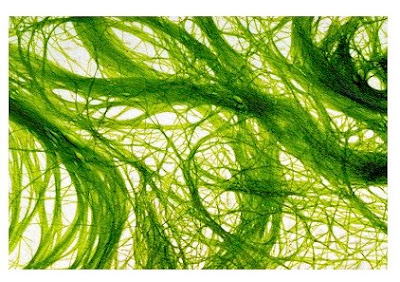
 Eranova has developed a unique technology and process (the “Technology”) which extracts starch from algae for use with other materials. The starch can be combined with other polymers to produce compounded resins which are compostable and biodegradable. These can be used to manufacture a wide range of finished products (“bioplastics”).

In addition, the Technology can be developed to produce biofuel, biopolymers, proteins for food and animal feed stock, as well as by-products for the pharmaceutical and cosmetic industries. Eranova is the applicant for PCT patent WO 2017/0463656 A1 and the application has been registered in several territories.

The importance of the Technology is that it will be possible to manufacture polymers from natural raw materials without the need to use arable land and fresh-water resources normally used for growing food crops. There is also a synergy with Symphony’s existing technologies to enhance the technical performance of polymers that will use the Technology.


The Main Terms of the Agreement are:


  • The Group will initially subscribe €500,122 for an 8% shareholding in Eranova when fully funded to start its pre-industrial development (the “Subscription”)
  • The Group will have an option to subscribe at market value for further shares to increase its shareholding to 51% of Eranova’s enlarged issued share capital, exercisable in one or more tranches at any time within three years after the initial investment
  • Symphony will have representation on the Board of Eranova

The Subscription is subject to completion of due diligence to the satisfaction of Symphony’s Board including confirmation that all other funding for Eranova is in place and ready to drawdown to start its pre-industrial development. The Subscription is financeable within Symphony’s current resources.

In addition, Symphony will have the right to purchase 75% of Eranova compound made in the Middle East and North Africa, for sale as compound or in manufactured finished products within the Middle East region exclusively, and on a non-exclusive basis globally, excepting thirteen(mainly European) countries for which Eranova will have exclusivity.

Symphony’s Investment


Eranova requires a total of €4,790,000 to start its pre-industrial development and Symphony’s investment represents one of the final tranches required. The project has won the backing of ADEME, (the French Environmental & Energy Management Agency), who after due diligence by KPMG, are supporting the project with €1,031,000 of funding. Eranova is also receiving funding from PACA (the French region of Provence Alpes Cote ‘d’Azur) together with private investment and soft loans.


Pre-industrial Development:

 Pre-industrial development is expected to start in the second half of 2018 and will consist of constructing long seawater tanks, called “raceways”, where Eranova will optimize cultivation of algae for the production of the starch extract. The raceways constructed during this phase will represent 1/50 scale of a full commercial facility and will cover 1.2 hectares.
This phase will also involve conversion of the resultant starch into bioplastic compounds. Eranova has signed an agreement to begin installation of the pre industrial development with the Grand Port de Marseille, and TOTAL TDR, a division of the TOTAL petrochemical company, will be supporting certain employment costs due to the innovative nature of the Technology.

The current majority owners, and directors, of Eranova are Philippe Michon, who is, and has been Symphony’s French distributor for over thirteen years, and Phillipe Lavoisier, a chemical engineer who has invented the Technology. He was an R&D manager at 3M and has worked for many years in the plastic film industry.

The Key Benefits of the Technology are:


  • Using a natural renewable waste product which pollutes beaches
  • A non-food-based resource (compared to corn or potatoes)
  • Higher yields per hectare due to the fast growing-rate of algae compared to food-crops
  • Early stage processing shows good mechanical properties and competitive cost
  • Potential new markets for by-products of the TechnologyPre-industrial development is expected to start in the second half of 2018 and will consist of constructing long seawater tanks, called “raceways”, where Eranova will optimize cultivation of algae for the production of the starch extract. The raceways constructed during this phase will represent 1/50 scale of a full commercial facility and will cover 1.2 hectares.
    This phase will also involve conversion of the resultant starch into bioplastic compounds. Eranova has signed an agreement to begin installation of the pre industrial development with the Grand Port de Marseille, and TOTAL TDR, a division of the TOTAL petrochemical company, will be supporting certain employment costs due to the innovative nature of the Technology.

    The current majority owners, and directors, of Eranova are Philippe Michon, who is, and has been Symphony’s French distributor for over thirteen years, and Phillipe Lavoisier, a chemical engineer who has invented the Technology. He was an R&D manager at 3M and has worked for many years in the plastic film industry.

    The Key Benefits of the Technology are:


  • Using a natural renewable waste product which pollutes beaches
  • A non-food-based resource (compared to corn or potatoes)
  • Higher yields per hectare due to the fast growing-rate of algae compared to food-crops
  • Early stage processing shows good mechanical properties and competitive cost
  • Potential new markets for by-products of the Technology
 Source: Symphony

Tuesday, June 5, 2018

EFFECTIVE Project Receives Grant for Biobased Fibers & Plastics Development

AquafilSLO has announced that it will act as the coordinator of a consortium which has been awarded a grant from the Bio-Based Industries Joint Undertaking (BBI JU), a public/private partnership between the European Union and the Bio-based Industries Consortium (BIC).

Innovative Biobased Chemical Technology:
The grant, for 7.1 million euros, is for the “EFFECTIVE” project, which aims to demonstrate first of its kind and economically viable ways to produce more sustainable fibers and plastic films. The focus is on making biobased polyamides and polyesters from renewable feedstocks rather than oil and gas and aims to accelerate progress toward a more circular economy and responsible use of materials. The project intends to enable the use of biobased ingredients to go into widely-used consumer products across multiple markets, such as construction, automotive, packaging, garments, carpets and textile, and demonstrate improved ways of recycling or biodegrading materials.

EFFECTIVE Team Extends from Product Ingredients through Finished Materials, Recycling and more
The participants in the EFFECTIVE project include 12 companies in 7 countries, specializing in:
Renewable feedstocks;
Conversion technologies, including fermentation-based techniques of making widely-used chemicals from renewable feedstocks;
Makers of intermediate and finished products;
Major consumer brands;
Recycling and biodegradability experts;
and sustainability advisors.
The EFFECTIVE project will be coordinated by AquafilSLO (Slovenia) and includes Aquafil S.p.A (Italy), Novamont (Italy), Südzucker (Germany), Carvico (Italy), Vaude (Germany), Balsan (France), H&M Group(Sweden), Bio-Mi (Croatia), CIRCE (Spain), Life Cycle Engineering (Italy) and Circular Change (Slovenia).

Source: Genomatica

Sunday, June 3, 2018

Perstorp to Reconstruct Caprolactone Monomer Plant with Increased Capacity

“Perstorp has made significant progress in ‘future-proofing’ its Capa caprolactone monomer plant in Warrington, United Kingdom. The project was announced last August, with work beginning in the final quarter of 2017. Major milestones have already been passed”, says Marie Grönborg, Executive Vice President Specialties & Solutions at Perstorp.

Successful Future for Caprolactone-based Solutions“With this significant investment, Perstorp is making the plant more robust to ensure an even more reliable supply for customers around the world”, says Grönborg. The work will also facilitate future debottlenecking to support market growth. Perstorp is building in the capability for the plant to run with a higher capacity which allows us to increase capacity in the future. During changes in the market last year, Perstorp has made its spare capacity available to the market.

Safety Improved

Safety of the plant is being further improved too. Introduction of state-of-the-art technology and information systems will mean that fewer manual interventions will be required in future.

“We continue to still see strong confidence and demand in the caprolactone market,” says Grönborg. “The polyurethane elastomers segment, which is an important area for caprolactones, is very buoyant, and we are seeing strong growth in coatings and resins. We strive to support and supply our customers’ needs, to maintain our manufacturing reliability and build a successful future for caprolactone-based solutions.”


Project to be Completed in the Second Half of 2019


In 2011 Perstorp completed a major investment of approximately 50 Million Euros, building a second monomer line in Warrington providing additional capacity and redundancy. The current project involves demolition of much of the original plant from 1996, followed by reconstruction from the ground up, to the latest standards. “Demolition has been completed, with new equipment now in place to better support the production facilities,” says Grönborg. “Production of caprolactone is not being affected during the plant upgrade, which consists of installing a new peracetic acid still and new reactors. The project is expected to be complete in the second half of 2019.”

Source: Perstorp

Continuous Marketing leads you taste more profits

If your marketing team is being forced to justify every single action by ROI or ROAS, you're strangling your own growth. The biggest dri...