Friday, March 18, 2022

Genomatica and Asahi Kasei Partner to Commercialize Renewably-sourced Nylon 6,6

Genomatica and Asahi Kasei announce a strategic partnership to commercialize renewably-sourced nylon 6,6 made from Genomatica’s bio-based HMD (hexamethylenediamine, also abbreviated as HMDA) building block. Asahi Kasei looks to this partnership to support its goal to be first-to-market with a more sustainable nylon 6,6 for the automotive and electronics industries, based on plant-based HMD, and to accelerate the achievement of its corporate sustainability objectives.


Genomatica’s Sustainable HMD

HMD is a key component of nylon 6,6 (also known as polyamide 6,6) and multiple other types of nylon, with a global market of 2 million tons per year. Conventional HMD is made starting from fossil fuels, such as crude oil or natural gas. Renewably sourced HMD made with Genomatica’s technology is derived from renewable feedstocks, such as plant-based sugars, and can improve the sustainability of the many materials made from it.

Genomatica develops complete, integrated process and manufacturing plant designs that use biotechnology, fermentation, and renewable feedstocks to make widely-used ingredients and materials with lower carbon footprints. Asahi Kasei expects Genomatica’s innovation to help the company reach its goal of becoming carbon neutral by 2050.


GENO™ HMD Process Technology

Building upon Genomatica’s recently announced breakthrough to successfully produce significant volumes of plant-based HMD, Asahi Kasei intends to apply the GENO™ HMD process technology to make more sustainable materials for use in products such as high-temperature automotive parts, electronics, or yarns to produce airbags. Asahi Kasei will have preferential access to early volumes of renewably sourced HMD and perform nylon application testing, leveraging Asahi Kasei’s deep experience developing successful nylon applications. Asahi Kasei anticipates licensing Genomatica’s GENO™ HMD process technology to commercialize bio-based nylon 6,6.

“Just as the sustainable energy transition is reinventing how we power our lives, we are at the start of a sustainable material's transition that will reinvent the products we use every day and where they come from,” said Christophe Schilling, Genomatica CEO. “Genomatica’s partnership with Asahi Kasei utilizing the GENO™ HMD process for nylon 6,6 and other specialty nylons marks another important step forward in this transition and leads the way toward more renewably-sourced, bio-based manufacturing plants replacing those utilizing fossil fuels.”

Source: Genomatica

Thursday, March 17, 2022

A pilot project in India set to assess hydrogen fuel cell vehicles viability in the country

 The Indian hydrogen economy has received a boost with the Transport Ministry launching a new pilot project to study and evaluate a fuel cell Toyota Mirai on Indian roads and assess its performance in the country’s climatic conditions.

This is according to The Print, with hydrogen fuel cell vehicles holding promise in the transportation sector due to their adaptability whilst also being highly regarded as a zero-emission fuel for vehicles.


Should this study and assessment be successful it could see an influx of hydrogen technology and vehicles on Indian roads creating further demand for the clean energy carrier and investment opportunities in India.

India has also been progressing its hydrogen economy in the past year and this adds to the existing potential the country has to become a key player in the global value chain.

Nitin Gadkari, Union Minister for Road Transport and Highways India, said, “Green Hydrogen can be generated from renewable energy and abundantly available biomass. Introduction and adoption of technology to tap into the green hydrogen’s potential will play a key role in securing a clean and affordable energy future for India.


Source:h2-view.com


Wednesday, March 16, 2022

The Composites Bandwagon!

 📢The Composites Bandwagon!📢


Today we would like to showcase one of our first customers and longest partnership! A global group that covers a wide spectrum of activities; from the development and assembly of electric powertrains, battery packs, and fast loading infrastructure programs, to the development of high-performance electric vehicles: @QEV Technologies!


Fun fact: Our relationship with them started when @Lluc Marti Fibla (our CEO) accepted the role of Composites Manager and Hispano Suiza Project Manager at QEV!


So, back to QEV! The company offers a unique and masterful engineering service in this sector and uses a model focused on the development of custom electric cars, carrying out all the aspects involved in the process. With many years of experience in motor racing, which includes its successful participation in the FIA Formula-E World Championship, QEV has the incredible ability to design, build and offer all the necessary technical support for new electric prototypes. So far, the company has developed 16 vehicles completely and homologated 6!


Managing Composites is honored to work alongside QEV, giving them composite technical support for many different automotive projects!


#managingcomposites


Pressurized steam-based composites recycling for full fiber reclamation!

 📢Spreading the Word!📢 Pressurized steam-based composites recycling for full fiber reclamation!


"To date, the most common methods of recycling composite components and materials are pyrolysis (flame-based) or thermolysis (heat-based), solvolysis (chemical-based), hydrolysis (water-based), or some type of mechanical process (chopping or shredding whole parts for reuse, etc.). The end product for most of these processes is a fiber with reduced mechanical properties (the resin having been burned or chemically melted off), suitable for chopping up for potential reuse as a filler, in a nonwoven, mat, or perhaps in injection molding or spray-up applications."


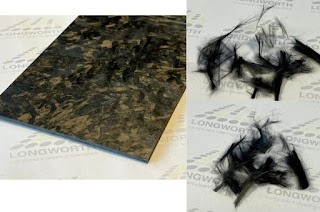
"@Longworth is one company promising a new method for reclaiming both near-virgin-grade fibers and resins. Called DEECOM, the process uses high-temperature steam and pressure to separate and reclaim materials. After a decade of development and proving out the technology, the company is ready to launch DEECOM commercially for composites recycling this year."


"The first iteration of the DEECOM system is set up to process waste in batches. The part to be recycled is fed into the top of a large pressure vessel. Saturated steam is piped into DEECOM’s heating system, superheated to at least 400°C, and then enters the pressure vessel. While the superheated steam is still present, the vessel is pressurized by at least 0.5 bar above atmospheric pressure and goes through several cycles of compression and decompression — the frequency and intensity of the cycles depending on the properties of each material. In practice, each decompression separates more of the resin from the fiber."


"The resin, now a gas or liquid depending on the type of resin and its reaction to the process, drops down into a collection area, and the fibers are left as intact as they can be, Hill says: “It’s not bent, damaged or burnt, it’s literally just cleaned. It’s in the exact same state as when you put it in, the same length and everything.” The only other waste output is steam expelled via a chimney. This steam can be captured for heat reclamation if required, further reducing the process’ environmental footprint. The timing of the overall process depends on the number of compression/decompression cycles needed for a particular part."


Source: #managingcomposites


Sunday, March 13, 2022

Hublot's unique spirit of the big bang gold tiger watch

 📢It's time for our segment Endless Possibilities!📢


Hublot roars in the year of the tiger with the unique spirit of the big bang gold tiger watch!


As the lunar year begins, Hublot introduces a version of its barrel-shaped icon in Frosted Carbon and gold, a first for the Swiss fine watchmaker.


The watch, which is based on the barrel-shaped 42mm Spirit of Big Bang, is a striking execution of Hublot’s famous fusion principles. This is the first Spirit of Big Bang with a case made of Frosted Carbon and 18-carat yellow-gold, a black and gold fusion of materials Hublot has used in its collection only once before.


This unique, complex, beautiful material, developed by Hublot, fuses carbon fiber with gold to create a unique finish defined by its glimmering gold occlusions. The watch is limited to 200 pieces and no two will be exactly the same. The patterns created by the process are random, just like a tiger’s majestic stripes.


Interested? Better start saving some money, because this watch has a price tag of 33 thousand euros!


Source:#managingcomposites


Monday, March 7, 2022

ARAMID FIBER through SEM

 📢Microscopic Mondays!📢


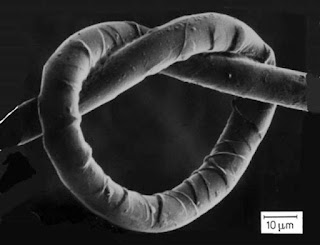
Have a look at this knotted aramid fiber! What is going on?


The anisotropic behavior of aramid fiber can be revealed in a vivid manner through SEM micrographs like this one: Note the buckling or kink marks on the compressive side... Meanwhile, the tensile side is smooth!


Such markings on the aramid fiber surface have also been reported when the aramid fiber is subjected to uniform compression or torsion!


Do you know why this happens? Let us know in the comments! 


Bibliographical Reference:

Composite Materials - Science and Engeneering - Page 50


Source:#managingcomposites

Visit MY BLOG http://polymerguru.blogspot.com


Sunday, March 6, 2022

Healing Halogens

 Healing Halogens #medicine


A significant number of drugs are halogenated.


Typically, insertion of halogen atoms on hit or lead compounds is performed to occupy the binding site of molecular targets in order to improve the drug−target binding affinity and/or reduce metabolism. 14 out of the 50 molecules approved by the FDA in 2021 contain halogens.


The introduction of F onto a chemical scaffold is able to infer changes that affect the physicochemical properties and the conformation of a molecule. Being the most electronegative element in the periodic table, F plays an important role in the modulation of pKa of neighboring functionalities. Substituting F for H on aromatic groups is also well known to improve metabolic stability.


Lipophilicity is also affected by the addition of F onto aliphatic and aromatic scaffolds. The monofluorination or trifluoromethylation of saturated alkyl groups usually decreases the lipophilicity due to the strong electron-withdrawing capabilities of fluorine. F-arenes are more lipophilic than des-F ones due to the low polarizability of the C-F bond. The installation of a fluorine atom in the ortho-position to an NH function on the aromatic ring is often used to enhance membrane permeability.


From a conformational perspective, the addition of one single F has a reduced steric effect, leaving mostly unchanged the interaction with the receptor site if compared to the same interaction with a molecule bearing an H atom in the same position. This can be explained by the similar van der Waals radii of F and H: 1.47 Å and 1.20 Å, respectively.

The commonly used trifluoromethyl group is sterically more demanding and almost equivalent to an ethyl group. The highly electronegative nature of fluorine makes it a hydrogen bond acceptor from HBD but does not establish as good of halogen bonds as Cl and Br, because it does not typically feature a σ-hole. Another important use is that fluorinated functionality can be incorporated into endogenous substrates or ligands through 19F-markers to investigate protein functions.


Cl is greater in size than F, and the C–Cl bond is stable enough that it allows its insertion in diverse heterocyclics. Cl is a better halogen bond acceptor compared to F. The most important impact of a nonreactive Cl atom on the biological activity of many compounds comes when it is a substituent on an aromatic, heteroaromatic or olefinic moiety. In these cases, the steric and/or electronic effects of the chlorine substituents lead to local electronic attraction or repulsion and/or to steric interference with any surrounding amino acids of target proteins. The Cl atom is often viewed as isosteric and has similar physicochemical properties to the methyl group; therefore, it is very often selected as a bioisosteric replacement because of its ability to alter the in vivo metabolism.


>250 FDA-approved chlorine-containing drugs are available on the market (as of 2019). 


Sunday's THOUGHTFUL POST : THE “BENT KEY PRINCIPLE”

 🔑 THE “BENT KEY PRINCIPLE” How a Tiny Mistake Inside Toyota’s Factory Created One of the Most Powerful Ideas in Modern Business In the ear...