Posts

UK consortium leads project to develop the next generation of hydrogen storage tanks for HGV and buses

Image
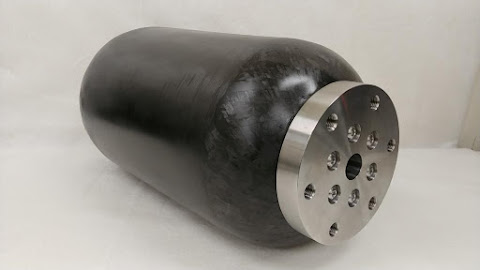
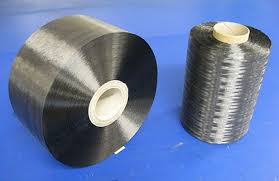
A consortium of UK companies, Ultima Forma, Lentus Composites and the National Composites Centre (NCC), have joined forces to develop a novel, high-pressure hydrogen storage tank aimed for use in HGV, bus and off-highway applications. Project HYSTOR has secured funding as part of the Advanced Propulsion Centre’s (APC) Automotive Transformation Fund. The project, led by Ultima Forma, brings together a novel electroformed integrated metallic liner overwrapped with composite that will bring weight reduction and other advantages over current solutions in the market today. The patented thin walled liner provides an impermeable hydrogen membrane onto which structural carbon fibre is wound by Lentus Composites using automated filament winding equipment. Steve Newbury, MD at Ultima Forma, said: “We are delighted to be working alongside Lentus and the NCC to bring to market improved storage solutions for high pressure hydrogen. Hydrogen propulsion systems are c...


Japan just shattered the internet speed record: 319 Terabits per Second

Image
  How’s your internetworking these days? At a recent conference, researchers from Japan demonstrated a whopping data transmission rate of 319 Terabits per second (Tb/s). Remarkably, the transmission was carried out over a long distance (3001 km / 1864 miles) and using technology that is already available today. A minute of footage, in high definition, takes about 100 Megabytes. That means that with this speed, you could download around 5,300 hours of footage every second. You could download the entire Spotify library in a few seconds. Wikipedia, you’d download in 0.01 seconds. This speed is almost double the previous record of 178 Tb/s, and almost seven times the earlier record of 44.2 Tb/s. Meanwhile, NASA’s internet tops out at 91 Gb/s (1 Tb = 1,000 Gb = 1,000,000 Mb) and the fastest home internet you can get is about 10 Gb/s. We at ZME feel fortunate to be working with a 1 Gb/s connection. The record was achieved with infrastructure that alread...

Scientists may have found how migrating birds sense Earth’s magnetic field

Image
  Birds migrate thousands of miles without a GPS, using the Earth’s magnetic field to orient themselves. It’s been a long mystery how they were able to do this, but now, scientists may have found the key reason behind it: a molecule in the eye that’s sensitive to magnetism and gives birds a working internal compass.  A group of biologists, chemists, and physicists tested a 40-years old theory according to which a light-sensitive molecule interacts with the Earth’s magnetic field via a quantum chemical process. To do this, they looked at a light-sensitive protein called cryptochrome 4 (CRY4) from the retina of European robins (Erithacus rubecula). “We think we may have identified the molecule that allows small migratory songbirds to detect the direction of the Earth’s magnetic field, which they undoubtedly can do, and use that information to help them navigate when they migrate thousands of kilometres,” Peter Hore, researcher and co-author of the paper. European robins live thr...

Lockheed Martin Looks To Space With Australian-Developed Composite Tanks

Image
  A collaborative partnership between Lockheed Martin, Australian manufacturer Omni Tanker and UNSW Sydney will look to develop and commercialize world-first composite tank technologies, thanks to a grant from the Federal Government’s Advanced Manufacturing Growth Centre (AMGC). The co-funded project  announced  as part of AMGC’s Commercialisation Fund launch and worth a total $AUD1.4 million will utilize two revolutionary home-grown technologies to solve the challenges of using composites for the transportation and storage of liquid hydrogen with applications on the ground, in the air, underwater and in space.   Combining nano-engineering technology developed by UNSW in partnership with Lockheed Martin and Omni Tanker, and Omni Tanker’s patented OmniBIND™ technology, the collaboration will result in the development of two new operational scale propellant tanks for storing cryogenic liquid fuels for commercial and civil satellite programs: a “Type IV” fluoropoly...

Carbon Fiber vs Fiberglass:

Image
  Though carbon fiber and fiberglass share some similar attributes and are used interchangeably in a handful of different industrial and everyday applications, the two materials are vastly different from one another. For instance… Strength: Though either material is substantially stronger than steel, industrial carbon fiber is more than 20 percent stronger than the best fiberglass. Carbon fiber boasts a strength-to-weight ratio roughly twice that of fiberglass. Stiffness: Carbon fiber is significantly less flexible than fiberglass and is the preferred material for applications in which stiffness and rigidity are essential (mechanical components for example). Carbon fiber tensile modulus is 4 times that of fiberglass. For applications in which flexibility is required or rigidity isn’t imperative, fiberglass is often the preferred choice.  Weight: Compared to metals like steel and aluminum, both carbon fiber and fiberglass materials are remarkably light in the weight g...

How the surfaces of silicone breast implants affect the immune system

Image
  Every year, about 400,000 people receive silicone breast implants in the United States. According to data from the U.S. Food and Drug Administration, a majority of those implants need to be replaced within 10 years due to the buildup of scar tissue and other complications. A team led by MIT researchers has now systematically analyzed how the varying surface architecture found in these implants influences the development of adverse effects, which in rare cases can include an unusual type of lymphoma. “The surface topography of an implant can drastically affect how the immune response perceives it, and this has important ramifications for the [implants’] design,” says Omid Veiseh, a former MIT postdoc. “We hope this paper provides a foundation for plastic surgeons to evaluate and better understand how implant choice can affect the patient experience.” The findings could also help scientists to design more biocompatible implants in the future, the researchers say. “We are pleased th...

Indian Oil Corp orders 15 hydrogen buses

Image
  15 new hydrogen-powered buses have been ordered for Indian roads. Indian bus manufacturer Tata Motors today (June 30) said it had received an order for the buses from Indian Oil Corporation as part of its effort towards ushering a hydrogen economy in the county. Indian Oil hopes the initiative will act as a stepping-stone for various other key programs, which propose to introduce hydrogen-based mobility on different iconic routes and important sectors in the country. As well as supplying the buses, Tata Motors will also collaborate with Indian Oil to undertake R&D projects and collectively study further the potential of fuel cell technology for commercial vehicles. Commenting on the company’s involvement in the landmark project, Girish Wagh, President of Commercial Vehicle Business Unit at Tata Motors said, “We are delighted to win this prestigious tender from IOCL for it adds to Tata Motors’ rich legacy of introducing future-ready technologies for cleaner and greener public ...