Saturday, May 1, 2021

Have you heard about the uses of Hemp?

 The Hemp plant has 50,000 different known uses to replace products we use on a daily basis. It is a renewable resource that yields a harvest in 4 to 5 months' time. Let’s list the many things that Hemp is for our people.


Hemp is energy

Hemp biomass can create biofuels such as gasoline, methane, ethanol, and methanol. Hemp can also be used to create electricity. It is a cleaner-burning fuel than of fossil fuels and is a renewable resource that can be harnessed by all people in all places.


Hemp is building materials


Hemp biomass can be used to create hempcrete, hemp insulation, and hemp wood. Hemp is more thermally efficient, fireproof & less susceptible to mold and mildew providing significant sound absorption. One acre of Hemp is equal to up to 4 acres of trees in fiber production


Hemp is economic diversification and development for our planet


The Hemp industry will create a new economy that is plant-based. It provides the answers we have been looking for about how we can stop the pollution that is causing the extinction of wildlife and polluting our oceans, land, and air. It is a new opportunity to give the power back to people to create a self-sustainable future for themselves out of Hemp.


Novel Polymer Ink Exhibits High Stability in Air and at High Temperatures

 At Linköping University, Sweden, scientists have designed a stable, highly conductive polymer ink. The breakthrough opens the door for novel printed electronics with high energy efficiency.

The study findings have been published in the Nature Communications journal.

Electrically conducting polymers have enabled the growth of lightweight and flexible electronic components like batteries, transistors, light-emitting diodes, solar cells, and organic biosensors.


The electrical properties of such polymers can be tweaked with the help of a technique called “doping.” This technique involves adding several dopant molecules to the polymer to alter its properties. Based on the dopant, the doped polymer has the ability to conduct electricity by the motion of either positively charged holes (a “p-type” conductor) or negatively charged electrons (an “n-type” conductor).

Major Advance

Currently, the p-type conductor PEDOT:PSS is the most common conducting polymer in use. PEDOT:PSS exhibits various convincing features like excellent ambient stability, high electrical conductivity, and most significantly, commercial availability as an aqueous dispersion.

But several electronic devices need a combination of n-types and p-types to function. Right now, there is no n-type comparable with PEDOT:PSS.

Scientists at Linköping University, together with their collaborators from the United States and South Korea, have designed a conductive n-type polymer ink that remains stable in air and even at higher temperatures. This new polymer formulation is called BBL:PEI.

According to Simone Fabiano, senior lecturer in the Department of Science and Technology at Linköping University, “This is a major advance that makes the next generation of printed electronic devices possible. The lack of a suitable n-type polymer has been like walking on one leg when designing functional electronic devices. We can now provide the second leg.”

Inexpensive and Easy

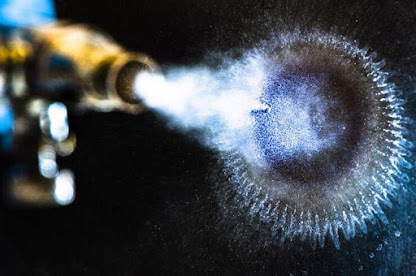
The latest n-type material is available in the form of ink along with ethanol as the solvent. The ink can be deposited by just spraying the solution onto a surface, which makes organic electronic devices simpler and inexpensive to manufacture.

Moreover, the ink is highly environmentally friendly compared to several other n-type organic conductors that are being developed at present, which contain detrimental solvents. Simone Fabiano is confident that the technology is all set for regular use.

The study was financially supported by the Knut and Alice Wallenberg Foundation, the Swedish Research Council, the Åforsk Foundation, the Olle Engkvist Foundation, Vinnova, and the strategic research area Advanced Functional Materials at Linköping University.

Journal Reference:

Yang, C.-Y., et al. (2021) A high-conductivity n-type polymeric ink for printed electronics. Nature Communicationsdoi.org/10.1038/s41467-021-22528-y.

Source: https://liu.se/en

Wednesday, April 28, 2021

Honda will sell only battery and fuel cell electric vehicles by 2040

The automaker has said that only electrified vehicles will be rolled out in North America.

Honda has announced its key target plans for the sale of electric and fuel cell electric vehicles (FCEVs) in North America. It intends to make those zero-emission vehicles the only type of vehicles they sell by 2040.

Battery electric and FCEVs will represent 100 percent of Honda’s sales by that year, said the plan.

According to Honda’s timeline for rolling out its zero-emission vehicles, the first major target will be in 2030. By that year, it already expects 40 percent of the vehicles it sells to be electric or fuel cell electric vehicles. Five years later in 2035, that percentage will double to 80 percent of the total vehicles it sells per year. Then, after another five years have passed, in 2040, 100 percent of new Honda vehicle sales in North America will be zero-emission producers.


The automaker sees FCEV technology as a strong component of the complete solution toward decarbonizing transportation. The challenge to achieve carbon neutrality will involve the use of H2, according to the company’s view. They anticipate that hydrogen will rapidly become a considerably more widely adopted renewable energy and fuel source.

The Honda view on fuel cell electric vehicles was placed in the spotlight with its F1 exit announcement.

The company has stated that they would be leaving Formula 1 (F1) at the close of this year’s season in order to focus on the development and production of fuel cell and battery technologies. Honda has been involved in the research and development of hydrogen fuel and fuel cell technologies, as well as their commercialization. Moreover, it has kept up its collaboration with General Motors with the goal of slashing the cost of producing and using this renewable energy technology.

The automaker has also shared its aims to bring about an H2 powered society by broadening its fuel cell electric vehicle lineup and by using this type of system for an expanded range of applications. This includes everything from passenger vehicles to commercial trucks, in addition to both mobile and stationary power sources.


Source:Hydrogen Fuel News


Tuesday, April 27, 2021

A Wrightbus hydrogen bus fleet in Aberdeen has hit the first 100,000 milestone, saving 170,000kg of CO2 polluting the atmosphere.

First Aberdeen and Aberdeen City Council are celebrating this week after their Wrightbus hydrogen double-decker bus fleet notched up its first major milestone of operation.


Since launch in January, the fleet of 15 UK-manufactured Wrightbus buses, has already saved a huge 170,000kg of CO2 from being released into the atmosphere – equivalent of taking 42 cars off the road for a year – a significant improvement in the city’s air quality for its residents.


Michelle Thomson, a hydrogen bus driver at First Aberdeen, said: “Drivers and the public love the new hydrogen buses – sailing smoothly and silently through the city’s streets is a joy."


Knowing a Wrightbus hydrogen bus is not polluting the atmosphere makes it a ride of kudos, as we come together to tackle the climate emergency.


“The buses are so quiet that socially distancing passengers wearing masks can still have a natter from either end of the bus. As drivers, it makes us much more in tune with what’s going on on board, so we’re able to deliver the best in customer service." said Michelle.


Source:Ryse Hydrogen


Thursday, April 22, 2021

HEMP NUT

 Technically a nut, hemp seeds are very nutritious. They have a mild, nutty flavor and are often referred to as hemp hearts. Hemp seeds contain over 30% fat. They are exceptionally rich in two essential fatty acids, linoleic acid (omega-6) & alpha-linolenic acid omega-3

While the fat content in hemp seeds comes primarily from its healthy essential fatty acids, eat them in moderation to meet your recommended daily consumption of fat. Hemp seeds may interact with certain medications including anticoagulants.

What is hemp nut?

Hemp seeds are a rich source of nutrients. Part of the hemp plant, these seeds are technically a nut that can be eaten raw or used to make milk, oil, cheese substitutes, or protein powder. While related to the cannabis plant, hemp seeds have little to none of the psychoactive compound THC found in marijuana.

Hemp Nuts are whole hemp seeds and are ideal for those seeking a natural, yet the excellent source of minerals, fiber, omega 3, and omega 6. Meaning each 1-kilogram bag is packed with nutrition and balanced essential fatty acids. Containing all the amino acids you’d ever need.

With the unique profile of each variety seed from certified EU organic farmers, ensuring a high-quality product with the ideal metabolic balance. Vegan-friendly and gluten-free.

HEMP Biodiesel

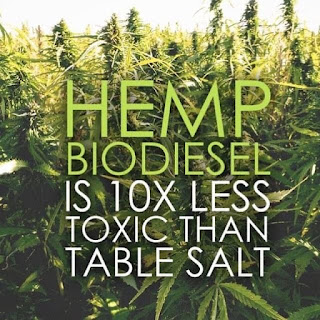
 Did You Know Biodiesel is safe to handle and transport because it is as biodegradable as sugar, 10 times less toxic than table salt, and has a high flashpoint of about 300 F compared to petroleum diesel fuel, which has a flash point of 125 F Biodiesel can be made from domestically produced, renewable oilseed crops such as hemp.


Why Hemp Biodiesel?


Biodiesel is the only alternative fuel that runs in any conventional, unmodified diesel engine.

It can be stored anywhere that petroleum diesel fuel is stored. Biodiesel is safe to handle and transport because it is as biodegradable as sugar, 10 times less toxic than table salt, and has a high flashpoint of about 300 F compared to petroleum diesel fuel, which has a flash point of 125 F.


Biodiesel can be made from domestically produced, renewable oilseed crops such as hemp. Biodiesel is a proven fuel with over 30 million successful US road miles, and over 20 years of use in Europe.


Biodiesel is the only alternative fuel in the US to complete EPA Tier I Health Effects Testing under section 211(b) of the Clean Air Act, which provide the most thorough inventory of environmental and human health effects attributes that current technology will allow.


Tuesday, April 20, 2021

New Project to Develop Biodegradable Packaging System Using Avocado Waste

 AIMPLAS announces the development of the GUACAPACK Project to make use of waste produced when avocados are processed for use in food items and extend the shelf life of prepared products. Funded by the Valencian Innovation Agency (AVI), the project is led by the company ITC Packaging and the Universidad de Alicante’s research group on Polymer and Nanomaterial Analysis (Nanobiopol-UA) is also taking part.

Extended Shelf Life of Food by 15%:


The project aims to develop a new biodegradable packaging system from renewable sources that also extends the shelf life of food by 15%, thanks to a label with oxygen barrier function that prevents the oxidation of food, and to the incorporation of natural antioxidants extracted from the avocado itself, which also helps reduce the use of synthetic preservatives.


To achieve this, starch from the avocado seed will be extracted and purified to obtain a film that can be used to make multilayer IML labels that have oxygen barrier properties and prevent the oxidation of food. In addition, the active components of waste avocado skin and flesh with a high antioxidant capacity will be obtained and used as a component of a bioplastic (PLA) that will be injected molded to manufacture the packaging system. When food contacts this system, its shelf life will be extended by 15%.

Value-added Use of Agri-food Waste:

This option provides an alternative to the use of synthetic additives, as well as a new, high value-added use for agri-food waste to obtain biodegradable packaging from renewable sources. The project is therefore fully aligned with circular economy criteria.

This project will also help achieve the United Nations Sustainable Development Goals (SDGs), especially SDG 3 on Good Health and Well-Being, SDG 9 on Industry, Innovation and Infrastructure, and SDG 12 on Responsible Consumption and Production.


Source: AIMPLAS

WORKPLACE FLOOR MARKINGS : Simple Lines. Clear Rules. Fewer Incidents.

  WORKPLACE FLOOR MARKINGS Simple Lines. Clear Rules. Fewer Incidents. Clear floor markings are a visual management tool that improves safet...