Posts

New Biodegradable Polyurethane Derived from Fish Waste

Image
  To make the new material, Kerton’s team started out with oil extracted from the remains of Atlantic salmon, after the fish were prepared for sale to consumers. “ I find it interesting how we can make something useful, something that could even change the way plastics are made, from the garbage that people just throw out, ” says Mikhailey Wheeler, a graduate student who is presenting the work at the meeting. Both Kerton and Wheeler are at Memorial University of Newfoundland (Canada). Demand for greener PU alternatives is growing. Previously, others have developed new polyurethanes using plant-derived oils to replace petroleum. However, these come with a drawback: The crops, often soybeans, that produce the oil require land that could otherwise be used to grow food. Leftover fish struck Kerton as a promising alternative. Salmon farming is a major industry for coastal Newfoundland, where her university is located. After the fish are processed, leftover parts are often discarded, but...


New Optimized Method to Recycle CFRP Composites While Maintaining Strength

Image
  Researchers from the University of Sydney’s School of Civil Engineering have developed an optimized method for recycling CFRP composites while maintaining 90 percent of their original strength. Loss of Properties in Recycled Products Until now, it has been difficult to continuously recycle products made of carbon fibers. Given that most recycling involves shredding, cutting or grinding, fibers are worn out, decreasing a future product’s viability. “ Globally and in Australia there has been a march towards better recycling processes, however there is often the belief that a material can be recycled an infinite number of times – this simply isn’t the case. Most recycling processes diminish mechanical or physical properties of materials ,” said the study’s lead researcher Dr Ali Hadigheh. This presents a huge challenge and threat to the environment, as it has led to the production of virgin carbon fibre which contributes significantly to greenhouse gas emissions. Cost-effective Meth...

What was the first application of carbon fibers?

Image
It's Story-Time What was the first application of carbon fibers? It's not what you are thinking! 👀 Carbon fibers are older than you imagine! The first carbon fibers date back to 1860! In 1879, a certain guy named Thomas Edison chose carbon fibers to manufacture light bulb filaments. At that time, they were not petroleum-based. Instead, they were produced through the pyrolysis of cotton or bamboo filaments. These filaments were ''baked'' at high temperatures to cause carbonization to take place. But why were they chosen? The answer is pretty straightforward and has nothing to do with high strength! At the time, Edison noticed that their high heat tolerance made them ideal electrical conductors. However, soon later tungsten took over as the light bulb filament of choice in the early 1900s, and carbon fiber became obsolete for the next 50 years or so.  During the 1960s, a Japanese researcher named Akio Shindo, manage to manufacture carbon fibers using PAN as a pre...

HEMP

Image
  90-120 days to grow ... That means under most circumstances it grows from a seed to a plant in 90-120 days and its buds blossom once before dying off for the next crops to be planted. Hemp is affected by seasonal changes so once the days start to shorten, the crop stops growing tall and begins producing flower buds instead Industrial hemp can be used in an estimated 50,000 different products across a wide spectrum of industries One acre of hemp can yield an average of 700 pounds of grain, which in turn can be pressed into about 22 gallons of oil and 530 pounds of meal. The same acre will also produce an average of 5,300 pounds of straw, which can be transformed into approximately 1,300 pounds of fiber. The hulled kernels are used to make highly nutritious foods, including non-dairy milk and cheese, breads, dips, spreads or as an ingredient in countless recipes, from biscuits to lasagne. Hemp seed kernels are also a healthy, non-allergenic alternative to nuts, as they can be eaten...

Blue-green Spirulina algae may prevent serious Covid-19

Image
  Study finds an extract of enhanced Spirulina reduces by 70% the release of an immune-system protein that causes dangerous cytokine storm in the lungs.An extract of Spirulina blue-green algae may help Covid-19 patients avoid getting seriously ill, according to a study by Israeli and Icelandic scientists  published  in the journal  Marine Biotechnology . “The potential health benefits of Spirulina are well documented,” the authors noted. “This blue-green algae contains C-phycocyanin (C-PC), a pigment-binding protein, which enhances antioxidation, anti-inflammation, and anti-tumor activities. The scientists found that an extract of photosynthetically enhanced Spirulina reduces by 70 percent the release of an immune-system protein that can cause a cytokine storm in the lungs leading to acute respiratory distress and organ damage. It is believed that cytokine storms are responsible for critical cases of Covid-19. The research was conducted at  MIGAL Galilee Researc...

Hydrogen fuel bus service to start on Delhi-Jaipur route by NTPC:

Image
 The new service is going to be a pilot project to test the viability of fuel cell buses for the intercity commute. It is going to be the first FCEV bus service in India to be used for intercity commute. Green mobility is taking the fast lane in the country; apart from establishing a complete EV supporting infra, the Indian government is now also planning more options towards alternative fuels in order to reduce dependence on traditional fuels. While electric cars and taxis are been promoted heavily by the government, it is now also conducting a feasibility study on hydrogen fuel buses. India's largest energy conglomerate, NTPC Limited (National Thermal Power Corporation Limited) is planning to start a premium hydrogen fuel bus service on Delhi to Jaipur route. For the record, it is going to be the first FCEV bus service in India to be used for intercity commute. However, no specific timeline has been provided for when the service would be started. Previously, similar bus services ...

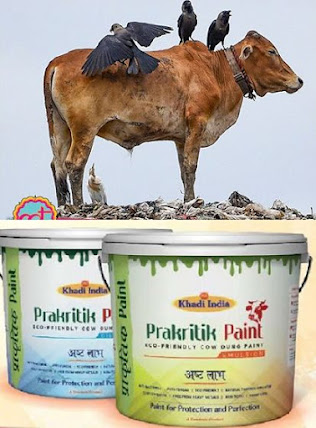
PAINT FROM COW DUNG

Image
  Paint from cow dung - first-of-its-kind!! Khadi India launched Prakritik emulsion paint which has cow dung as its main ingredient. Cow dung makes for 20-30% of the paint’s ingredients and so it is anti-fungal, non-toxic, anti-bacterial, cost-effective and odorless. The paint can be applied on interior as well as exterior walls. It dries in less than 4 hours, and has a smooth and uniform finish. This paint will instantly reduce the temperature of a room if the outer environment is hot and will maintain the temperature if it is cold outside. It has even successfully tested for radiation prevention. It has been certified by Bureau of Indian Standards. They have priced the distemper paint at Rs 120 per litre and emulsion paint at Rs 225 per litre. Khadi Prakritik Emulsion paint meets BIS 15489:2013 standards whereas Khadi Prakritik Distemper paint meets BIS 428:2013 standards. This technology will increase the consumption of cow dung as a raw material for eco-friendly products and wi...